Download Mendeley
Effects of the location of distal histidine in the reaction of myoglobin with hydrogen peroxide.
Matsui, T., Ozaki, S., Liong, E., Phillips Jr., G.N., Watanabe, Y.(1999) J Biol Chem 274: 2838-2844
- PubMed: 9915818 Search on PubMed
- DOI: https://doi.org/10.1074/jbc.274.5.2838
- Primary Citation Related Structures:
1OFJ, 1OFK - PubMed Abstract:
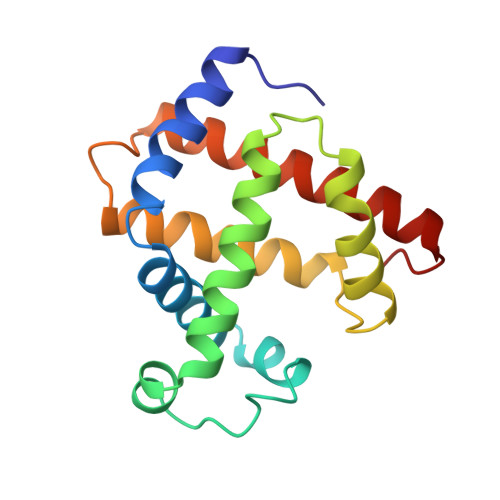
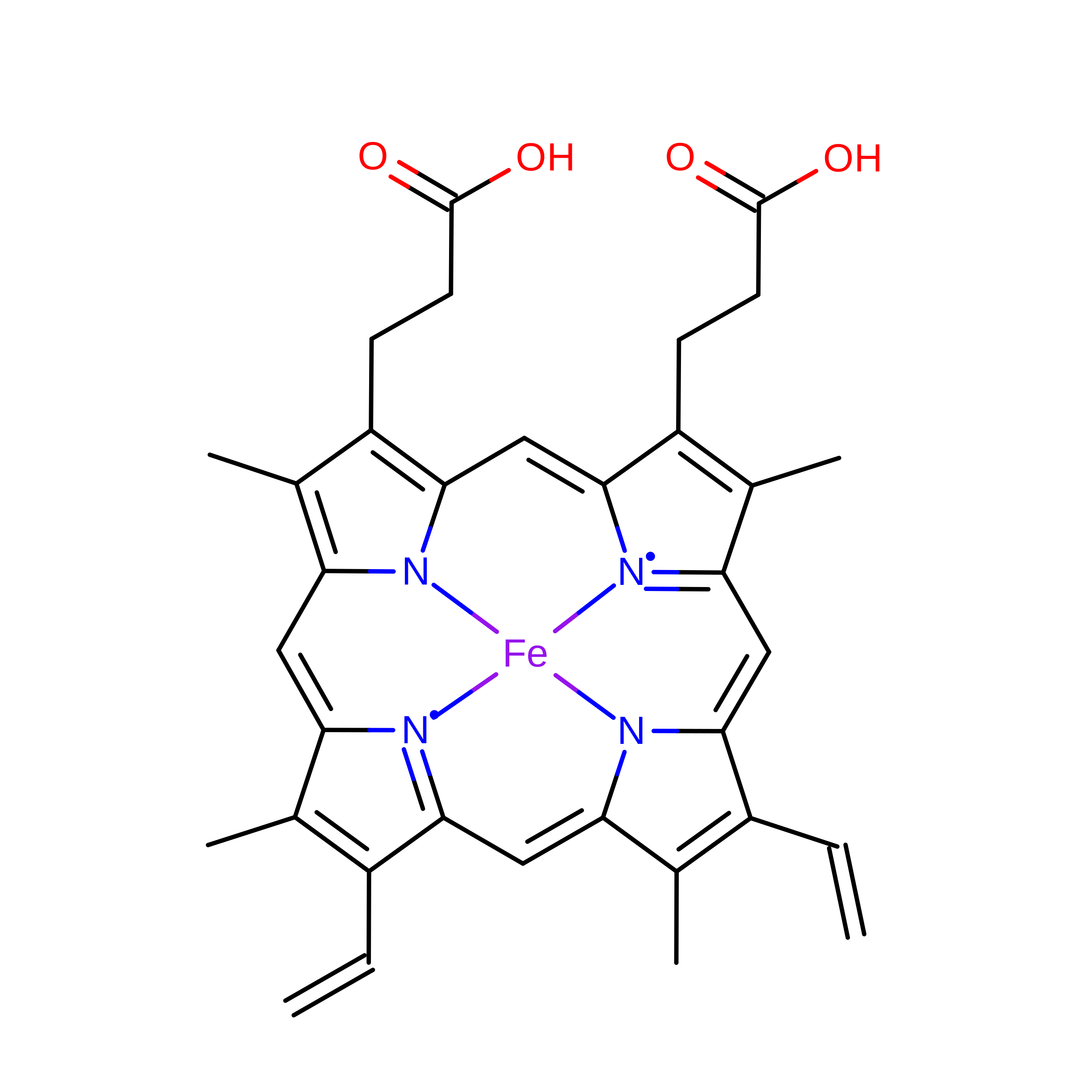
To clarify how the location of distal histidine affects the activation process of H2O2 by heme proteins, we have characterized reactions with H2O2 for the L29H/H64L and F43H/H64L mutants of sperm whale myoglobin (Mb), designed to locate the histidine farther from the heme iron. Whereas the L29H/H64L double substitution retarded the reaction with H2O2, an 11-fold rate increase versus wild-type Mb was observed for the F43H/H64L mutant. The Vmax values for 1-electron oxidations by the myoglobins correlate well with the varied reactivities with H2O2. The functions of the distal histidine as a general acid-base catalyst were examined based on the reactions with cumene hydroperoxide and cyanide, and only the histidine in F43H/H64L Mb was suggested to facilitate heterolysis of the peroxide bond. The x-ray crystal structures of the mutants confirmed that the distal histidines in F43H/H64L Mb and peroxidase are similar in distance from the heme iron, whereas the distal histidine in L29H/H64L Mb is located too far to enhance heterolysis. Our results indicate that the proper positioning of the distal histidine is essential for the activation of H2O2 by heme enzymes.
- Institute for Molecular Science, Graduate University for Advanced Studies, Myodaiji, Okazaki 444, Japan.
Organizational Affiliation: