1NMC | pdb_00001nmc

COMPLEX BETWEEN NC10 ANTI-INFLUENZA VIRUS NEURAMINIDASE SINGLE CHAIN ANTIBODY WITH A 15 RESIDUE LINKER AND INFLUENZA VIRUS NEURAMINIDASE


Experimental Data Snapshot

  • Method: X-RAY DIFFRACTION
  • Resolution: 2.50 Å
  • R-Value Free: 
    0.260 (Depositor) 
  • R-Value Work: 
    0.220 (Depositor), 0.233 (DCC) 
  • R-Value Observed: 
    0.220 (Depositor) 

Starting Model: experimental
View more details

wwPDB Validation 3D Report Full Report

Validation slider image for 1NMC

Ligand Structure Quality Assessment 


This is version 2.2 of the entry. See complete history

Literature

Three-dimensional structures of single-chain Fv-neuraminidase complexes.

Malby, R.L.McCoy, A.J.Kortt, A.A.Hudson, P.J.Colman, P.M.

(1998) J Mol Biology 279: 901-910

  • DOI: https://doi.org/10.1006/jmbi.1998.1794
  • Primary Citation Related Structures: 
    1A14, 1NMC

  • PubMed Abstract: 

    The structure of the complex between a recombinant single-chain Fv construct of antibody NC10 with a five-residue peptide linker between VH and VL (termed scFv(5)), and its antigen, tetrameric neuraminidase from influenza virus (NA), has been determined and refined at 2.5 A resolution. The antibody-antigen binding interface is very similar to that of a similar NC10 scFv-NA complex in which the scFv has a 15-residue peptide linker (scFv(15)), and the NC10 Fab-NA complex. However, scFv(5) and scFv(15) have different stoichiometries in solution. While scFv(15) is predominantly monomeric in solution, scFv(5) forms dimers exclusively, because the five-residue linker is not long enough to permit VH and VL domains from the same polypeptide associating and forming an antigen-binding site. Upon forming a complex with NA, scFv(15) forms a approximately 300 kDa complex corresponding to one NA tetramer binding four scFv(15) monomers, while scFv(5) forms a approximately 590 kDa complex, corresponding to two NA tetramers crosslinked by four bivalent scFv(5) dimers. However, the dimeric scFv(5) in the scFv(5)-NA crystals does not crosslink NA tetramers, and modelling studies indicate that it is not possible to pack four dimeric and simultaneously bivalent scFvs between the NA tetramers with only a five-residue linker between VH and VL. The inability arises from the exacting requirement to orient the two antigen-binding surfaces to bind the tetrameric NA antigen while avoiding steric clashes with NC10 scFv(5) dimers bound to other sites on the NA tetramer. The utility of bivalent or bifunctional scFvs with short linkers may therefore be restricted by the steric constraints imposed by binding multivalent antigens.


  • Organizational Affiliation
    • Biomolecular Research Institute, 343 Royal Parade, Parkville, 3052, Australia.

Macromolecule Content 

  • Total Structure Weight: 142.04 kDa 
  • Atom Count: 10,138 
  • Modeled Residue Count: 1,238 
  • Deposited Residue Count: 1,238 
  • Unique protein chains: 3

Macromolecules

Find similar proteins by:|  3D Structure
Entity ID: 1
MoleculeChains  Sequence LengthOrganismDetailsImage
NEURAMINIDASEA [auth N],
D [auth A]
388Influenza A virusMutation(s): 0 
EC: 3.2.1.18
UniProt
Find proteins for P03472 (Influenza A virus (strain A/Tern/Australia/G70C/1975 H11N9))
Explore P03472 
Go to UniProtKB:  P03472
Entity Groups
Sequence Clusters30% Identity50% Identity70% Identity90% Identity95% Identity100% Identity
UniProt GroupP03472
Glycosylation
Glycosylation Sites: 3
Sequence Annotations
Expand
Reference Sequence
Find similar proteins by:|  3D Structure
Entity ID: 2
MoleculeChains  Sequence LengthOrganismDetailsImage
SINGLE CHAIN ANTIBODYB [auth H],
E [auth B]
122Mus musculusMutation(s): 0 
Find similar proteins by:|  3D Structure
Entity ID: 3
MoleculeChains  Sequence LengthOrganismDetailsImage
SINGLE CHAIN ANTIBODYC [auth L],
F [auth C]
109Mus musculusMutation(s): 0 

Oligosaccharides

Help  
Entity ID: 4
MoleculeChains Length2D Diagram GlycosylationD Interactions
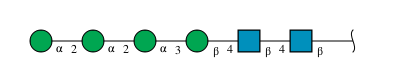
alpha-D-mannopyranose-(1-2)-alpha-D-mannopyranose-(1-2)-alpha-D-mannopyranose-(1-3)-beta-D-mannopyranose-(1-4)-2-acetamido-2-deoxy-beta-D-glucopyranose-(1-4)-2-acetamido-2-deoxy-beta-D-glucopyranoseG [auth D],
H [auth E]
6N-Glycosylation
Glycosylation Resources
GlyTouCan: G01760ZU
GlyCosmos: G01760ZU
GlyGen: G01760ZU

Small Molecules

Ligands 3 Unique
IDChains Name / Formula / InChI Key2D Diagram3D Interactions
NAG

Query on NAG


Download:Ideal Coordinates CCD File
J [auth N],
K [auth N],
N [auth A],
O [auth A]
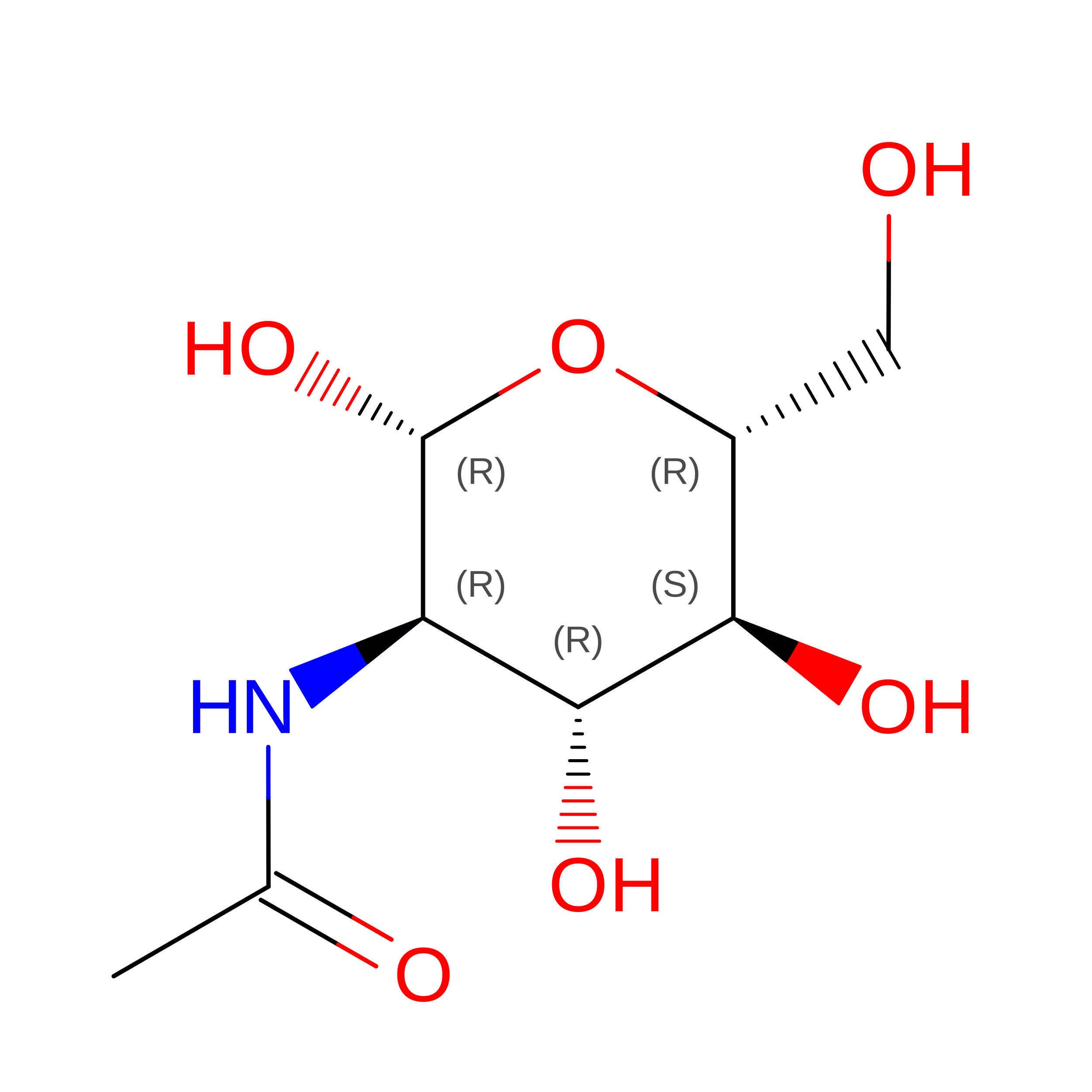
2-acetamido-2-deoxy-beta-D-glucopyranose
C8 H15 N O6
OVRNDRQMDRJTHS-FMDGEEDCSA-N
MAN

Query on MAN


Download:Ideal Coordinates CCD File
I [auth N],
M [auth A]
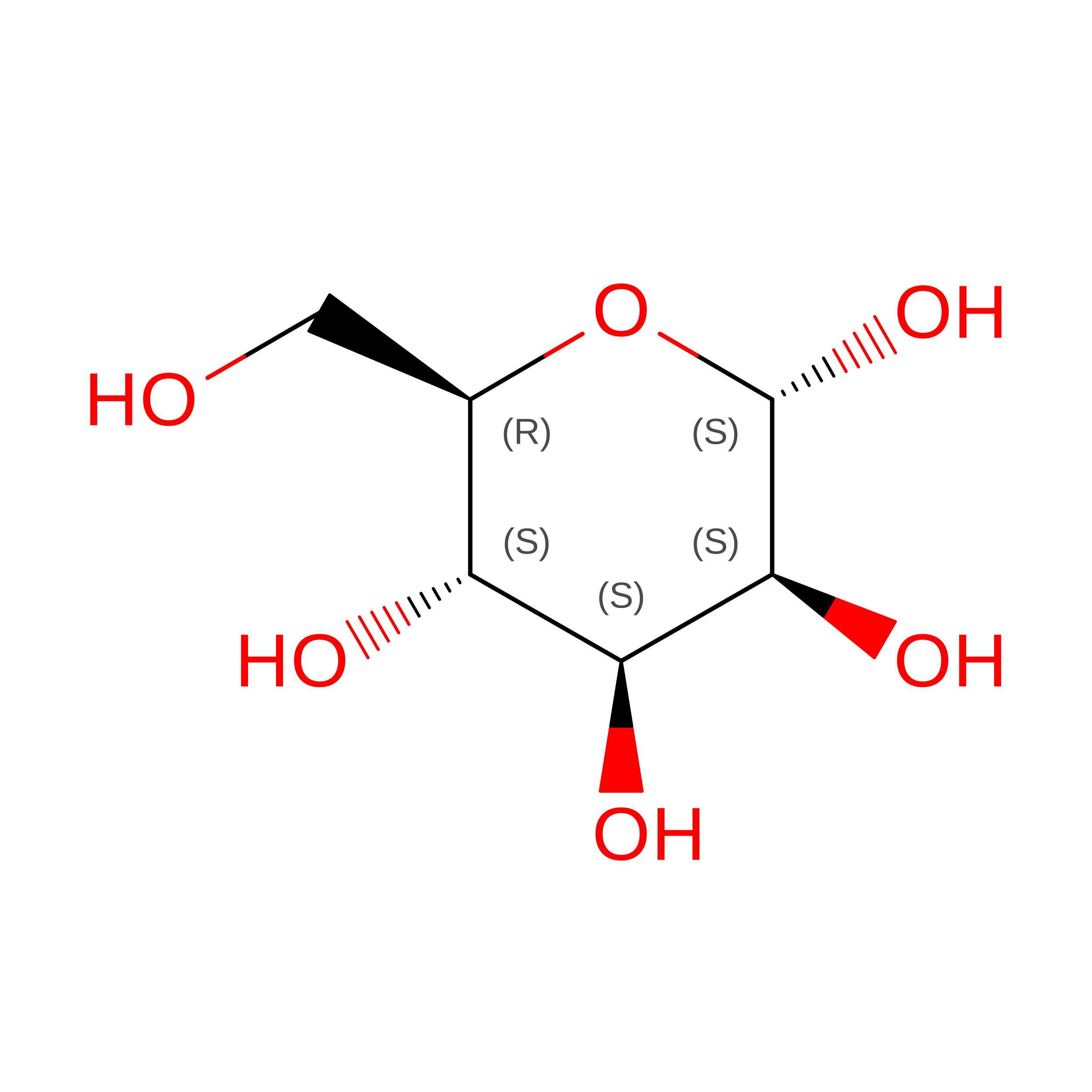
alpha-D-mannopyranose
C6 H12 O6
WQZGKKKJIJFFOK-PQMKYFCFSA-N
CA

Query on CA


Download:Ideal Coordinates CCD File
L [auth N],
P [auth A]
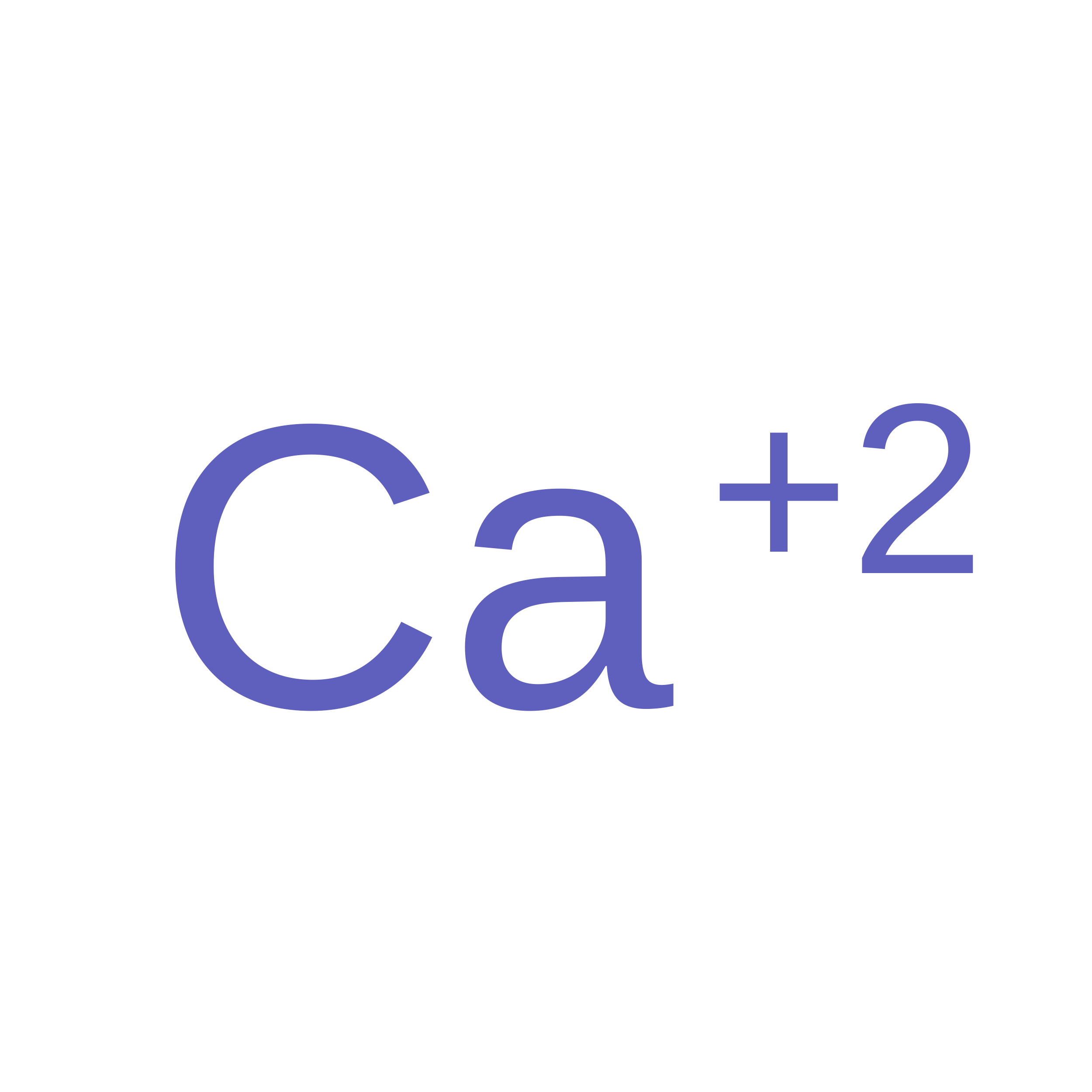
CALCIUM ION
Ca
BHPQYMZQTOCNFJ-UHFFFAOYSA-N

Experimental Data & Validation

Experimental Data

  • Method: X-RAY DIFFRACTION
  • Resolution: 2.50 Å
  • R-Value Free:  0.260 (Depositor) 
  • R-Value Work:  0.220 (Depositor), 0.233 (DCC) 
  • R-Value Observed: 0.220 (Depositor) 
Space Group: P 4 21 2
Unit Cell:
Length ( Å )Angle ( ˚ )
a = 144.4α = 90
b = 144.4β = 90
c = 227γ = 90
Software Package:
Software NamePurpose
WEISdata collection
PROTEINdata reduction
X-PLORmodel building
X-PLORrefinement
WEISdata reduction
PROTEINdata scaling
X-PLORphasing

Structure Validation

View Full Validation Report


Ligand Structure Quality Assessment 


Entry History 

Deposition Data

Revision History  (Full details and data files)

  • Version 1.0: 1998-09-23
    Type: Initial release
  • Version 1.1: 2008-03-24
    Changes: Version format compliance
  • Version 1.2: 2011-07-13
    Changes: Non-polymer description, Version format compliance
  • Version 1.3: 2020-03-04
    Changes: Advisory, Data collection, Derived calculations, Other
  • Version 2.0: 2020-07-29
    Type: Remediation
    Reason: Carbohydrate remediation
    Changes: Advisory, Atomic model, Data collection, Derived calculations, Structure summary
  • Version 2.1: 2023-08-09
    Changes: Database references, Refinement description, Structure summary
  • Version 2.2: 2024-11-20
    Changes: Data collection, Structure summary