Download Mendeley
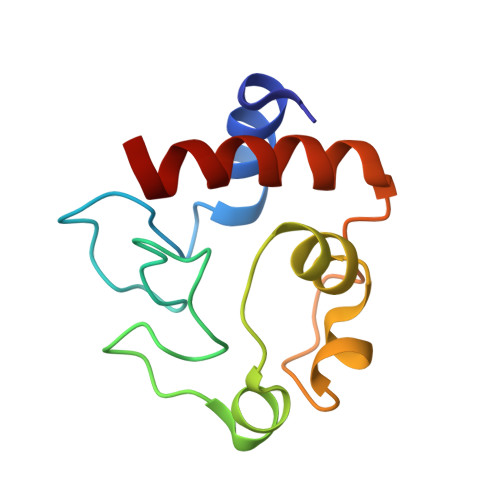
Solution structure of cyanoferricytochrome c: ligand-controlled conformational flexibility and electronic structure of the heme moiety.
Yao, Y., Qian, C., Ye, K., Wang, J., Bai, Z., Tang, W.(2002) J Biol Inorg Chem 7: 539-547
- PubMed: 11941512 Search on PubMed
- DOI: https://doi.org/10.1007/s00775-001-0334-y
- Primary Citation Related Structures:
1I5T - PubMed Abstract:
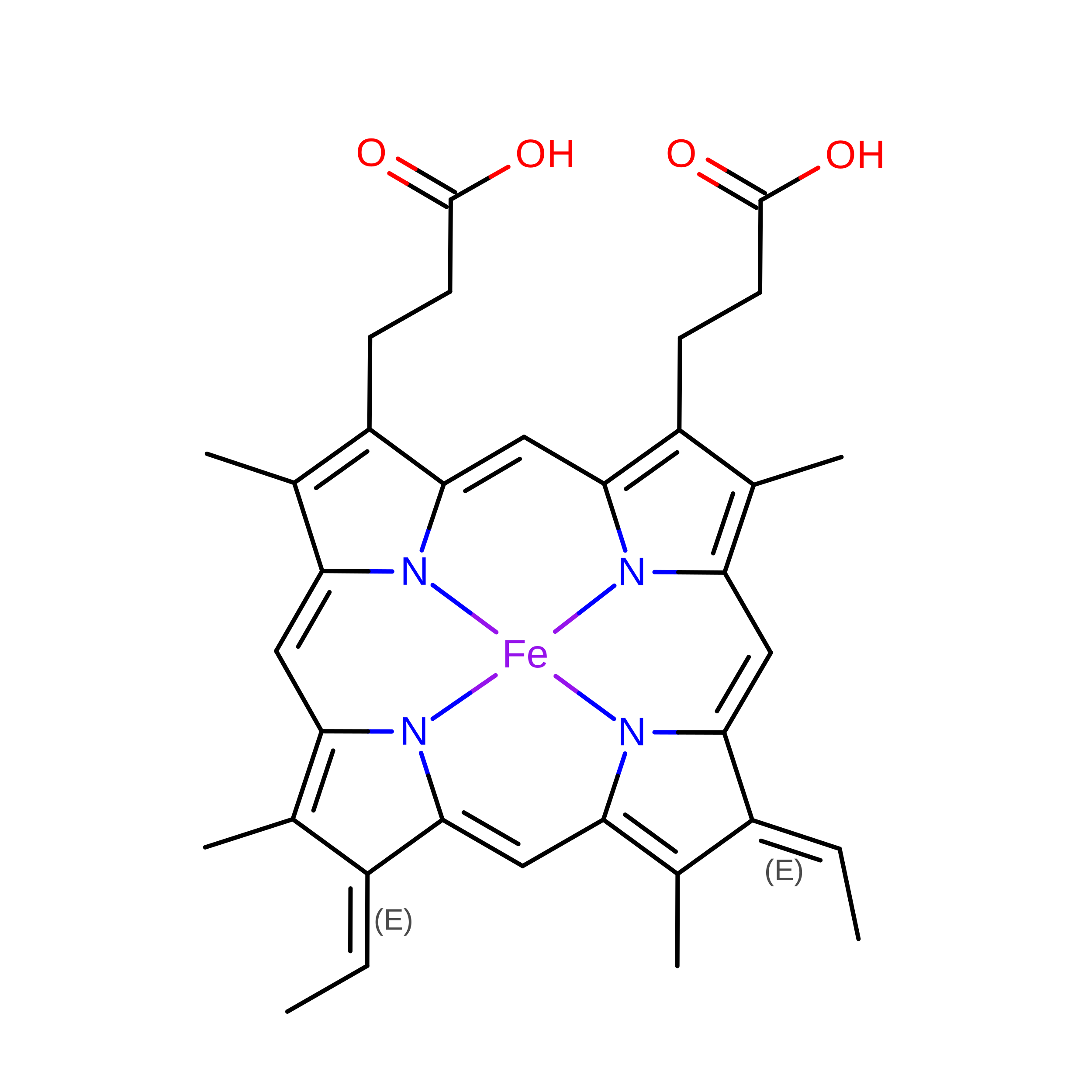
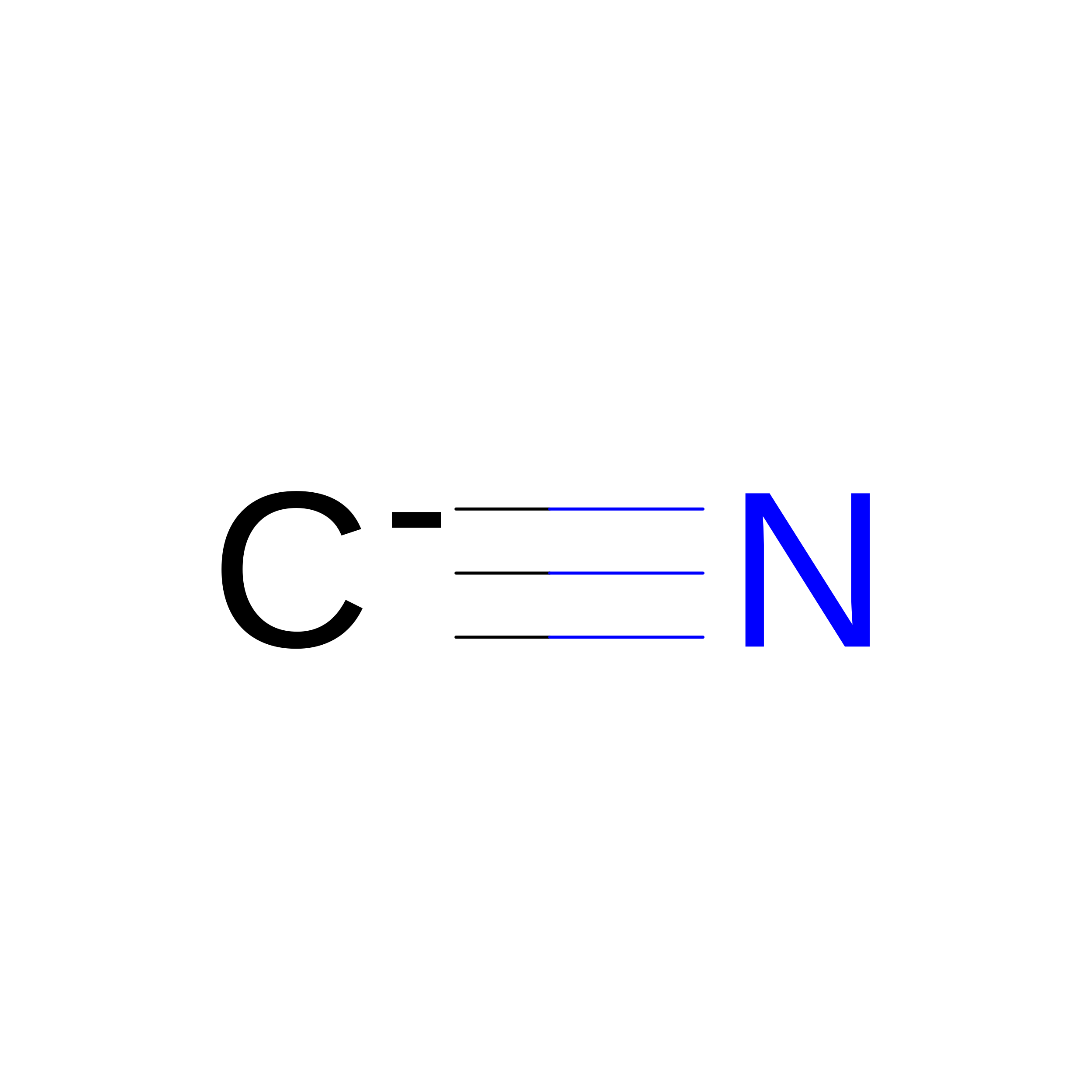
The solution structure of cyanoferricytochrome c has been determined using NMR spectroscopy. As a result of including additional constraints derived from pseudocontact shifts, a high-resolution NMR structure was obtained with high accuracy. In order to study the conformational transition between the native protein and its ligand adducts, the present structure was compared with the solution structures of the wild-type cytochrome c and the imidazole-cytochrome c complex. Like the solution structure of imidazole-cytochrome c, the heme crevice is widened by the swinging out of residues 77-85 and a noticeable shift of the 50s helix. However, unlike imidazole, cyanide exerts less significant perturbation on the conformation of the heme cavity, which is revealed by a more compact residue package in the distal pocket. Furthermore, comparison of the solution structure of CN-iso-1Met80Ala cytochrome c with the structure of cyanoferricytochrome c indicated that the binding of cyanide has a different impact on the distal cavity conformation in the two proteins. In addition, the magnetic properties of the present system are discussed and a comprehensive study of the electronic structure of ligand-cytochrome c complexes and the native protein is also described. Electronic supplementary material to this paper can be obtained by using the Springer Link server located at http://dx.doi.org/10.1007/s00775-001-0334-y.
- State Key Laboratory of Coordination Chemistry, Nanjing University, Nanjing 210093, P.R. China.
Organizational Affiliation: