1F6N | pdb_00001f6n

CRYSTAL STRUCTURE ANALYSIS OF THE MUTANT REACTION CENTER PRO L209-> TYR FROM THE PHOTOSYNTHETIC PURPLE BACTERIUM RHODOBACTER SPHAEROIDES


Experimental Data Snapshot

  • Method: X-RAY DIFFRACTION
  • Resolution: 2.80 Å
  • R-Value Free: 
    0.250 (Depositor) 
  • R-Value Work: 
    0.221 (Depositor) 
  • R-Value Observed: 
    0.221 (Depositor) 

wwPDB Validation 3D Report Full Report

Validation slider image for 1F6N

This is version 1.4 of the entry. See complete history

Literature

X-ray structure analyses of photosynthetic reaction center variants from Rhodobacter sphaeroides: structural changes induced by point mutations at position L209 modulate electron and proton transfer.

Kuglstatter, A.Ermler, U.Michel, H.Baciou, L.Fritzsch, G.

(2001) Biochemistry 40: 4253-4260

  • DOI: https://doi.org/10.1021/bi001589h
  • Primary Citation Related Structures: 
    1F6N, 1FNP, 1FNQ

  • PubMed Abstract: 

    The structures of the reaction center variants Pro L209 --> Tyr, Pro L209 --> Phe, and Pro L209 --> Glu from the photosynthetic purple bacterium Rhodobacter sphaeroides have been determined by X-ray crystallography to 2.6-2.8 A resolution. These variants were constructed to interrupt a chain of tightly bound water molecules that was assumed to facilitate proton transfer from the cytoplasm to the secondary quinone Q(B) [Baciou, L., and Michel, H. (1995) Biochemistry 34, 7967-7972]. However, the amino acid exchanges Pro L209 --> Tyr and Pro L209 --> Phe do not interrupt the water chain. Both aromatic side chains are oriented away from this water chain and interact with three surrounding polar side chains (Asp L213, Thr L226, and Glu H173) which are displaced by up to 2.6 A. The conformational changes induced by the bulky aromatic rings of Tyr L209 and Phe L209 lead to unexpected displacements of Q(B) compared to the wild-type protein. In the structure of the Pro L209 --> Tyr variant, Q(B) is shifted by approximately 4 A and is now located at a position similar to that reported for the wild-type reaction center after illumination [Stowell, M. H. B., et al. (1997) Science 276, 812-816]. In the Pro L209 --> Phe variant, the electron density map reveals an intermediate Q(B) position between the binding sites of the wild-type protein in the dark and the Pro L209 --> Tyr protein. In the Pro L209 --> Glu reaction center, the carboxylic side chain of Glu L209 is located within the water chain, and the binding site of Q(B) remains unchanged compared to the wild-type structure.


  • Organizational Affiliation
    • Max-Planck-Institut für Biophysik, H.-Hoffmann-Strasse 7, 60528 Frankfurt/M, Germany.

Macromolecule Content 

  • Total Structure Weight: 102.9 kDa 
  • Atom Count: 7,186 
  • Modeled Residue Count: 823 
  • Deposited Residue Count: 848 
  • Unique protein chains: 3

Macromolecules

Find similar proteins by:|  3D Structure
Entity ID: 1
MoleculeChains  Sequence LengthOrganismDetailsImage
REACTION CENTER PROTEIN L CHAINA [auth L]281Cereibacter sphaeroidesMutation(s): 1 
Membrane Entity: Yes 
UniProt
Find proteins for P0C0Y8 (Cereibacter sphaeroides)
Explore P0C0Y8 
Go to UniProtKB:  P0C0Y8
Entity Groups
Sequence Clusters30% Identity50% Identity70% Identity90% Identity95% Identity100% Identity
UniProt GroupP0C0Y8
Sequence Annotations
Expand
Reference Sequence
Find similar proteins by:|  3D Structure
Entity ID: 2
MoleculeChains  Sequence LengthOrganismDetailsImage
REACTION CENTER PROTEIN M CHAINB [auth M]307Cereibacter sphaeroidesMutation(s): 0 
Membrane Entity: Yes 
UniProt
Find proteins for P0C0Y9 (Cereibacter sphaeroides)
Explore P0C0Y9 
Go to UniProtKB:  P0C0Y9
Entity Groups
Sequence Clusters30% Identity50% Identity70% Identity90% Identity95% Identity100% Identity
UniProt GroupP0C0Y9
Sequence Annotations
Expand
Reference Sequence
Find similar proteins by:|  3D Structure
Entity ID: 3
MoleculeChains  Sequence LengthOrganismDetailsImage
REACTION CENTER PROTEIN H CHAINC [auth H]260Cereibacter sphaeroidesMutation(s): 0 
Membrane Entity: Yes 
UniProt
Find proteins for P0C0Y7 (Cereibacter sphaeroides)
Explore P0C0Y7 
Go to UniProtKB:  P0C0Y7
Entity Groups
Sequence Clusters30% Identity50% Identity70% Identity90% Identity95% Identity100% Identity
UniProt GroupP0C0Y7
Sequence Annotations
Expand
Reference Sequence

Small Molecules

Ligands 7 Unique
IDChains Name / Formula / InChI Key2D Diagram3D Interactions
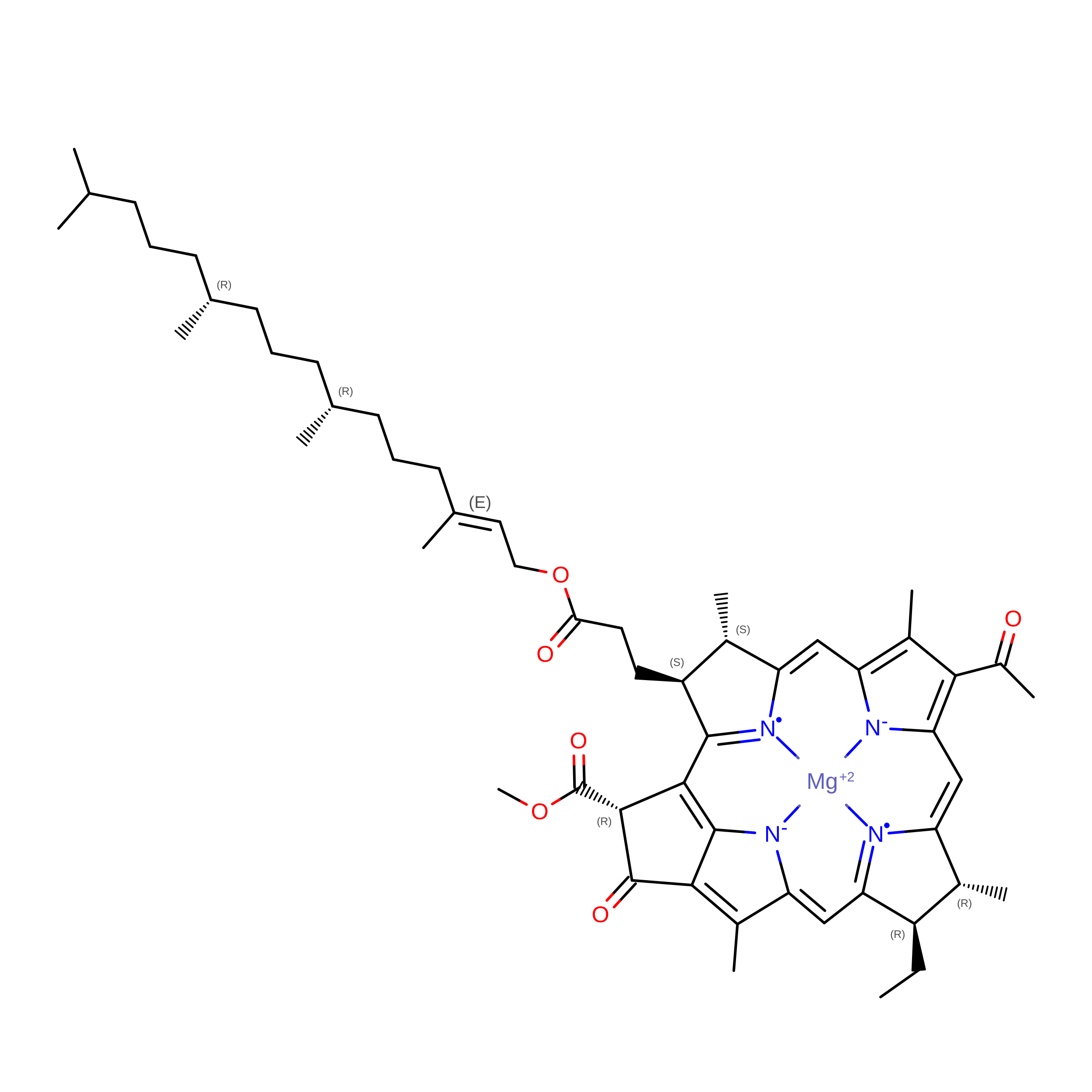
BCL

Query on BCL


Download:Ideal Coordinates CCD File
D [auth L],
E [auth L],
F [auth L],
L [auth M]
BACTERIOCHLOROPHYLL A
C55 H74 Mg N4 O6
DSJXIQQMORJERS-AGGZHOMASA-M
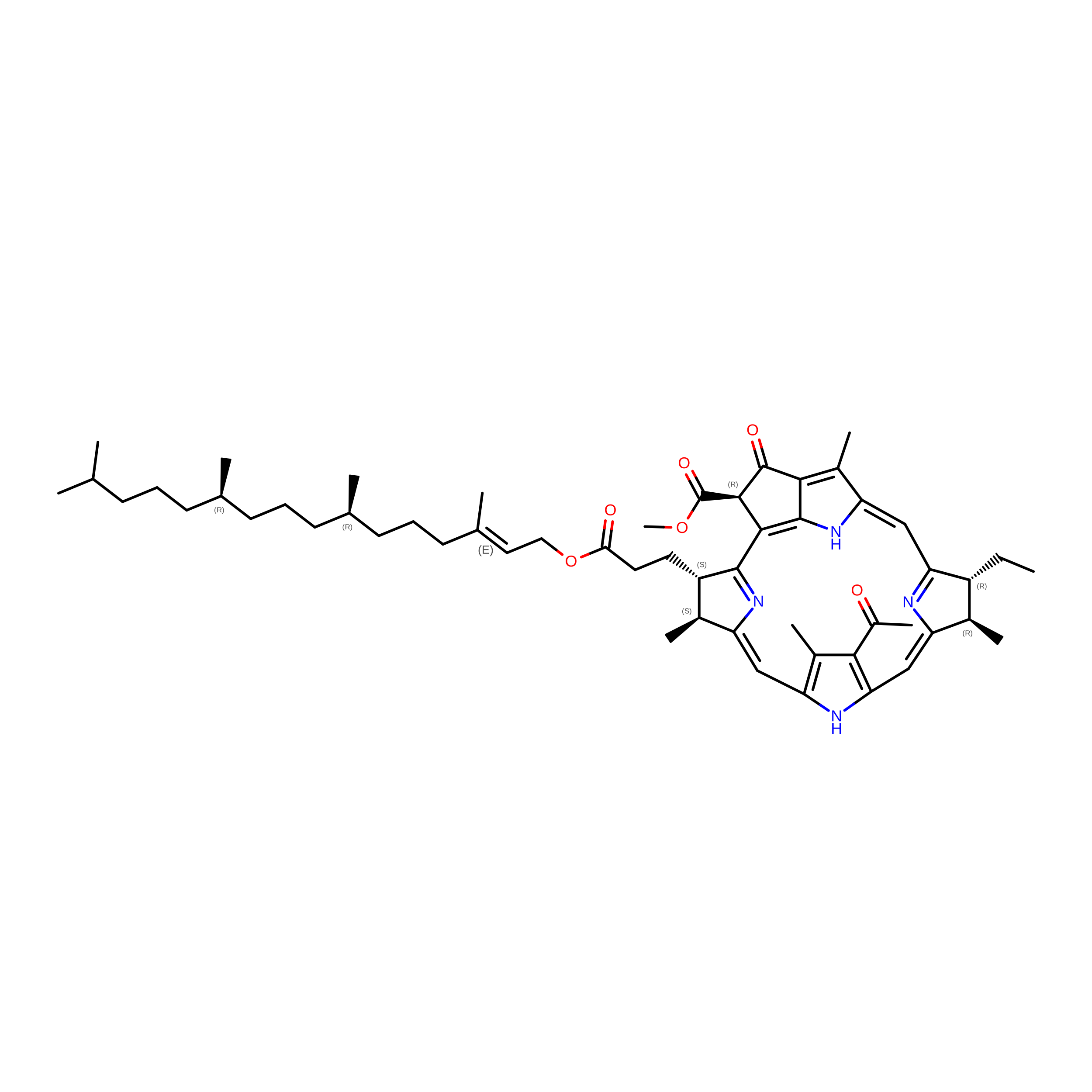
BPH

Query on BPH


Download:Ideal Coordinates CCD File
G [auth L],
M
BACTERIOPHEOPHYTIN A
C55 H76 N4 O6
KWOZSBGNAHVCKG-SZQBJALDSA-N
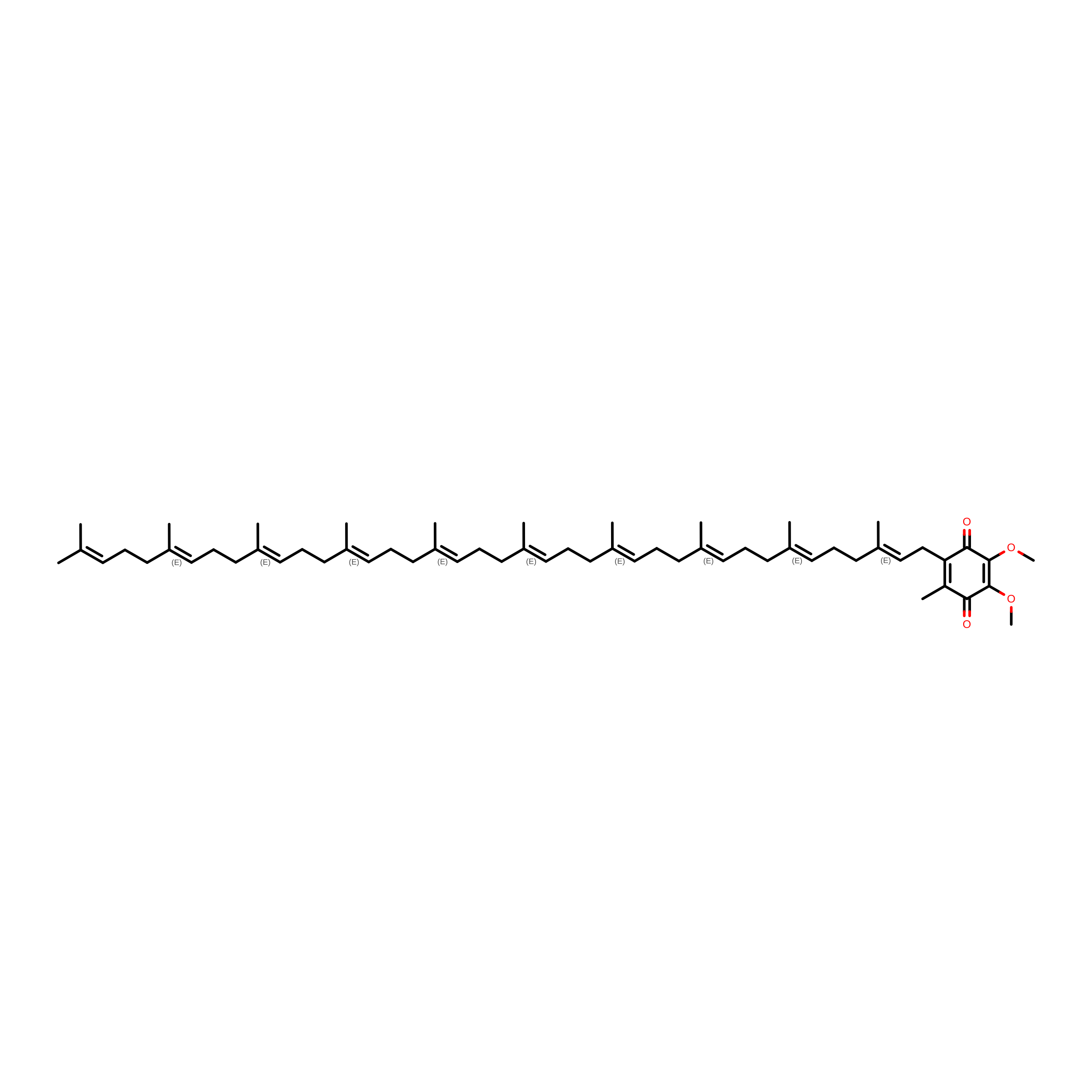
U10

Query on U10


Download:Ideal Coordinates CCD File
H [auth L],
N [auth M]
UBIQUINONE-10
C59 H90 O4
ACTIUHUUMQJHFO-UPTCCGCDSA-N
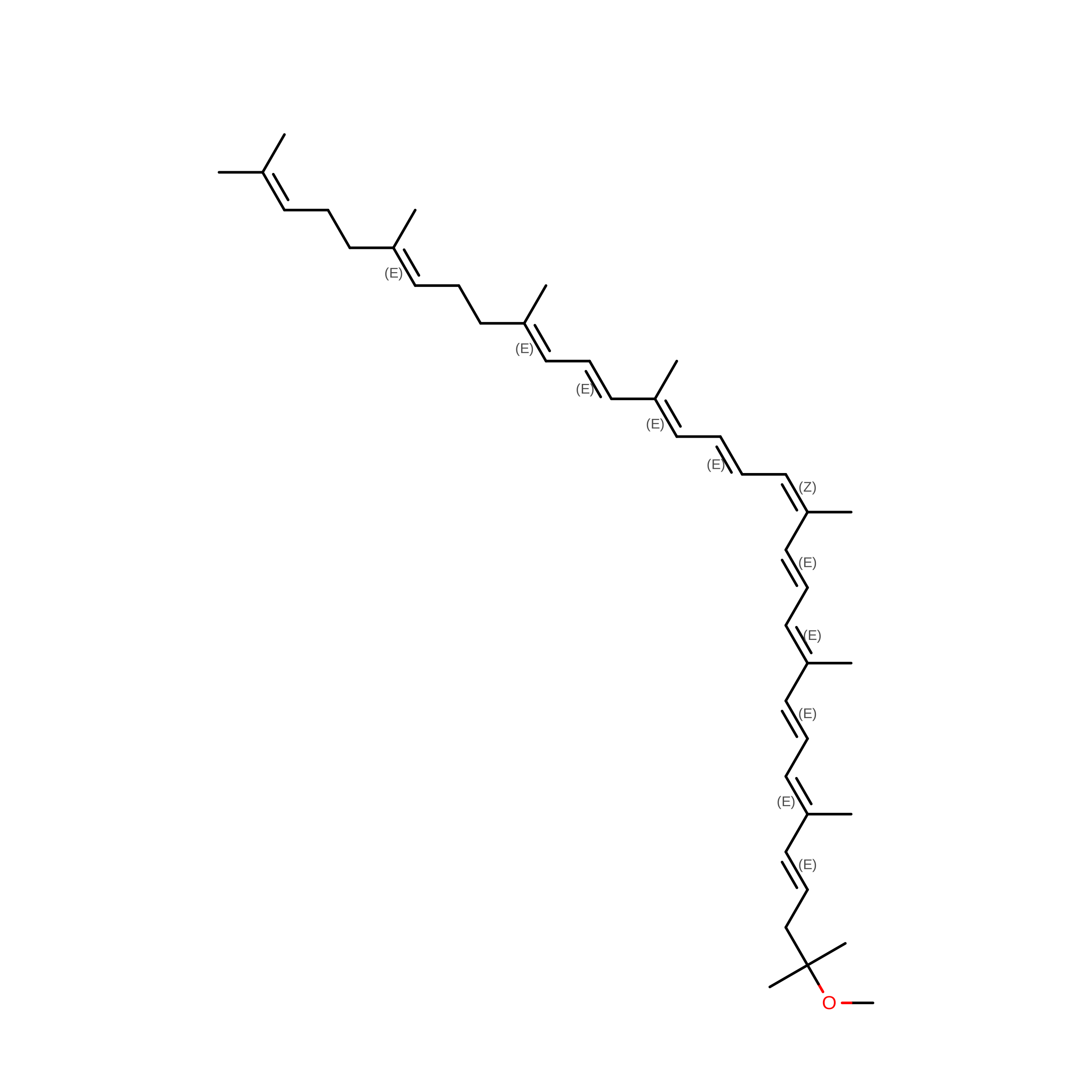
SPO

Query on SPO


Download:Ideal Coordinates CCD File
O [auth M]SPHEROIDENE
C41 H60 O
FJOCMTHZSURUFA-KXCOHNEYSA-N
LDA

Query on LDA


Download:Ideal Coordinates CCD File
I [auth L],
P [auth M],
Q [auth M],
R [auth H],
S [auth H]
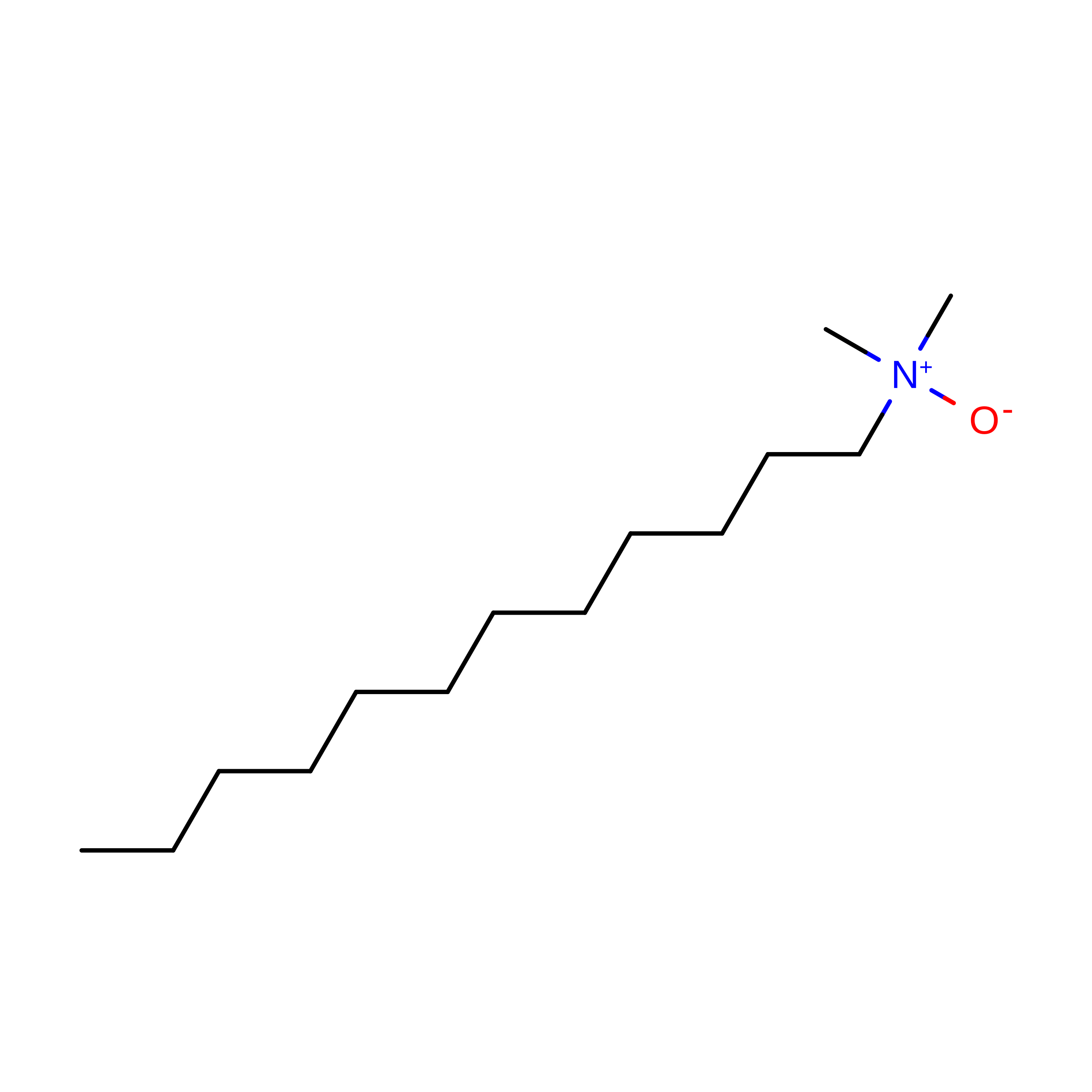
LAURYL DIMETHYLAMINE-N-OXIDE
C14 H31 N O
SYELZBGXAIXKHU-UHFFFAOYSA-N
PO4

Query on PO4


Download:Ideal Coordinates CCD File
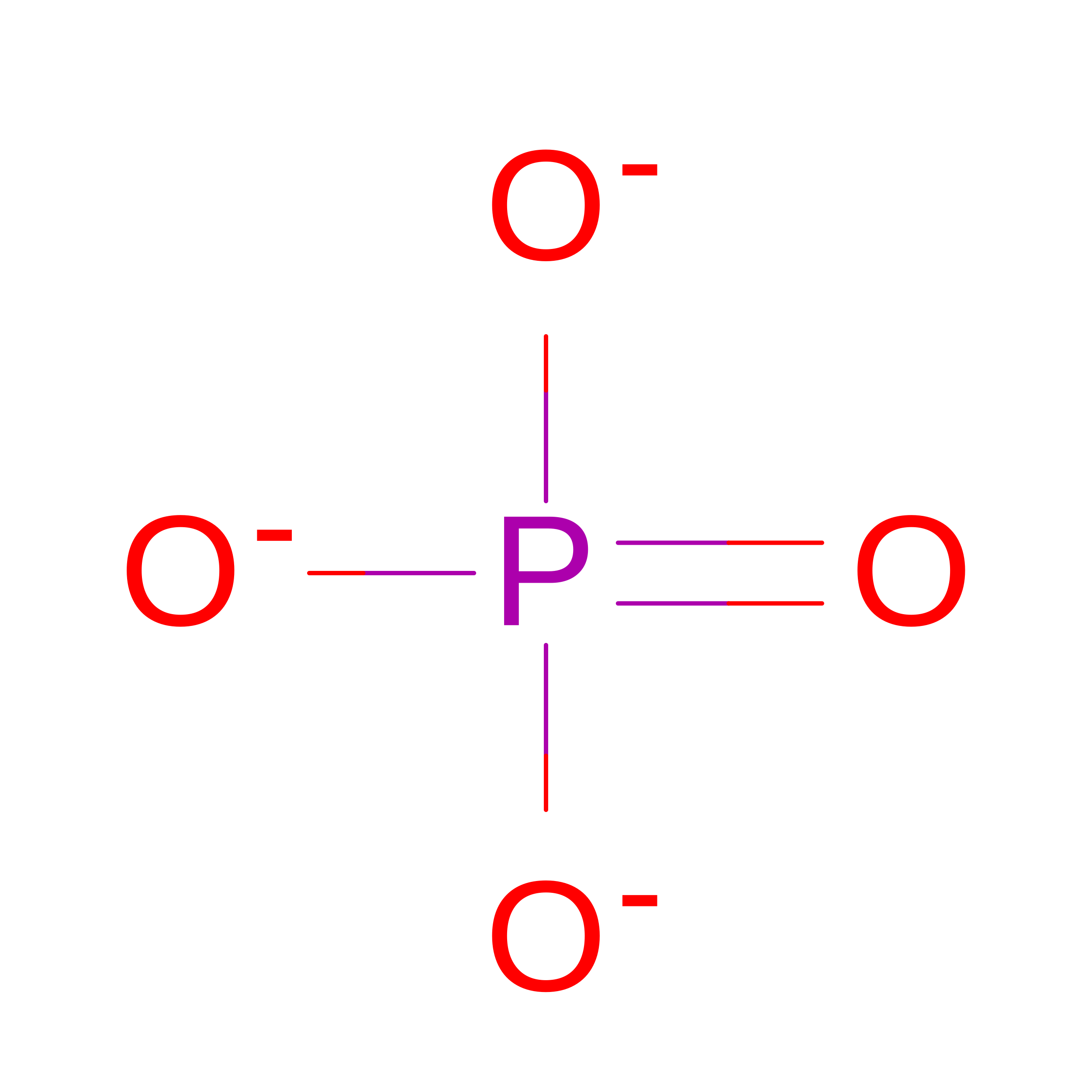
K [auth M]PHOSPHATE ION
O4 P
NBIIXXVUZAFLBC-UHFFFAOYSA-K
FE

Query on FE


Download:Ideal Coordinates CCD File
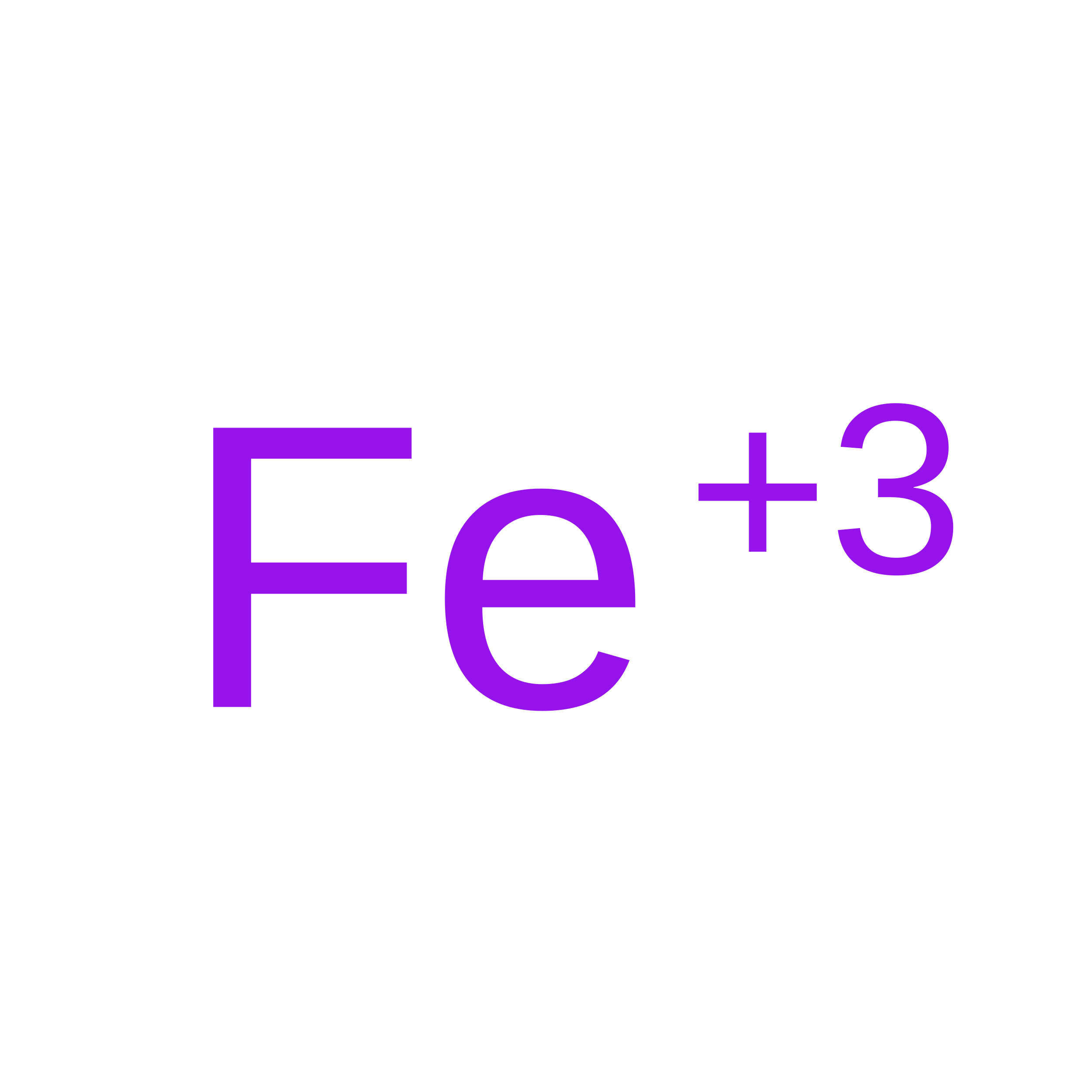
J [auth M]FE (III) ION
Fe
VTLYFUHAOXGGBS-UHFFFAOYSA-N

Experimental Data & Validation

Experimental Data

  • Method: X-RAY DIFFRACTION
  • Resolution: 2.80 Å
  • R-Value Free:  0.250 (Depositor) 
  • R-Value Work:  0.221 (Depositor) 
  • R-Value Observed: 0.221 (Depositor) 
Space Group: P 31 2 1
Unit Cell:
Length ( Å )Angle ( ˚ )
a = 141.535α = 90
b = 141.535β = 90
c = 187.913γ = 120
Software Package:
Software NamePurpose
CNSrefinement
DENZOdata reduction
SCALEPACKdata scaling
CNSphasing

Structure Validation

View Full Validation Report


Entry History 

Deposition Data

Revision History  (Full details and data files)

  • Version 1.0: 2001-04-18
    Type: Initial release
  • Version 1.1: 2008-04-27
    Changes: Version format compliance
  • Version 1.2: 2011-07-13
    Changes: Non-polymer description, Version format compliance
  • Version 1.3: 2021-11-03
    Changes: Data collection, Database references, Derived calculations
  • Version 1.4: 2024-02-07
    Changes: Data collection