1DVX | pdb_00001dvx

CRYSTAL STRUCTURE OF HUMAN TRANSTHYRETIN IN COMPLEX WITH DICLOFENAC


Experimental Data Snapshot

  • Method: X-RAY DIFFRACTION
  • Resolution: 2.00 Å
  • R-Value Free: 
    0.215 (Depositor) 
  • R-Value Work: 
    0.192 (Depositor) 

wwPDB Validation 3D Report Full Report

Validation slider image for 1DVX

This is version 1.3 of the entry. See complete history

Literature

Rational design of potent human transthyretin amyloid disease inhibitors.

Klabunde, T.Petrassi, H.M.Oza, V.B.Raman, P.Kelly, J.W.Sacchettini, J.C.

(2000) Nat Struct Biol 7: 312-321

  • DOI: https://doi.org/10.1038/74082
  • Primary Citation Related Structures: 
    1DVQ, 1DVS, 1DVT, 1DVU, 1DVX, 1DVY, 1DVZ

  • PubMed Abstract: 

    The human amyloid disorders, familial amyloid polyneuropathy, familial amyloid cardiomyopathy and senile systemic amyloidosis, are caused by insoluble transthyretin (TTR) fibrils, which deposit in the peripheral nerves and heart tissue. Several nonsteroidal anti-inflammatory drugs and structurally similar compounds have been found to strongly inhibit the formation of TTR amyloid fibrils in vitro. These include flufenamic acid, diclofenac, flurbiprofen, and resveratrol. Crystal structures of the protein-drug complexes have been determined to allow detailed analyses of the protein-drug interactions that stabilize the native tetrameric conformation of TTR and inhibit the formation of amyloidogenic TTR. Using a structure-based drug design approach ortho-trifluormethylphenyl anthranilic acid and N-(meta-trifluoromethylphenyl) phenoxazine 4, 6-dicarboxylic acid have been discovered to be very potent and specific TTR fibril formation inhibitors. This research provides a rationale for a chemotherapeutic approach for the treatment of TTR-associated amyloid diseases.


  • Organizational Affiliation
    • Department of Biochemistry and Biophysics, Texas A&M University, College Station, Texas 77843, USA.

Macromolecule Content 

  • Total Structure Weight: 27.14 kDa 
  • Atom Count: 1,903 
  • Modeled Residue Count: 229 
  • Deposited Residue Count: 248 
  • Unique protein chains: 1

Macromolecules

Find similar proteins by:|  3D Structure
Entity ID: 1
MoleculeChains  Sequence LengthOrganismDetailsImage
TRANSTHYRETIN
A, B
124Homo sapiensMutation(s): 0 
UniProt & NIH Common Fund Data Resources
Find proteins for P02766 (Homo sapiens)
Explore P02766 
Go to UniProtKB:  P02766
PHAROS:  P02766
GTEx:  ENSG00000118271 
Entity Groups
Sequence Clusters30% Identity50% Identity70% Identity90% Identity95% Identity100% Identity
UniProt GroupP02766
Sequence Annotations
Expand
Reference Sequence

Small Molecules

Ligands 1 Unique
IDChains Name / Formula / InChI Key2D Diagram3D Interactions
DIF

Query on DIF


Download:Ideal Coordinates CCD File
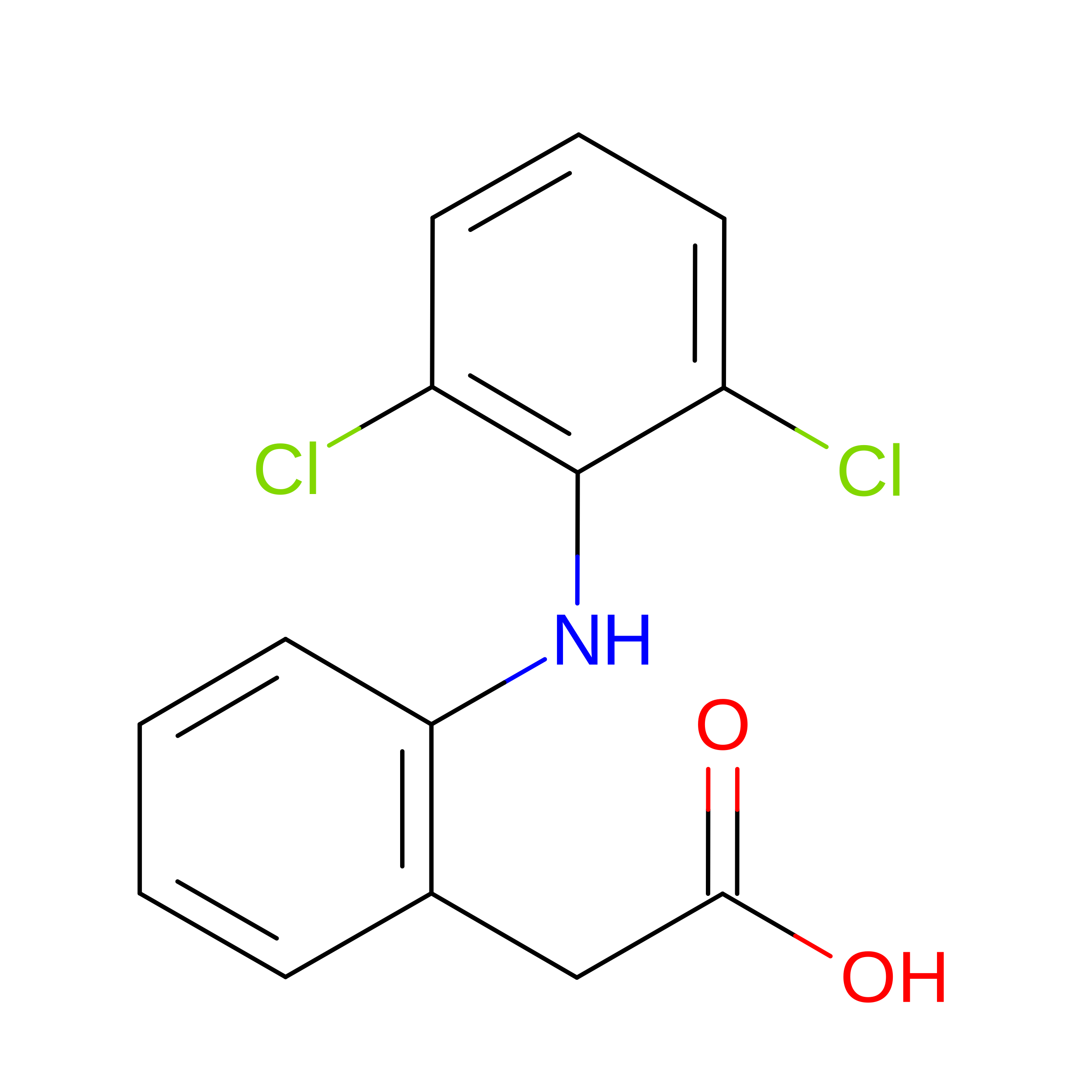
C [auth B]2-[2,6-DICHLOROPHENYL)AMINO]BENZENEACETIC ACID
C14 H11 Cl2 N O2
DCOPUUMXTXDBNB-UHFFFAOYSA-N

Experimental Data & Validation

Experimental Data

  • Method: X-RAY DIFFRACTION
  • Resolution: 2.00 Å
  • R-Value Free:  0.215 (Depositor) 
  • R-Value Work:  0.192 (Depositor) 
Space Group: P 21 21 2
Unit Cell:
Length ( Å )Angle ( ˚ )
a = 43.14α = 90
b = 85.74β = 90
c = 64.54γ = 90
Software Package:
Software NamePurpose
CNSrefinement
DENZOdata reduction
SCALEPACKdata scaling
CNSphasing

Structure Validation

View Full Validation Report


Entry History 

Deposition Data

Revision History  (Full details and data files)

  • Version 1.0: 2001-01-23
    Type: Initial release
  • Version 1.1: 2008-04-27
    Changes: Version format compliance
  • Version 1.2: 2011-07-13
    Changes: Derived calculations, Version format compliance
  • Version 1.3: 2024-12-25
    Changes: Data collection, Database references, Derived calculations, Structure summary