1CPU | pdb_00001cpu

SUBSITE MAPPING OF THE ACTIVE SITE OF HUMAN PANCREATIC ALPHA-AMYLASE USING SUBSTRATES, THE PHARMACOLOGICAL INHIBITOR ACARBOSE, AND AN ACTIVE SITE VARIANT


Experimental Data Snapshot

  • Method: X-RAY DIFFRACTION
  • Resolution: 2.00 Å
  • R-Value Work: 
    0.170 (Depositor) 
  • R-Value Observed: 
    0.170 (Depositor) 

wwPDB Validation 3D Report Full Report

Validation slider image for 1CPU

This is version 3.2 of the entry. See complete history

Literature

Subsite mapping of the human pancreatic alpha-amylase active site through structural, kinetic, and mutagenesis techniques.

Brayer, G.D.Sidhu, G.Maurus, R.Rydberg, E.H.Braun, C.Wang, Y.Nguyen, N.T.Overall, C.M.Withers, S.G.

(2000) Biochemistry 39: 4778-4791

  • DOI: https://doi.org/10.1021/bi9921182
  • Primary Citation Related Structures: 
    1CPU, 2CPU, 3CPU

  • PubMed Abstract: 

    We report a multifaceted study of the active site region of human pancreatic alpha-amylase. Through a series of novel kinetic analyses using malto-oligosaccharides and malto-oligosaccharyl fluorides, an overall cleavage action pattern for this enzyme has been developed. The preferred binding/cleavage mode occurs when a maltose residue serves as the leaving group (aglycone sites +1 and +2) and there are three sugars in the glycon (-1, -2, -3) sites. Overall it appears that five binding subsites span the active site, although an additional glycon subsite appears to be a significant factor in the binding of longer substrates. Kinetic parameters for the cleavage of substrates modified at the 2 and 4' ' positions also highlight the importance of these hydroxyl groups for catalysis and identify the rate-determining step. Further kinetic and structural studies pinpoint Asp197 as being the likely nucleophile in catalysis, with substitution of this residue leading to an approximately 10(6)-fold drop in catalytic activity. Structural studies show that the original pseudo-tetrasaccharide structure of acarbose is modified upon binding, presumably through a series of hydrolysis and transglycosylation reactions. The end result is a pseudo-pentasaccharide moiety that spans the active site region with its N-linked "glycosidic" bond positioned at the normal site of cleavage. Interestingly, the side chains of Glu233 and Asp300, along with a water molecule, are aligned about the inhibitor N-linked glycosidic bond in a manner suggesting that these might act individually or collectively in the role of acid/base catalyst in the reaction mechanism. Indeed, kinetic analyses show that substitution of the side chains of either Glu233 or Asp300 leads to as much as a approximately 10(3)-fold decrease in catalytic activity. Structural analyses of the Asp300Asn variant of human pancreatic alpha-amylase and its complex with acarbose clearly demonstrate the importance of Asp300 to the mode of inhibitor binding.


  • Organizational Affiliation
    • Department of Biochemistry, University of British Columbia, Vancouver V6T 1Z3, Canada. brayer@laue.biochem.ubc.ca

Macromolecule Content 

  • Total Structure Weight: 57.07 kDa 
  • Atom Count: 4,277 
  • Modeled Residue Count: 496 
  • Deposited Residue Count: 496 
  • Unique protein chains: 1

Macromolecules

Find similar proteins by:|  3D Structure
Entity ID: 1
MoleculeChains  Sequence LengthOrganismDetailsImage
PROTEIN (ALPHA-AMYLASE)496Homo sapiensMutation(s): 0 
EC: 3.2.1.1
UniProt & NIH Common Fund Data Resources
Find proteins for P04746 (Homo sapiens)
Explore P04746 
Go to UniProtKB:  P04746
PHAROS:  P04746
GTEx:  ENSG00000243480 
Entity Groups
Sequence Clusters30% Identity50% Identity70% Identity90% Identity95% Identity100% Identity
UniProt GroupP04746
Glycosylation
Glycosylation Sites: 1Go to GlyGen: P04746-1
Sequence Annotations
Expand
Reference Sequence

Oligosaccharides

Help  
Entity ID: 2
MoleculeChains Length2D Diagram GlycosylationD Interactions
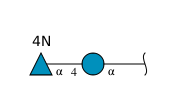
4-amino-4,6-dideoxy-alpha-D-glucopyranose-(1-4)-alpha-D-glucopyranose
B
2N/A
Glycosylation Resources
GlyTouCan: G90989WB
GlyCosmos: G90989WB
Entity ID: 3
MoleculeChains Length2D Diagram GlycosylationD Interactions
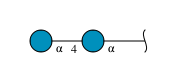
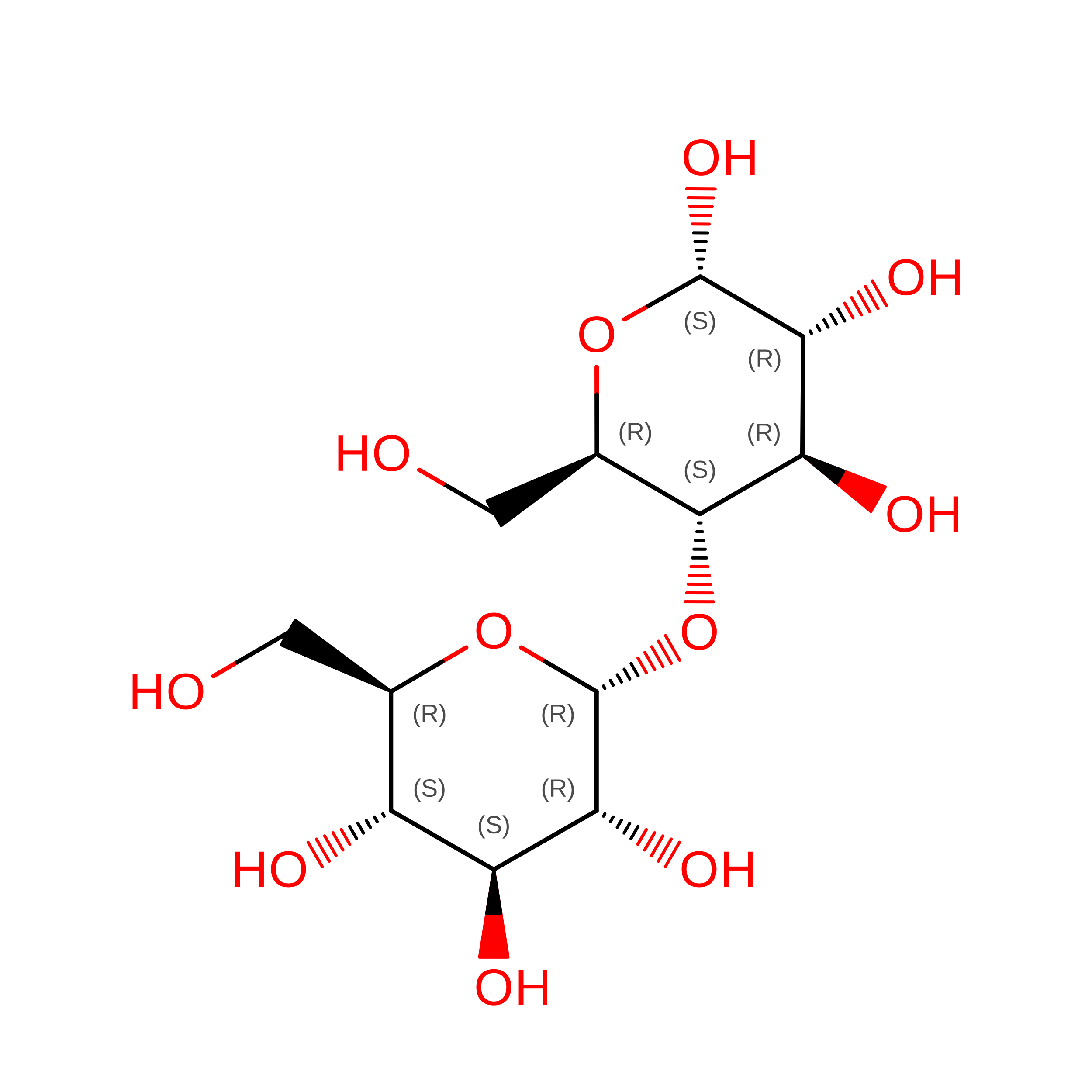
alpha-D-glucopyranose-(1-4)-alpha-D-glucopyranose
C
2N/A
Glycosylation Resources
GlyTouCan: G07411ON
GlyCosmos: G07411ON

Small Molecules

Ligands 4 Unique
IDChains Name / Formula / InChI Key2D Diagram3D Interactions
NAG

Query on NAG


Download:Ideal Coordinates CCD File
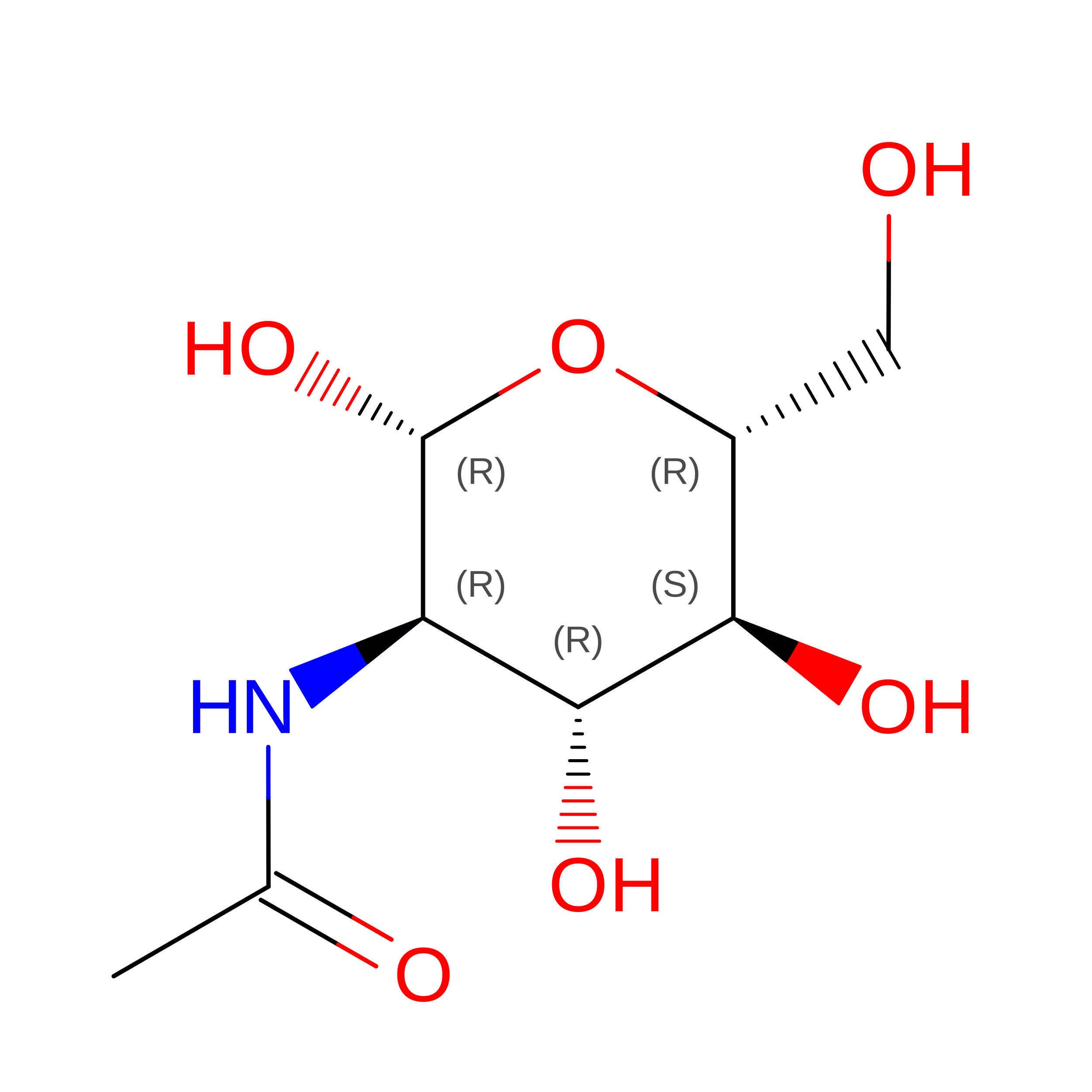
D [auth A]2-acetamido-2-deoxy-beta-D-glucopyranose
C8 H15 N O6
OVRNDRQMDRJTHS-FMDGEEDCSA-N
HMC

Query on HMC


Download:Ideal Coordinates CCD File
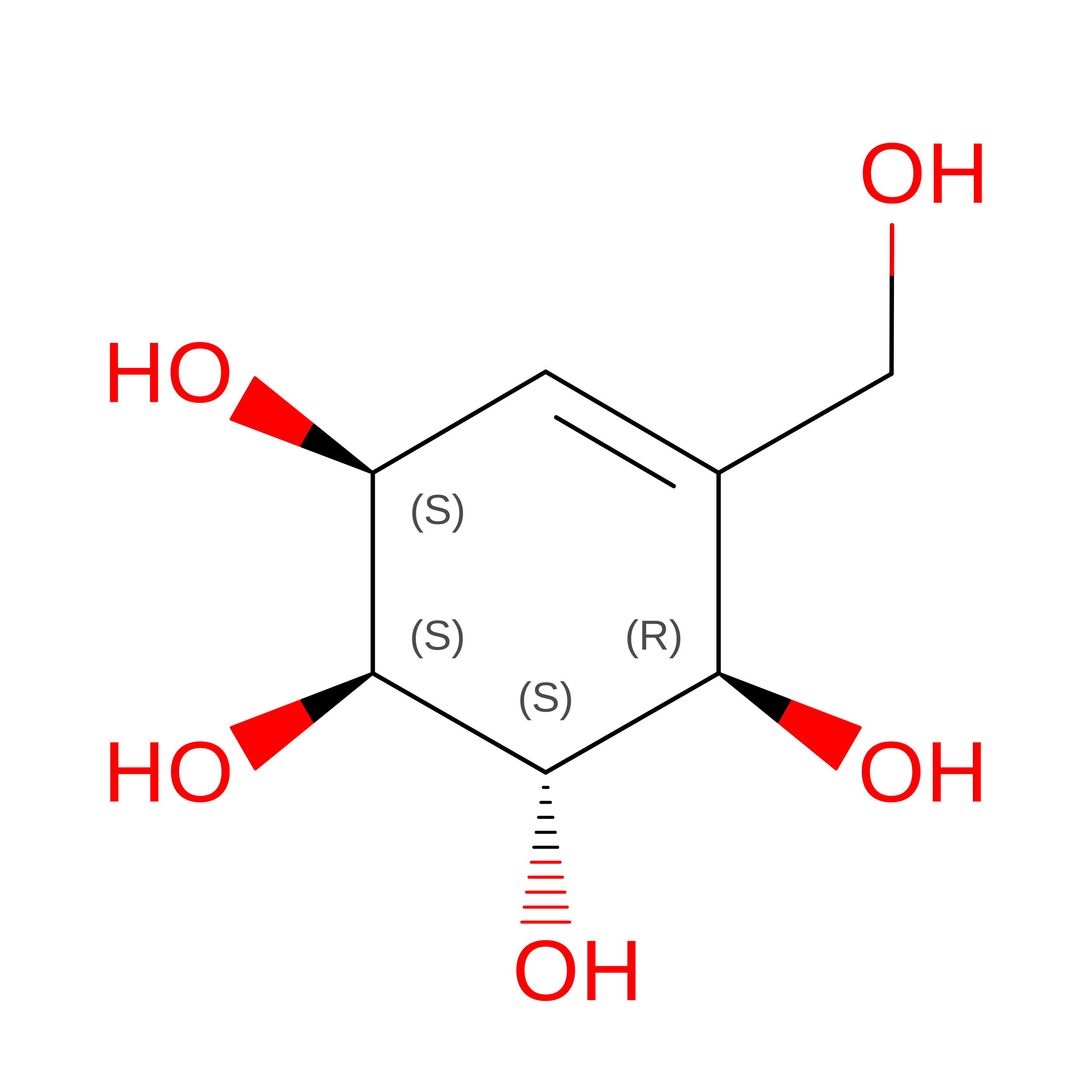
G [auth A]5-HYDROXYMETHYL-CHONDURITOL
C7 H12 O5
PJPGMULJEYSZBS-VZFHVOOUSA-N
CA

Query on CA


Download:Ideal Coordinates CCD File
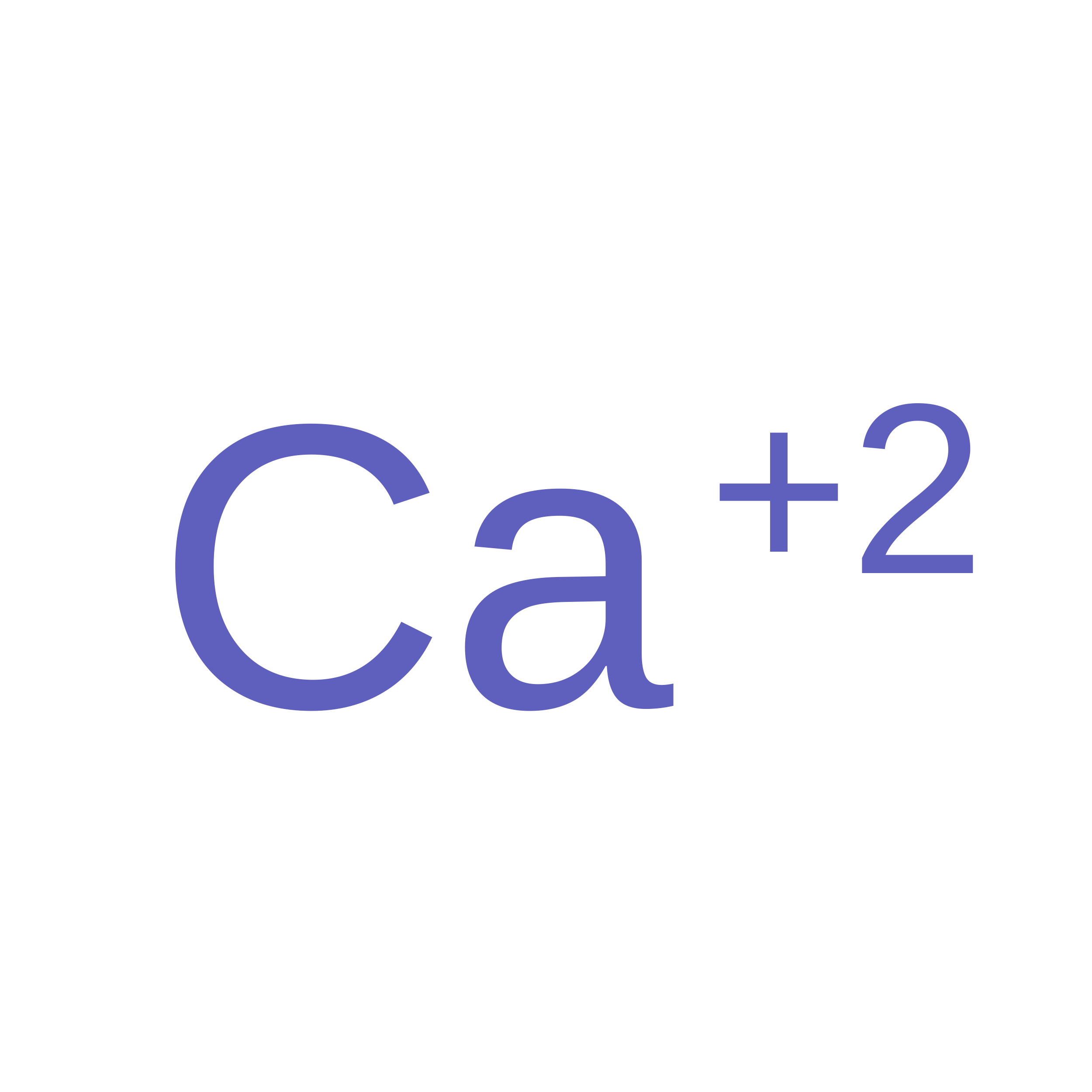
E [auth A]CALCIUM ION
Ca
BHPQYMZQTOCNFJ-UHFFFAOYSA-N
CL

Query on CL


Download:Ideal Coordinates CCD File
F [auth A]CHLORIDE ION
Cl
VEXZGXHMUGYJMC-UHFFFAOYSA-M
Modified Residues  1 Unique
IDChains TypeFormula2D DiagramParent
PCA
Query on PCA
A
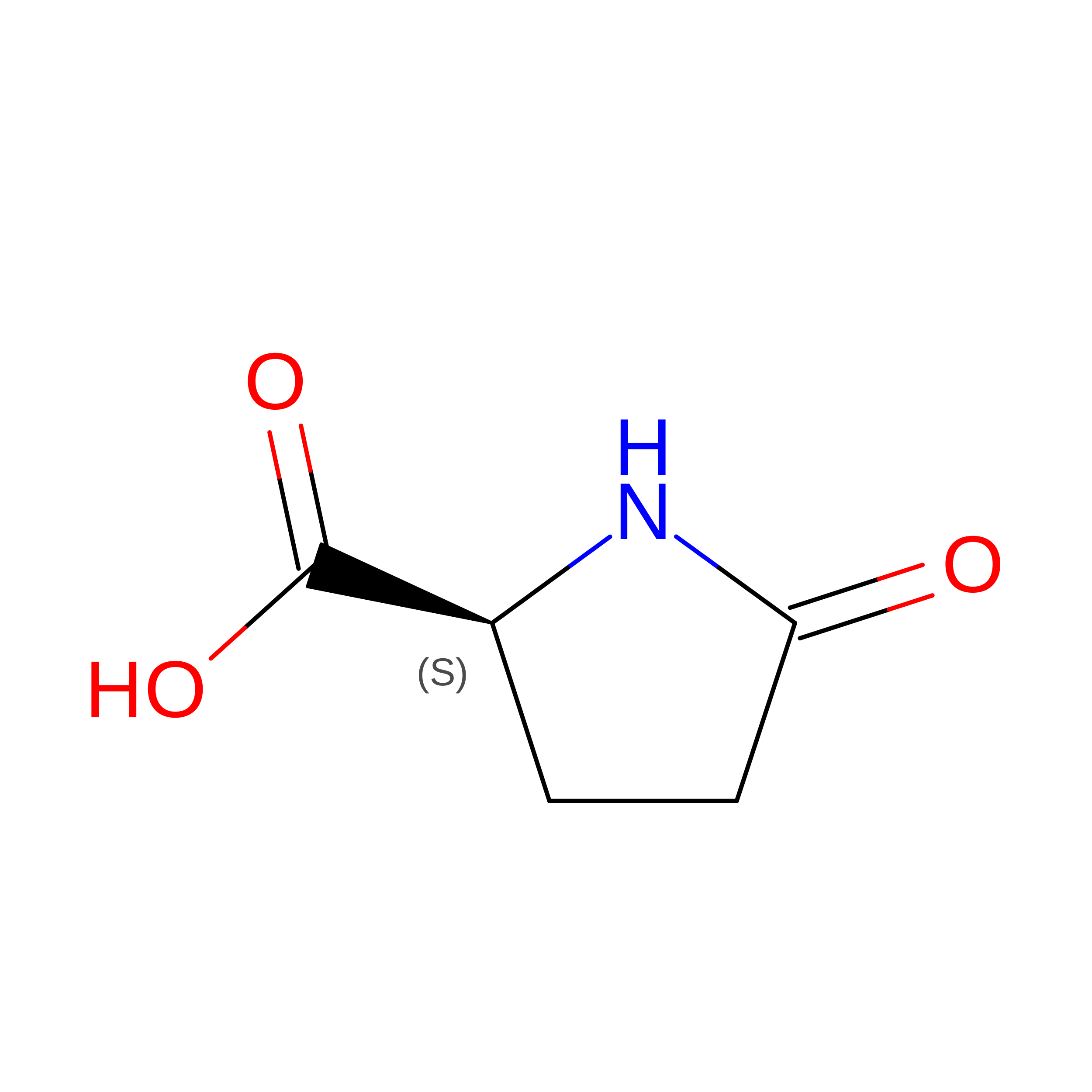
L-PEPTIDE LINKINGC5 H7 N O3GLN

Biologically Interesting Molecules (External Reference) 

1 Unique
Entity ID: 3
IDChains NameType/Class2D Diagram3D Interactions
PRD_900001
Query on PRD_900001
C
alpha-maltoseOligosaccharide / Nutrient

Experimental Data & Validation

Experimental Data

  • Method: X-RAY DIFFRACTION
  • Resolution: 2.00 Å
  • R-Value Work:  0.170 (Depositor) 
  • R-Value Observed: 0.170 (Depositor) 
Space Group: P 21 21 21
Unit Cell:
Length ( Å )Angle ( ˚ )
a = 52.91α = 90
b = 68.9β = 90
c = 131.77γ = 90
Software Package:
Software NamePurpose
X-PLORrefinement

Structure Validation

View Full Validation Report


Entry History 

Deposition Data

Revision History  (Full details and data files)

  • Version 1.0: 1999-06-14
    Type: Initial release
  • Version 1.1: 2008-04-26
    Changes: Version format compliance
  • Version 1.2: 2011-07-13
    Changes: Non-polymer description, Version format compliance
  • Version 2.0: 2019-12-25
    Changes: Data collection, Database references, Derived calculations, Polymer sequence
  • Version 3.0: 2020-07-29
    Type: Remediation
    Reason: Carbohydrate remediation
    Changes: Atomic model, Data collection, Derived calculations, Structure summary
  • Version 3.1: 2023-12-27
    Changes: Data collection, Database references, Derived calculations, Structure summary
  • Version 3.2: 2024-10-30
    Changes: Structure summary