1ACO | pdb_00001aco

CRYSTAL STRUCTURE OF ACONITASE WITH TRANSACONITATE BOUND


Experimental Data Snapshot

  • Method: X-RAY DIFFRACTION
  • Resolution: 2.05 Å
  • R-Value Work: 
    0.168 (Depositor) 
  • R-Value Observed: 
    0.168 (Depositor) 

wwPDB Validation 3D Report Full Report

Validation slider image for 1ACO

This is version 2.1 of the entry. See complete history

Literature

Crystal structures of aconitase with trans-aconitate and nitrocitrate bound.

Lauble, H.Kennedy, M.C.Beinert, H.Stout, C.D.

(1994) J Mol Biology 237: 437-451

  • DOI: https://doi.org/10.1006/jmbi.1994.1246
  • Primary Citation Related Structures: 
    1ACO, 1NIS, 1NIT

  • PubMed Abstract: 

    Crystal structures of mitochondrial aconitase with the inhibitors trans-aconitate and nitrocitrate bound to the [4Fe-4S] cluster have been solved and refined at 2.05 A resolution with R-factors of 0.168 and 0.172, respectively. Crystallization of aconitase with the substrates citrate and cis-aconitate has not been possible because the enzyme turns over and selects enzyme with isocitrate bound into the crystal lattice. Therefore we have analyzed crystal structures of the enzyme complexed with inhibitor analogs of these two substrates. The structure with nitrocitrate bound provides a model for citrate binding. The structure with trans-aconitate bound provides a model for cis-aconitate binding in two ways: Fe4 of the [4Fe-4S] cluster is five-coordinate and the carbon at the C beta position is trigonal. These results allow the model for the reaction mechanism to be extended to all three natural substrates of aconitase. The results support a model in which citrate and isocitrate form similar chelate structures related by 180 degrees rotation about the C alpha-C beta bond while the intermediate cis-aconitate binds in either of two ways (citrate mode or isocitrate mode). In both inhibitor complexes a H2O molecule is also bound to Fe4. In the structure with nitrocitrate bound, partial occupancy of sulfate in the active site is observed accompanied by hydroxyl binding to Fe4. Comparison of the structures with isocitrate, trans-aconitate, nitrocitrate and sulfate bound reveals preferred orientations for the three types of oxygens ligated to Fe4 (carboxyl, hydroxyl and H2O) supporting the proposed roles for His101, Asp165 and His167 in the catalytic mechanism.


  • Organizational Affiliation
    • Department of Biochemistry, Medical College of Wisconsin, Milwaukee 53226.

Macromolecule Content 

  • Total Structure Weight: 83.27 kDa 
  • Atom Count: 6,136 
  • Modeled Residue Count: 753 
  • Deposited Residue Count: 754 
  • Unique protein chains: 1

Macromolecules

Find similar proteins by:|  3D Structure
Entity ID: 1
MoleculeChains  Sequence LengthOrganismDetailsImage
ACONITASE754Bos taurusMutation(s): 0 
EC: 4.2.1.3
UniProt
Find proteins for P20004 (Bos taurus)
Explore P20004 
Go to UniProtKB:  P20004
Entity Groups
Sequence Clusters30% Identity50% Identity70% Identity90% Identity95% Identity100% Identity
UniProt GroupP20004
Sequence Annotations
Expand
Reference Sequence

Small Molecules

Ligands 2 Unique
IDChains Name / Formula / InChI Key2D Diagram3D Interactions
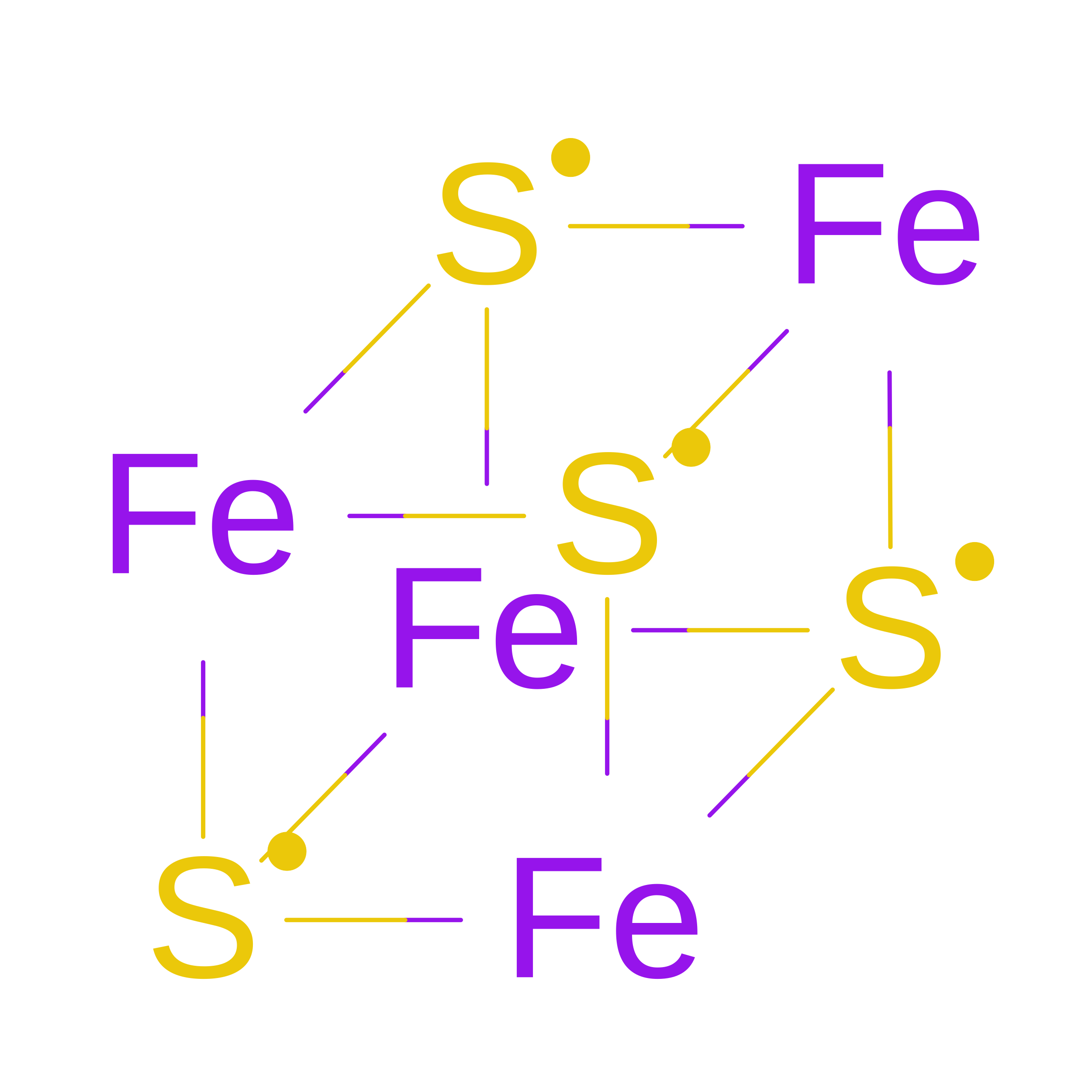
SF4

Query on SF4


Download:Ideal Coordinates CCD File
C [auth A]IRON/SULFUR CLUSTER
Fe4 S4
LJBDFODJNLIPKO-UHFFFAOYSA-N
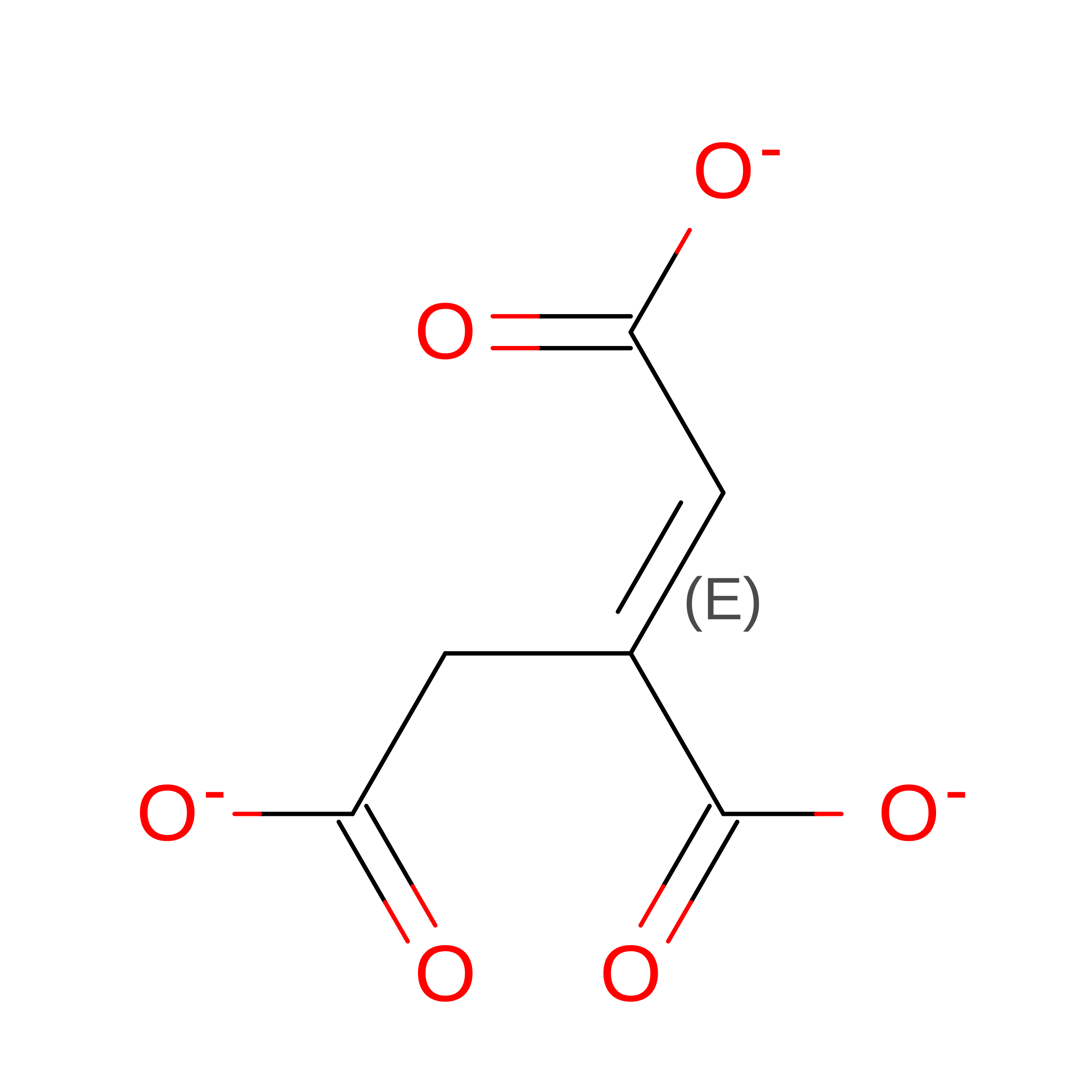
TRA

Query on TRA


Download:Ideal Coordinates CCD File
B [auth A]ACONITATE ION
C6 H3 O6
GTZCVFVGUGFEME-HNQUOIGGSA-K
Modified Residues  1 Unique
IDChains TypeFormula2D DiagramParent
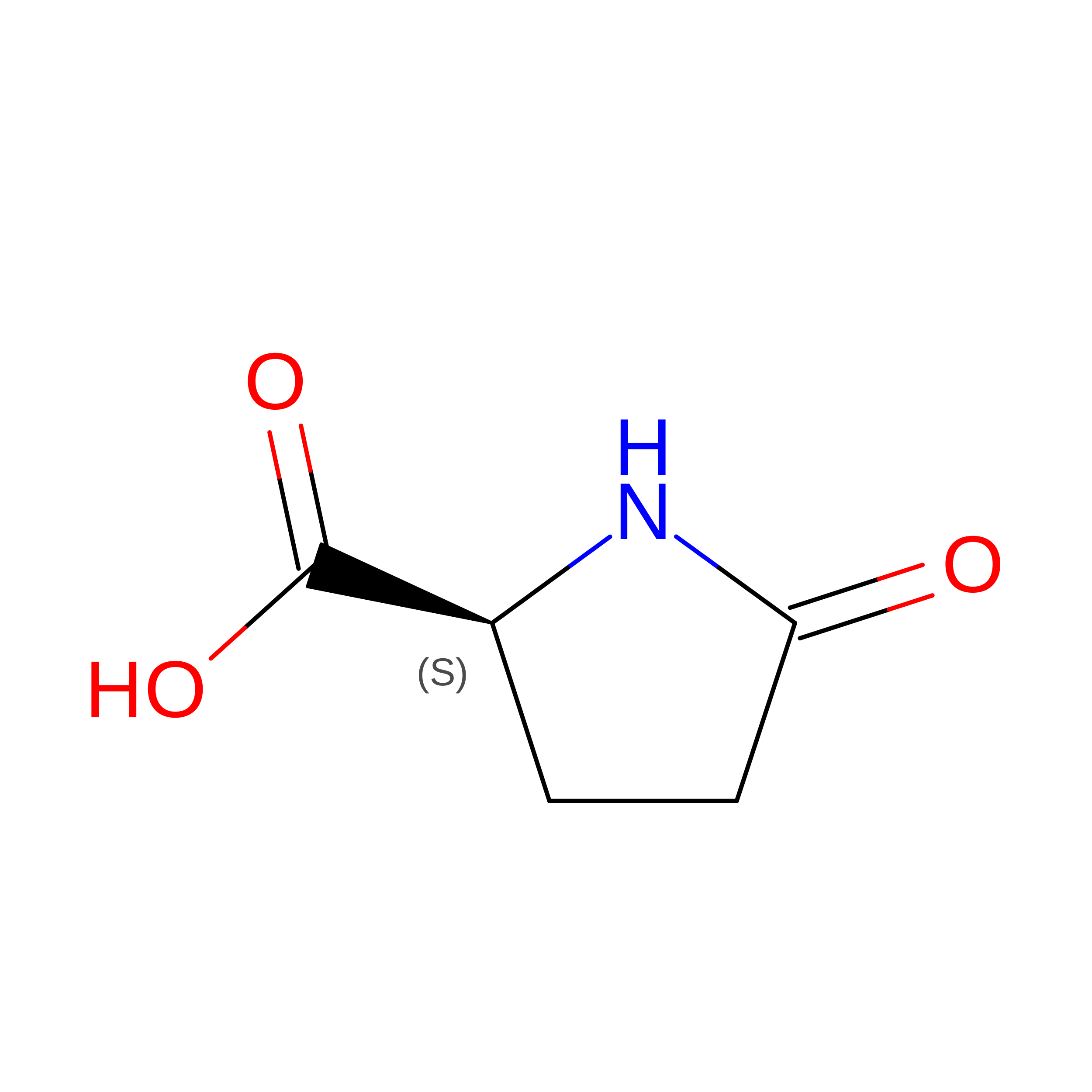
PCA
Query on PCA
A
L-PEPTIDE LINKINGC5 H7 N O3GLN

Experimental Data & Validation

Experimental Data

  • Method: X-RAY DIFFRACTION
  • Resolution: 2.05 Å
  • R-Value Work:  0.168 (Depositor) 
  • R-Value Observed: 0.168 (Depositor) 
Space Group: B 1 1 2
Unit Cell:
Length ( Å )Angle ( ˚ )
a = 185.5α = 90
b = 72β = 90
c = 73γ = 77.7
Software Package:
Software NamePurpose
X-PLORmodel building
X-PLORrefinement
X-PLORphasing

Structure Validation

View Full Validation Report


Entry History 

Deposition Data

  • Released Date: 1993-10-31 
  • Deposition Author(s): Stout, C.D.

Revision History  (Full details and data files)

  • Version 1.0: 1993-10-31
    Type: Initial release
  • Version 1.1: 2008-03-10
    Changes: Version format compliance
  • Version 1.2: 2011-07-13
    Changes: Version format compliance
  • Version 1.3: 2017-11-29
    Changes: Derived calculations, Other
  • Version 2.0: 2024-02-07
    Changes: Data collection, Database references, Derived calculations, Polymer sequence
  • Version 2.1: 2024-10-30
    Changes: Structure summary