Download Mendeley
The ZN domain acts as a dynamic switch coordinating multiple-step aminoacylation in bacterial leucyl-tRNA synthetase.
Hoffmann, G., Dulic, M., Gruic-Sovulj, I., Palencia, A.(2026) Nucleic Acids Res 54
- PubMed: 42573068 Search on PubMedSearch on PubMed Central
- DOI: https://doi.org/10.1093/nar/gkag786
- Primary Citation Related Structures:
9TJT, 9TJU, 9TJV, 9TJW - PubMed Abstract:
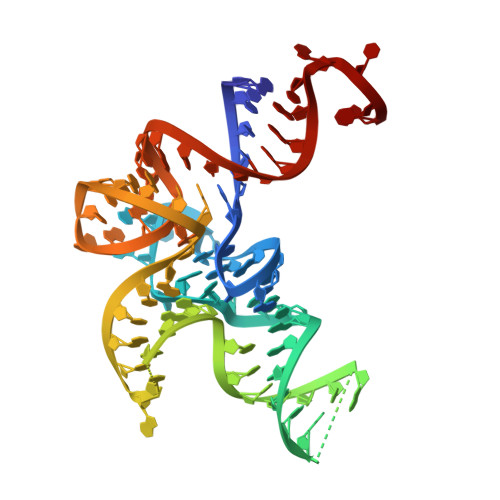
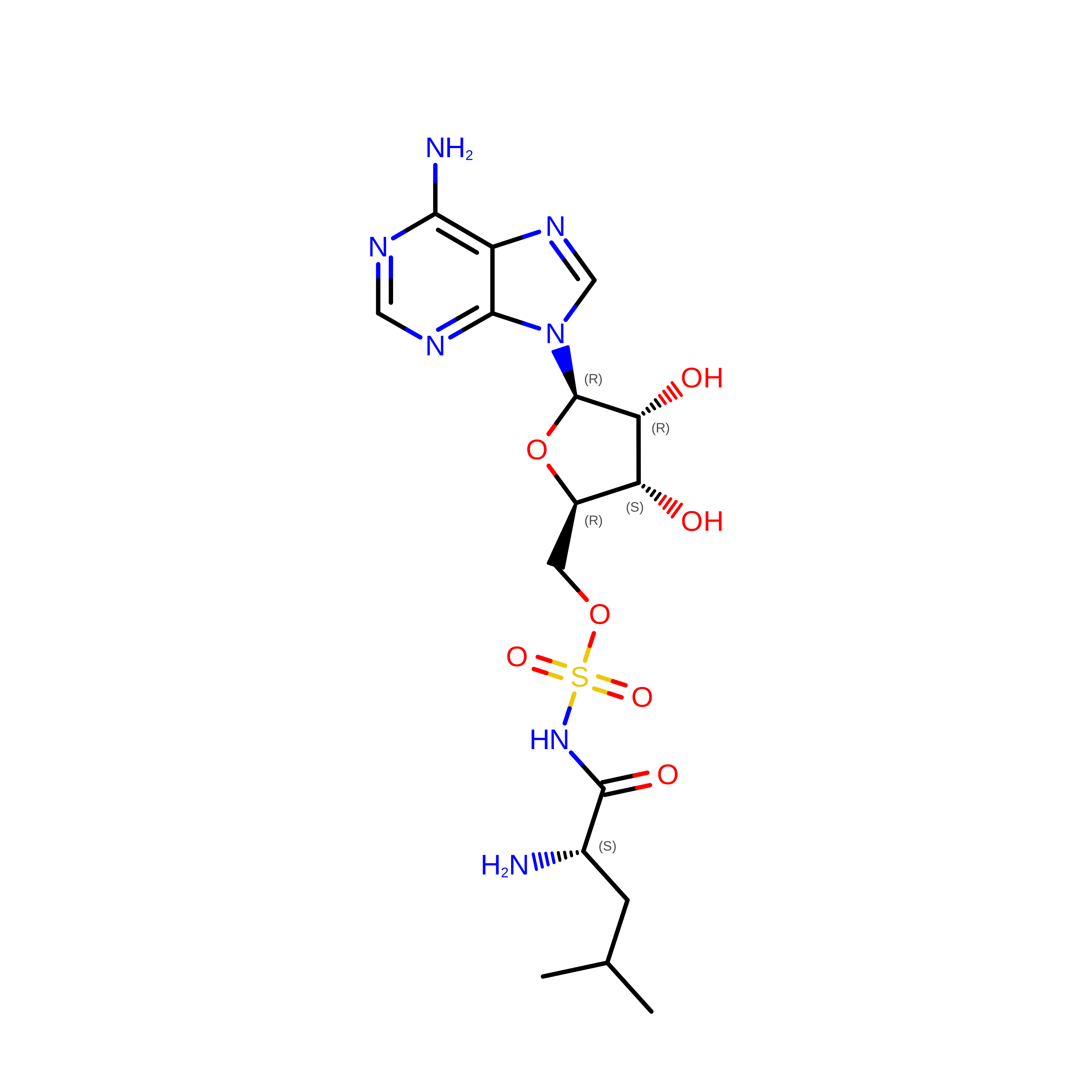
Aminoacyl-tRNA synthetases (AARSs) safeguard translational fidelity by coordinating amino acid activation and tRNA charging within distinct catalytic and editing domains. In leucyl-tRNA synthetase (LeuRS), the small, centrally located zinc-binding domain (ZN domain) sits at the crossroads of these functional centres, yet its role has remained enigmatic. Here, we present crystal structures of the Escherichia coli LeuRS-tRNALeu complex that capture the ZN domain in a previously unobserved conformation, revealing the pre-activation state. By integrating structural data with kinetic analysis, we propose a model for the aminoacylation reaction in which the ZN domain functions as a dynamic molecular switch that coordinates the different catalytic steps of the reaction cycle. We show that the ZN domain first acts as a wedge to prime the synthetic active site while locking the 3'-end tRNALeu in the editing domain. It subsequently reorients to stabilize the tRNA acceptor stem for aminoacyl transfer, before releasing it for proofreading. These findings resolve the mechanism of long-range domain communication in LeuRS and identify a discrete, druggable intermediate for the design of next-generation antimicrobials.
- Institute for Advanced Biosciences (IAB), Structural Biology of Novel Targets in Human Diseases, INSERM U1209, CNRS UMR5309, University of Grenoble Alpes, 38000 Grenoble, France.
Organizational Affiliation: