Download Mendeley
Coordination of a Dirhodium(II) Center to Methionine and Cysteine Side Chains: Evidence from X-Ray Structure of the Adduct Formed by Dirhodium Tetraacetate with a C-Phycocyanin.
Ferraro, G., Imbimbo, P., Troisi, R., Monti, D.M., Merlino, A.(2025) Int J Mol Sci 26
- PubMed: 41373647
- DOI: https://doi.org/10.3390/ijms262311492
- Primary Citation of Related Structures:
9T05 - PubMed Abstract:
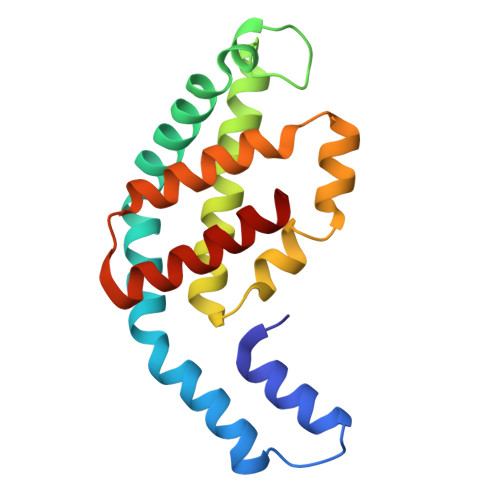
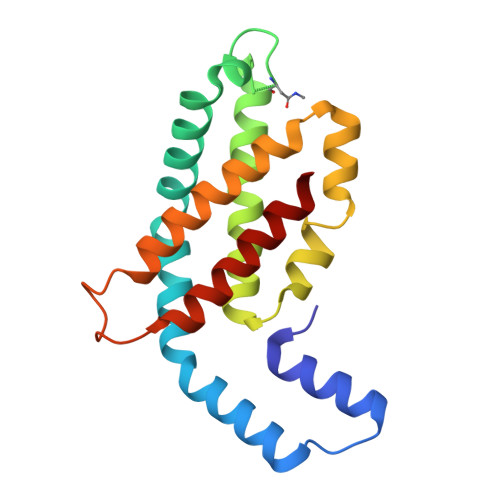
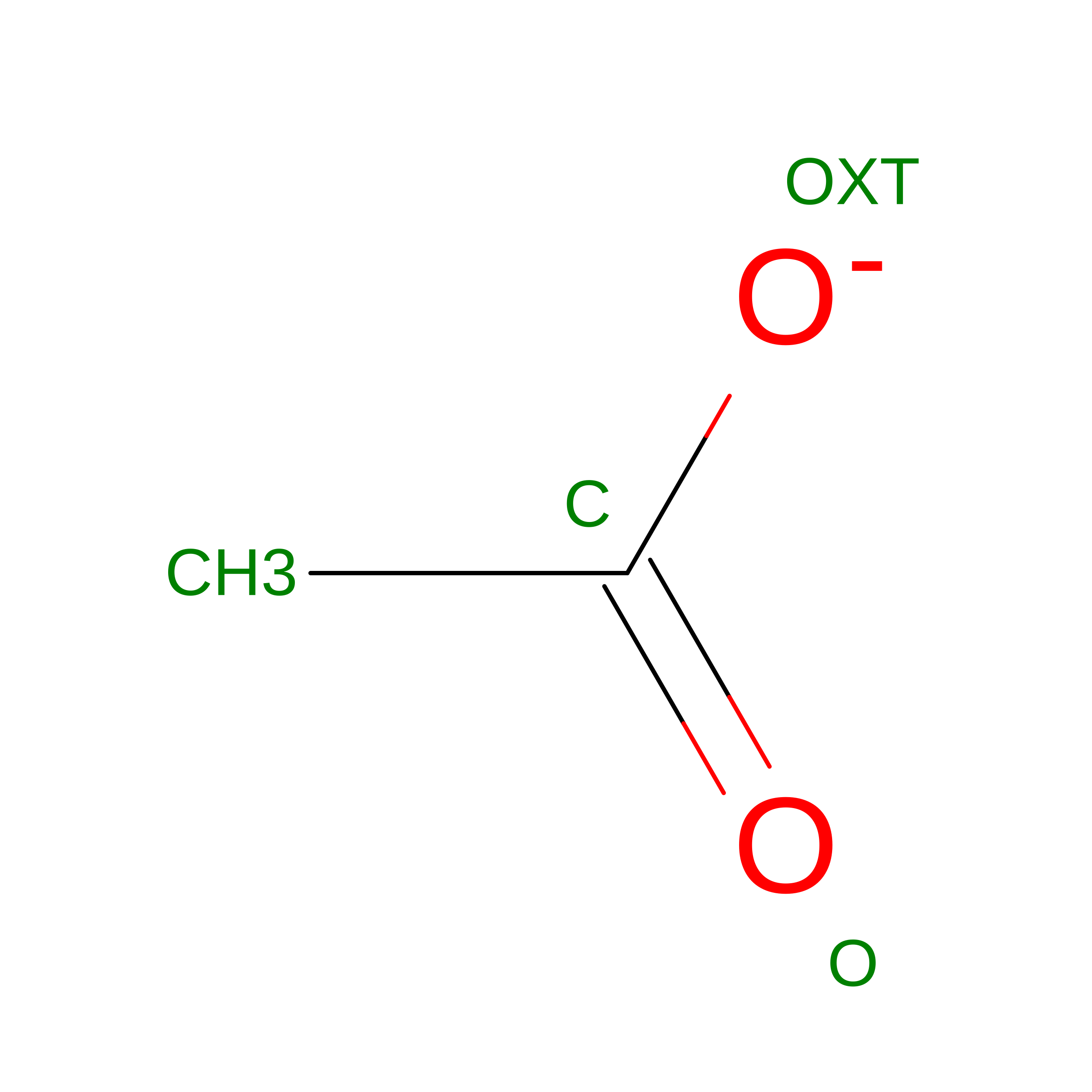
Upon reaction of dirhodium tetraacetate ([Rh 2 (μ-O 2 CCH 3 ) 4 ]) and some [Rh 2 (μ-O 2 CCH 3 ) 4 ] derivatives with proteins, dimeric Rh-Rh units (diRh) or monometallic moieties can bind the side chains of His, Cys, Met, Asp, Asn, Arg and Lys, and the C-terminal carboxylate. However, structural data on the interaction between the diRh center and Cys and Met side chains within the protein environment are still missing. Here, we report the X-ray structure of the adduct that [Rh 2 (μ-O 2 CCH 3 ) 4 ] forms with C-phycocyanin from Galdiera phlegrea at 2.17 Å resolution. Twelve diRh binding sites were found on the protein structure, two for each (αβ) unit. Dimetallic fragments were observed close to the side chains of Met30 of β-chains and of Cys73 of α-chains. To the best of our knowledge, the results provide the first unambiguous crystallographic observation of the diRh center binding to Met and Cys protein residues. DiRh binding does not alter overall protein structure and stability. This result will help in the design of new dirhodium-based artificial metalloenzymes.
- Department of Chemical Sciences, University of Naples Federico II, Via Cintia, 80126 Napoli, Italy.
Organizational Affiliation: