Download Mendeley
The molecular basis of the binding and specific activation of rhizobial NodD by flavonoids.
Ruan, Y., Dong, S., Jiang, S., Wang, Y., Wu, X., Zhuang, Y., Wu, W., East, A.K., Xu, P., Poole, P.S., Zhang, Y., Murray, J.D.(2026) Science 391: 184-189
- PubMed: 41505558
- DOI: https://doi.org/10.1126/science.aec3061
- Primary Citation of Related Structures:
9IIB, 9X6W - PubMed Abstract:
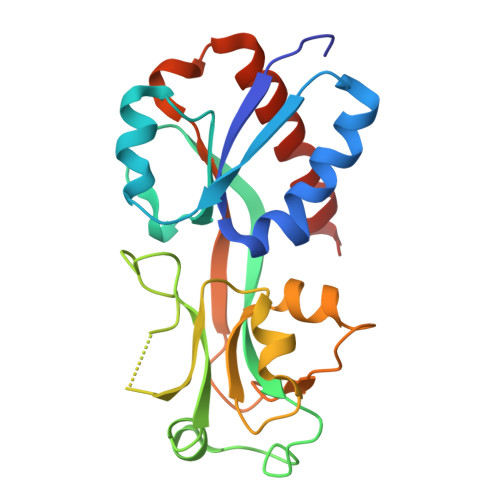
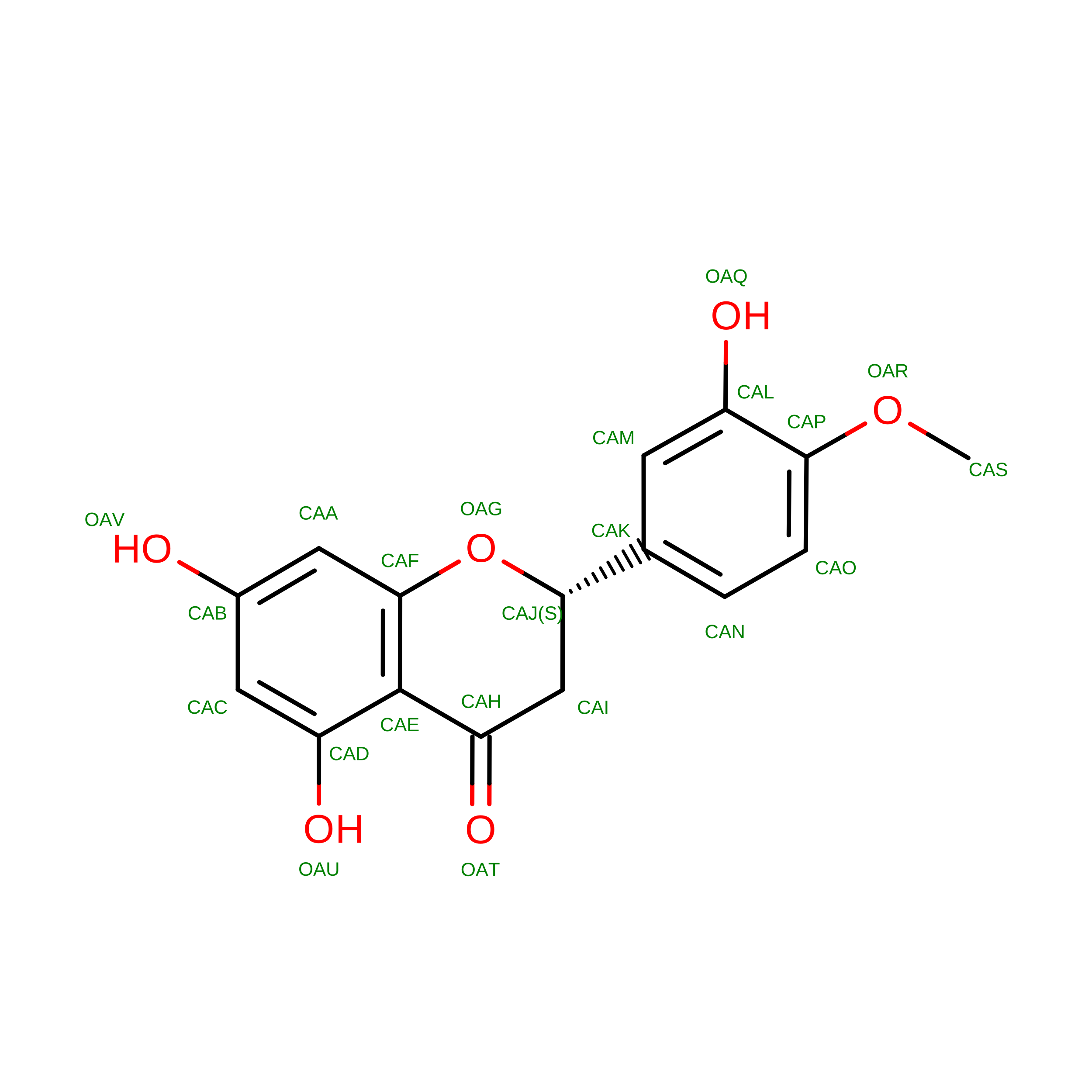
The specific partnership between legumes and rhizobia relies on a chemical dialogue. Plant flavonoids activate the bacterial transcription factor NodD, which triggers production of Nod factors that are recognized by the plant. Structural studies of the Pisum sativum (pea) symbiont Rhizobium leguminosarum NodD revealed two pockets that are essential for its activation by flavonoids. Comparative studies with NodD1 of Sinorhizobium medicae , the symbiont of Medicago truncatula , revealed that this specificity is determined by the shape of the pocket and by specific amino acids. A chimeric NodD containing the flavonoid recognition residues from S. medicae NodD1 in the R. leguminosarum NodD backbone was sufficient to complement nitrogen fixation in M. truncatula by an S. medicae nodD1 mutant, confirming the critical role of flavonoid recognition in host range.
- CAS-JIC Centre of Excellence for Plant and Microbial Science (CEPAMS), Centre for Excellence in Molecular Plant Sciences (CEMPS), Chinese Academy of Sciences, Shanghai, China.
Organizational Affiliation: