Download Mendeley
Discovery and biosynthesis of a novel diaminopropane-modified thymine in phage DNA.
Li, W., Chen, H., Ma, H., Pan, H., Jia, Y., He, P., Zhao, S.(2026) Nucleic Acids Res 54
- PubMed: 42578370 Search on PubMedSearch on PubMed Central
- DOI: https://doi.org/10.1093/nar/gkag763
- Primary Citation Related Structures:
25QC - PubMed Abstract:
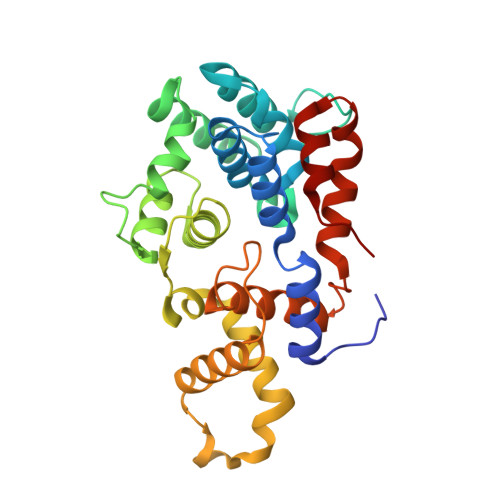
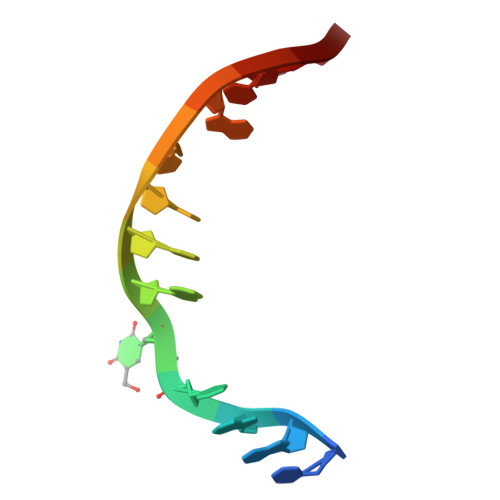
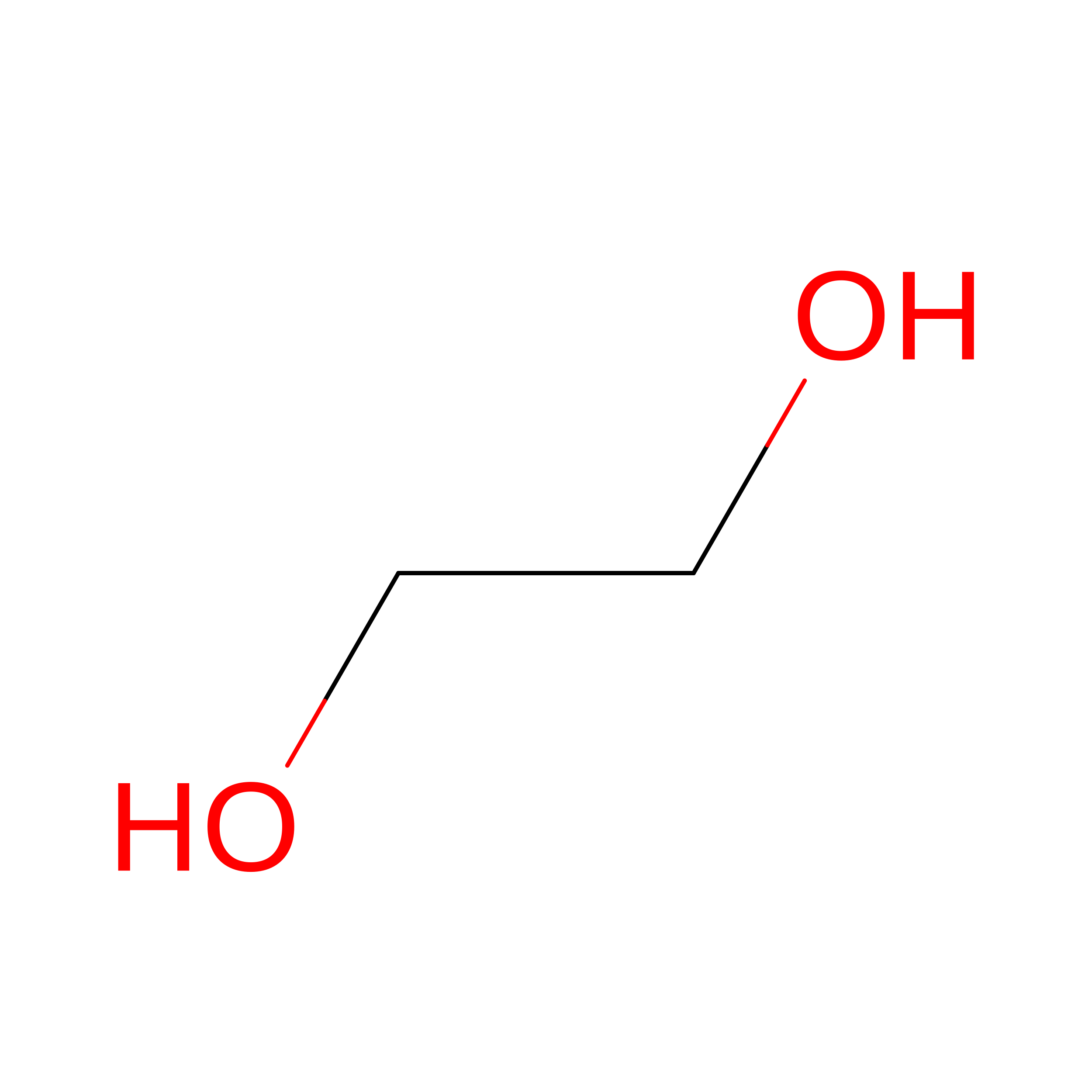
Bacteriophage genomes exhibit exceptional diversity in nucleotide modifications, which primarily function to counteract host defense systems. However, the diversity of phage DNA hypermodifications remains largely unexplored in post genome era. Here, we discovered a novel thymine hypermodification, α-1,3-diaminopropanylthymine (α-dapT), in the Acinetobacter baumannii phage SH-Ab 15599, and elucidated its biosynthetic pathway, featuring the phage-encoded key diamine DNA transferase (DADT, formerly αGPT-Pplase2). DADT utilizes the metabolite 1,3-diaminopropane, which is the major polyamine in the host to modify phage DNA. DADT exhibits broad in vitro substrate specificity but a strong in vivo preference for 1,3-diaminopropane. Structural and mutagenesis analyses revealed the molecular basis for substrate recognition and catalysis. The α-dapT modification occurs preferentially at TG dinucleotides and confers resistance to multiple host restriction enzymes. Furthermore, RNA-seq analysis showed that phage infection upregulates genes for 1,3-diaminopropane synthesis, and downregulates genes for 1,3-diaminoproprane consumption to supply the modification precursor. Given that 1,3-diaminopropane functions as a key regulator in mobility of A. baumannii, its metabolic reprograming may impair host biofilm formation.
- iHuman Institute, ShanghaiTech University, Shanghai 201210, China.
Organizational Affiliation: