Download Mendeley
Broadly reactive antibodies against influenza B virus hemagglutinin neutralize and protect through distinct structural mechanisms.
Bhavsar, D., Civljak, A., Bonnettaz, B., Arunkumar, G.A., Krammer, F., Bajic, G.(2026) J Virol : e0080226-e0080226
- PubMed: 42696304 Search on PubMed
- DOI: https://doi.org/10.1128/jvi.00802-26
- Primary Citation Related Structures:
12ID, 12IE, 12IF - PubMed Abstract:
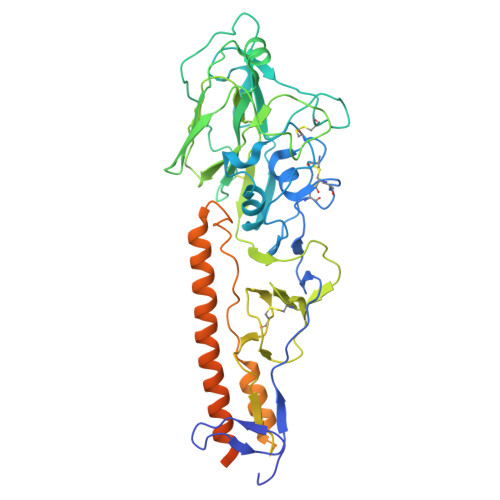
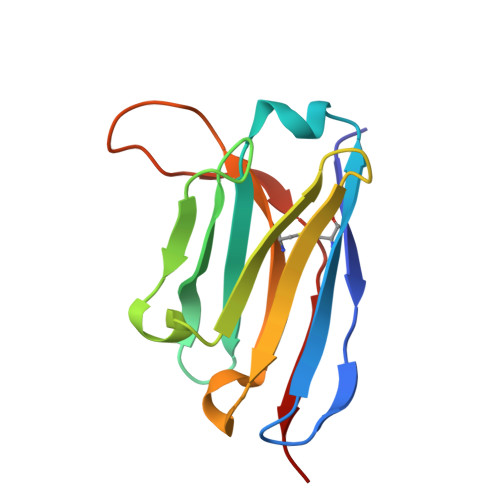
Influenza B viruses contribute substantially to seasonal disease burden; however, the structural basis by which antibodies recognize the major glycoprotein hemagglutinin (HA) and mediate antiviral activity remains incompletely defined. Influenza B virus used to circulate as two antigenically distinct lineages, B/Victoria/2/1987-like and B/Yamagata/16/1988-like, although the latter has not been detected in global surveillance in recent years. Antigenic drift in HA contributes to reduced vaccine effectiveness; however, the structural and functional basis by which antibodies recognize influenza B virus HA and mediate antiviral activity remains incompletely defined and thus thwarts our efforts in guiding next-generation vaccine design for broad protection. We characterize four murine monoclonal antibodies (mAb) that broadly bind and neutralize influenza B viruses spanning isolates across four decades of antigenic drift. Using cryo-electron microscopy coupled with in vitro and in vivo functional assays, we show that these antibodies target distinct regions of HA and confer antiviral activity through multiple mechanisms. One antibody engages the receptor-binding site and potently inhibits hemagglutination, whereas others interfere with viral egress and inhibit neuraminidase (NA) activity, suggesting steric occlusion of NA. A medial-junction antibody additionally induces antibody-dependent cellular cytotoxicity in vitro . Despite these mechanistic differences, all antibodies confer complete protection in mice when administered prophylactically or therapeutically. Together, these findings define distinct modes of antibody recognition of influenza B virus HA and link epitope specificity to antiviral function, providing a mechanistic understanding of correlates of immune protection and informing efforts to elicit broadly protective antibody responses against influenza B viruses.IMPORTANCEInfluenza B viruses cause substantial seasonal illness, particularly in children; however, antibody responses against influenza B virus remain less well understood than those against influenza A virus. Here, we identified four antibodies that broadly recognize influenza B virus hemagglutinin and protect through distinct mechanisms. We determined cryo-electron microscopy structures of three antibody-hemagglutinin complexes to define their epitopes and explain their molecular mechanisms of action. One antibody blocks viral attachment by engaging the receptor-binding site, whereas antibodies targeting the medial junction act through post-entry antiviral activity, neuraminidase inhibition, or immune effector functions. Although the antibodies differed in neutralizing potency, all protected mice when administered before infection, and several remained effective after infection. These findings show that broad protection against influenza B virus can arise through multiple antibody targets and mechanisms, informing the evaluation and design of future vaccines and antibody-based therapies.
- Department of Microbiology, Icahn School of Medicine at Mount Sinai, New York, New York, USA.
Organizational Affiliation: