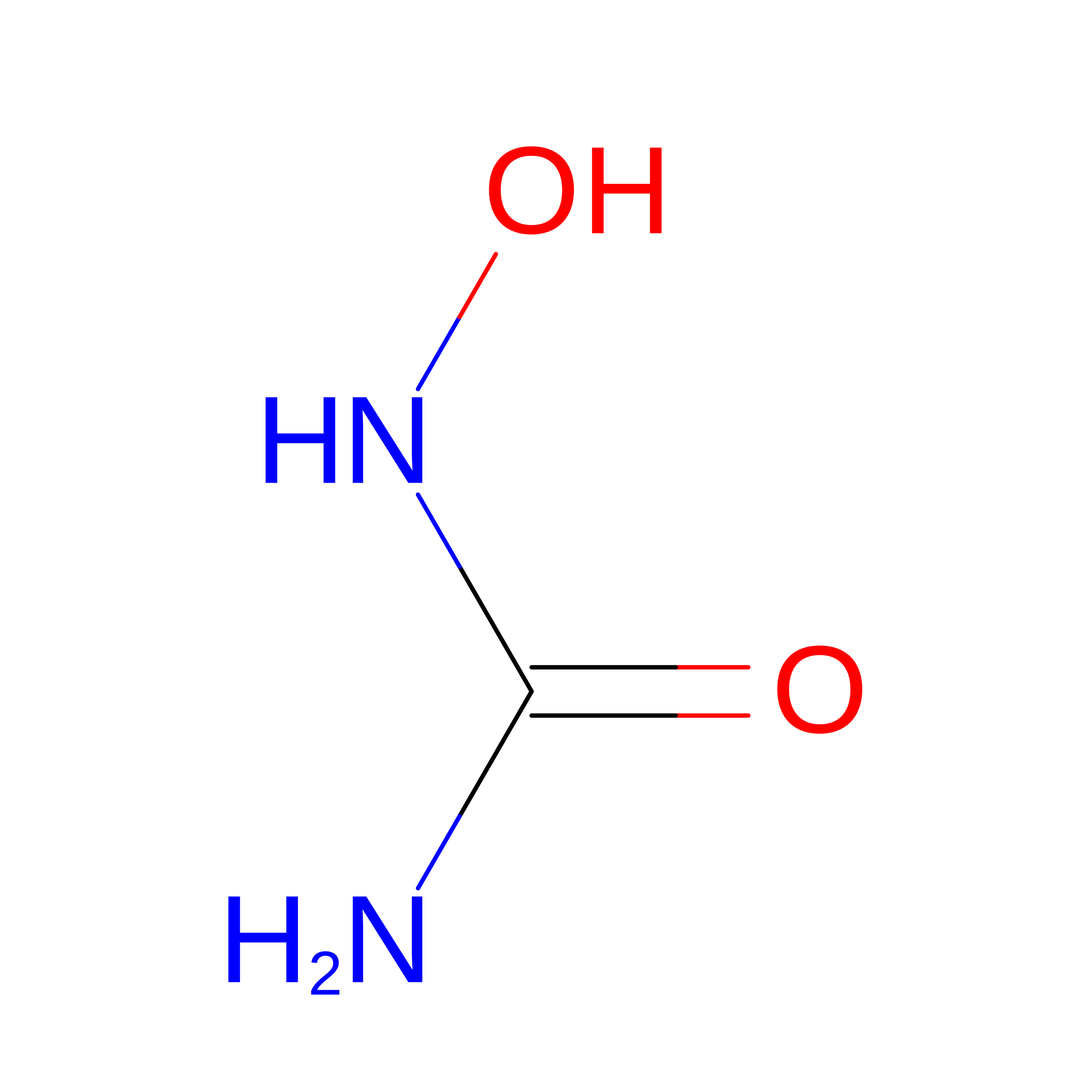
Hydroxyurea is a non-alkylating antineoplastic agent that was first synthesized in 1869 but was not characterized biologically until 1928.[A262596] It was first approved by the FDA in 1998 for the treatment of sickle cell anemia in adults.[A262601] Although clinical evidence on the efficacy of hydroxyurea in certain conditions exists, hydroxyurea is used sparingly in clinical settings, largely due to lack of knowledge and adherence, the need for therapeutic monitoring, and serious side effects of secondary cancer and birth defects.[A262606]
Synonyms
Hydroxycarbamidum
Hydroxyharnstoff
Hydrea
Carbamoyl oxime
Hydroxy Urea
Carbamyl hydroxamate
Hydroxycarbamid
Hydroxycarbamide
N-Hydroxyurea
Hydroxyurea
N-Carbamoylhydroxylamine
Carbamohydroxamic acid
Carbamohydroximic acid
Hidroxicarbamida
Oxyurea
Brand Names
Eugia-hydroxyurea
Mylan-hydroxyurea
Apo-hydroxyurea
Hydroxyurea
Riva-hydroxyurea
Siklos
Scedamin
Droxia
Xromi
Hydrea
Indication
Hydroxyurea is indicated to reduce the frequency of painful crises and to reduce the need for blood transfusions in adult and pediatric patients, 9 months of age and older, with sickle cell anemia with recurrent moderate to severe painful crises.[L41150,L47137]
Drug Info/Drug Targets: DrugBank 3.0: a comprehensive resource for 'omics' research on drugs. Knox C, Law V, Jewison
T, Liu P, Ly S, Frolkis A, Pon A, Banco K, Mak C, Neveu V, Djoumbou Y, Eisner R, Guo AC, Wishart DS.
Nucleic Acids Res. 2011 Jan; 39 (Database issue):D1035-41. | PMID:21059682