Download Mendeley
Molecular insights into ligand recognition and receptor activation of GPR15.
Chen, S., Han, X., Zhang, Y., Ma, L., Yi, C., Chu, X., Tan, Q., Han, S., Zhao, Q., Wu, B.(2025) iScience 28: 113935-113935
- PubMed: 41321630 Search on PubMedSearch on PubMed Central
- DOI: https://doi.org/10.1016/j.isci.2025.113935
- Primary Citation Related Structures:
9WXM - PubMed Abstract:
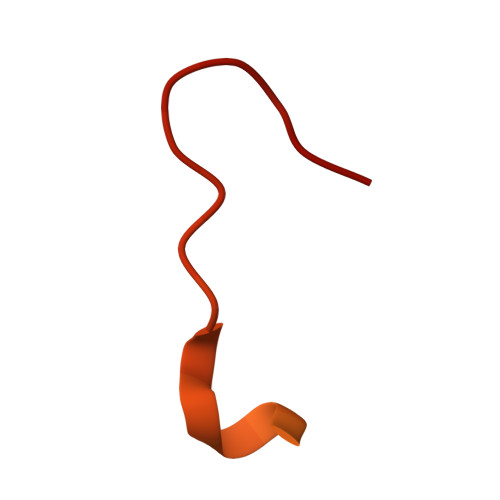
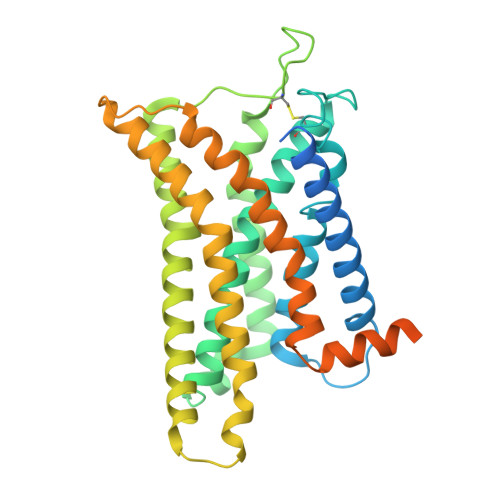
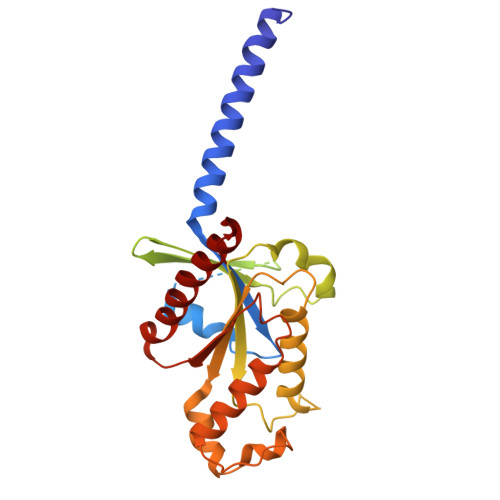
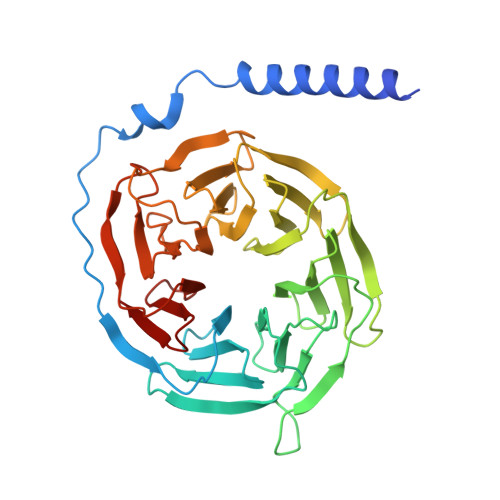
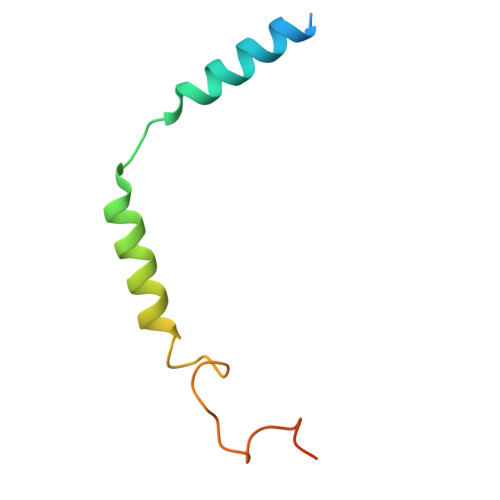
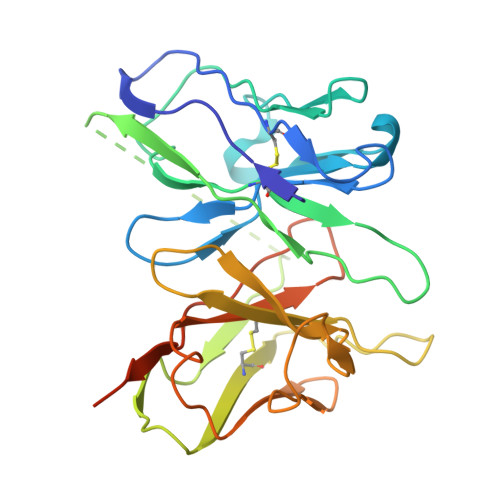
In response to the chemokine-like peptide GPR15L, G protein-coupled receptor 15 (GPR15) is crucial for immune cell trafficking and inflammatory diseases. However, understanding of its physiology and pathology is hindered by lack of molecular details of the interaction between GPR15 and the full-length GPR15L. Here, we report the structure of GPR15 bound to the full-length GPR15L and G i3 protein. Combined with mutagenesis data, this structure reveals key interactions that define ligand recognition and a subpocket that governs GPR15L selectivity and receptor activation. Molecular dynamics simulations suggest that sulfation modifications in the N-terminal region of GPR15 may play a role in stabilizing the binding between GPR15 and the core region of GPR15L. Furthermore, molecular docking of some potential small-molecule antagonists suggests a conserved molecular pattern of these ligands inhibiting receptor activation. These findings provide essential insight into functional modulation of GPR15 and would facilitate development of therapeutic strategies for treatment of inflammation and immune diseases.
- State Key Laboratory of Drug Research, State Key Laboratory of Chemical Biology, Shanghai Institute of Materia Medica, Chinese Academy of Sciences, Shanghai 201203, China.
Organizational Affiliation: