Download Mendeley
Engineering an Imine Reductase for Enantioselective Synthesis of Atropisomeric Amides.
Yao, Z., Meng, R., Zhou, Z., Yu, L., Wu, Z., Tang, L., Qiao, T., Li, K., Huang, L., Song, D., Fu, H.(2025) J Am Chem Soc 147: 40616-40625
- PubMed: 41140043 Search on PubMed
- DOI: https://doi.org/10.1021/jacs.5c12724
- Primary Citation Related Structures:
9VVS, 9VW7 - PubMed Abstract:
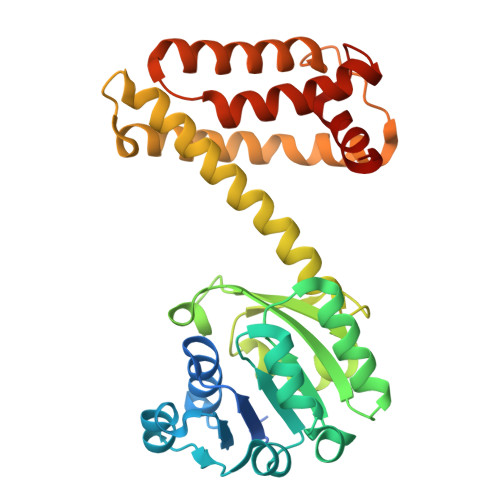
Atropisomeric amides possess unique axial chirality arising from the rotation-restricted C aryl -C amide bond and find broad application in bioactive molecules and asymmetric catalysis. However, catalytic asymmetric methods for their synthesis remain underdeveloped, with no biocatalytic approaches reported. Herein, we report the first efficient biocatalytic strategy for the atroposelective synthesis of atropisomeric amides via dynamic kinetic resolution using engineered imine reductases (IREDs). Structure-guided engineering of an IRED from Kutzneria albida provided a quadruple mutant (IRED-68-M4) capable of catalyzing the stereoconvergent synthesis of diverse napthamides and benzamides in high yields and excellent enantioselectivities (up to 98% yield, >99:1 er). Gram-scale synthesis of an axially chiral napthamide was also demonstrated. Moreover, protein X-ray crystallography and molecular modeling studies revealed the structural basis of the enhanced catalytic performance of the IRED-68-M4 variant.
- State Key Laboratory of Bioactive Substances and Function of Natural Medicines, Institute of Medicinal Biotechnology, Chinese Academy of Medical Sciences & Peking Union Medical College, Beijing 100050, China.
Organizational Affiliation: