9V6O | pdb_00009v6o

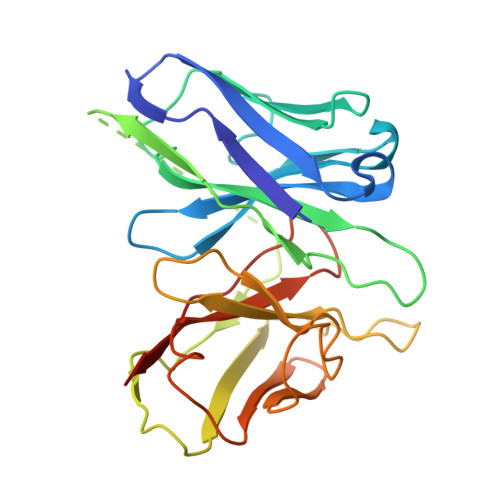
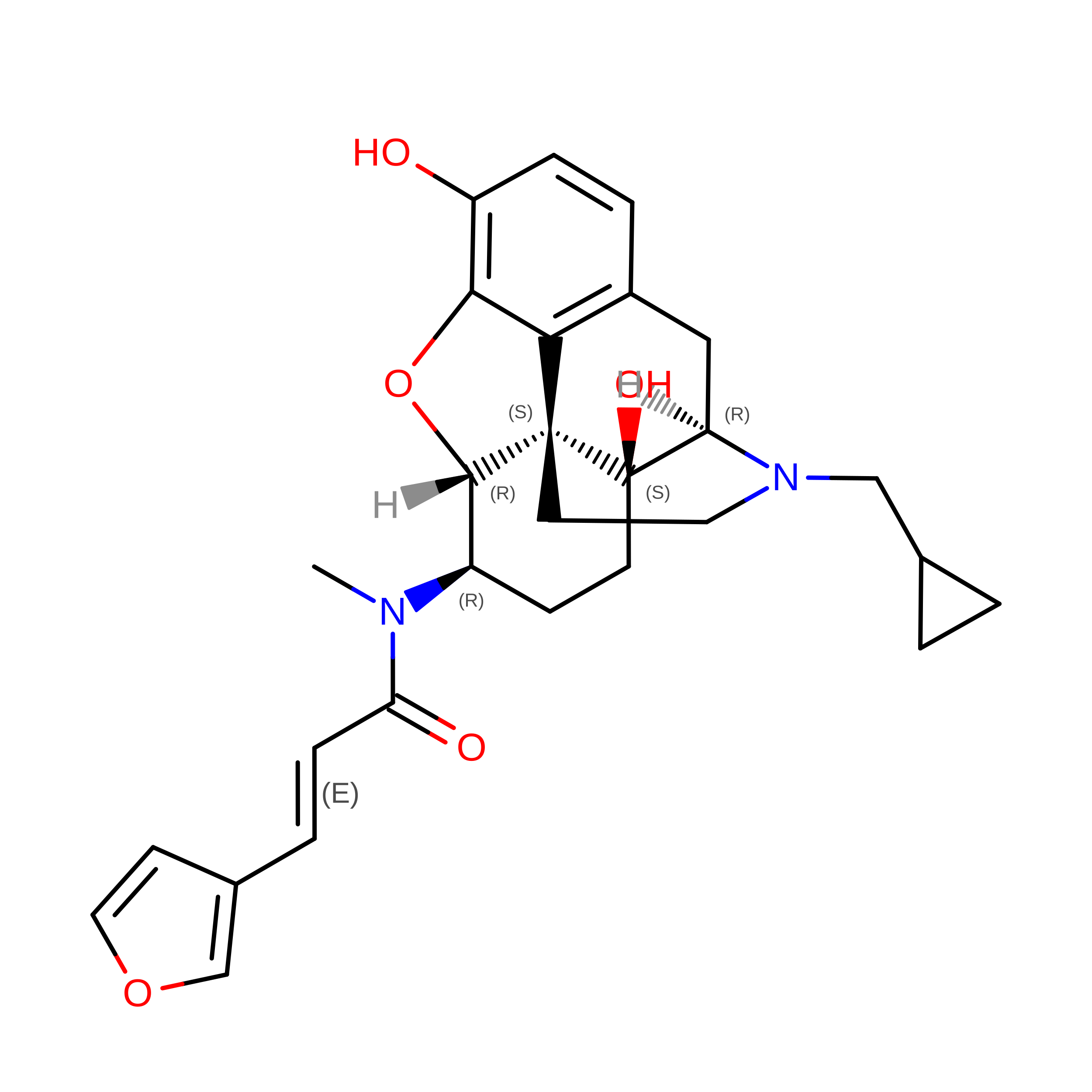
Cryo-EM structure of human kappa opioid receptor - G protein signaling complex bound with nalfurafine.


Experimental Data Snapshot

  • Method: ELECTRON MICROSCOPY
  • Resolution: 2.76 Å
  • Aggregation State: PARTICLE 
  • Reconstruction Method: SINGLE PARTICLE 

wwPDB Validation   3D Report Full Report


This is version 1.0 of the entry. See complete history


Literature

Structural and dynamic insights into the biased signaling mechanism of the human kappa opioid receptor.

Suno-Ikeda, C.Nishikawa, R.Suzuki, R.Yokoi, S.Iwata, S.Takai, T.Ogura, T.Hirose, M.Tokuda, A.Katamoto, R.Inoue, A.Asai, E.Kise, R.Sugita, Y.Kato, T.Nagase, H.Mitsutake, A.Saitoh, T.Katayama, K.Inoue, A.Kandori, H.Kobayashi, T.Suno, R.

(2025) Nat Commun 16: 9392-9392

  • DOI: https://doi.org/10.1038/s41467-025-64882-1
  • Primary Citation of Related Structures:  
    9V6O, 9W49

  • PubMed Abstract: 

    The κ-opioid receptor (KOR) is a member of the G protein-coupled receptor (GPCR) family, modulating cellular responses through transducers such as G proteins and β-arrestins. G-protein-biased KOR agonists aim to retain analgesic and antipruritic actions while limiting aversion and sedation. Aiming to inform G-biased KOR agonist design, we analyze signaling-relevant residues from structural and dynamic views. Here we show, using multiple complementary methods, shared residues that determine β-arrestin recruitment by nalfurafine and U-50,488H. Cryo-electron microscopy structures of the KOR-G i signaling complexes identify the ligand binding mode in the activated state. Vibrational spectroscopy reveals ligand-induced conformational changes. Cell-based mutant experiments pinpoint four amino acids (K227 5.40 , C286 6.47 , H291 6.52 , and Y312 7.34 ; Ballesteros-Weinstein numbering is shown in superscript) that play crucial roles in β-arrestin recruitment. Furthermore, MD simulations revealed that the four mutants tend to adopt conformations with reduced β-arrestin recruitment activity. Our research findings provide a foundation for enhancing KOR-mediated therapeutic effects while minimizing unwanted side effects by targeting specific residues within the KOR ligand-binding pocket, including K227 5.40 and Y312 7.34 , which have previously been implicated in biased signaling.


  • Organizational Affiliation
    • Department of Medical Chemistry, Kansai Medical University, Hirakata, Japan.

Macromolecules
Find similar proteins by:  (by identity cutoff)  |  3D Structure
Entity ID: 1
MoleculeChains Sequence LengthOrganismDetailsImage
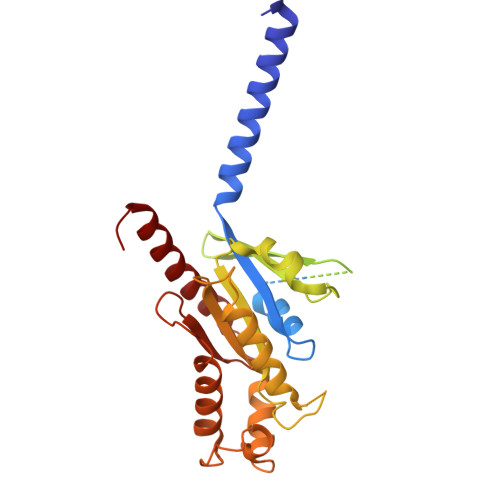
Guanine nucleotide-binding protein G(i) subunit alpha-1354Homo sapiensMutation(s): 0 
Gene Names: GNAI1
EC: 3.6.5
UniProt & NIH Common Fund Data Resources
Find proteins for P63096 (Homo sapiens)
Explore P63096 
Go to UniProtKB:  P63096
PHAROS:  P63096
GTEx:  ENSG00000127955 
Entity Groups  
Sequence Clusters30% Identity50% Identity70% Identity90% Identity95% Identity100% Identity
UniProt GroupP63096
Sequence Annotations
Expand
  • Reference Sequence
Find similar proteins by:  (by identity cutoff)  |  3D Structure
Entity ID: 2
MoleculeChains Sequence LengthOrganismDetailsImage
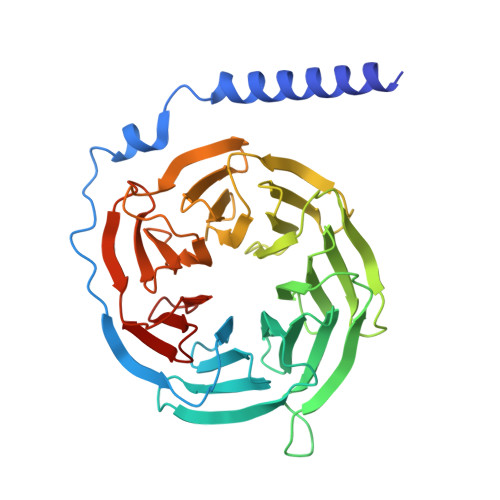
Guanine nucleotide-binding protein G(I)/G(S)/G(T) subunit beta-1345Homo sapiensMutation(s): 0 
Gene Names: GNB1
UniProt & NIH Common Fund Data Resources
Find proteins for P62873 (Homo sapiens)
Explore P62873 
Go to UniProtKB:  P62873
PHAROS:  P62873
GTEx:  ENSG00000078369 
Entity Groups  
Sequence Clusters30% Identity50% Identity70% Identity90% Identity95% Identity100% Identity
UniProt GroupP62873
Sequence Annotations
Expand
  • Reference Sequence
Find similar proteins by:  (by identity cutoff)  |  3D Structure
Entity ID: 3
MoleculeChains Sequence LengthOrganismDetailsImage
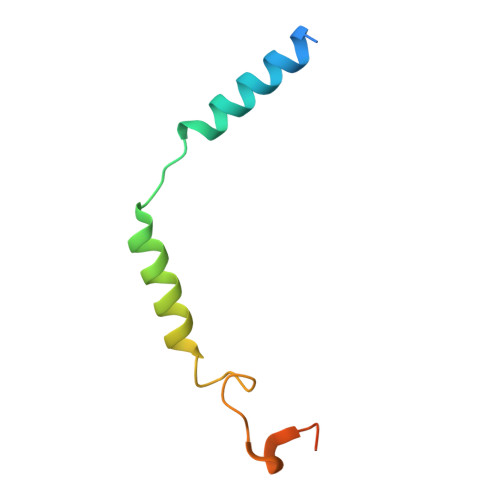
Guanine nucleotide-binding protein G(I)/G(S)/G(O) subunit gamma-2C [auth G]71Homo sapiensMutation(s): 0 
Gene Names: GNG2
UniProt & NIH Common Fund Data Resources
Find proteins for P59768 (Homo sapiens)
Explore P59768 
Go to UniProtKB:  P59768
PHAROS:  P59768
GTEx:  ENSG00000186469 
Entity Groups  
Sequence Clusters30% Identity50% Identity70% Identity90% Identity95% Identity100% Identity
UniProt GroupP59768
Sequence Annotations
Expand
  • Reference Sequence
Find similar proteins by:  (by identity cutoff)  |  3D Structure
Entity ID: 4
MoleculeChains Sequence LengthOrganismDetailsImage
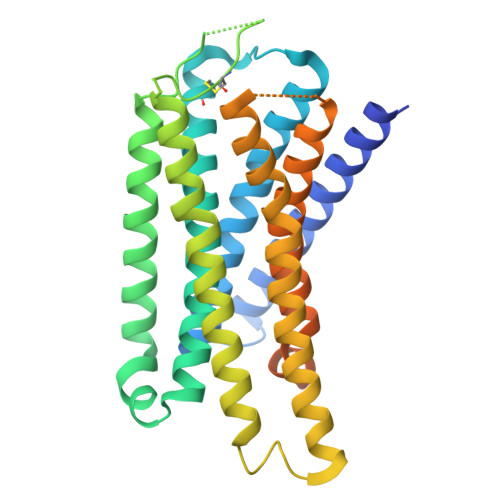
Kappa-type opioid receptorD [auth R]341Homo sapiensMutation(s): 1 
Gene Names: OPRK1
UniProt & NIH Common Fund Data Resources
Find proteins for P41145 (Homo sapiens)
Explore P41145 
Go to UniProtKB:  P41145
PHAROS:  P41145
GTEx:  ENSG00000082556 
Entity Groups  
Sequence Clusters30% Identity50% Identity70% Identity90% Identity95% Identity100% Identity
UniProt GroupP41145
Sequence Annotations
Expand
  • Reference Sequence
Find similar proteins by:  (by identity cutoff)  |  3D Structure
Entity ID: 5
MoleculeChains Sequence LengthOrganismDetailsImage
scFv16E [auth S]255Homo sapiensMutation(s): 0 
Entity Groups  
Sequence Clusters30% Identity50% Identity70% Identity90% Identity95% Identity100% Identity
Sequence Annotations
Expand
  • Reference Sequence
Small Molecules
Experimental Data & Validation

Experimental Data

  • Method: ELECTRON MICROSCOPY
  • Resolution: 2.76 Å
  • Aggregation State: PARTICLE 
  • Reconstruction Method: SINGLE PARTICLE 
EM Software:
TaskSoftware PackageVersion
MODEL REFINEMENTPHENIX1.21_5207

Structure Validation

View Full Validation Report


Entry History & Funding Information

Deposition Data


Funding OrganizationLocationGrant Number
Japan Agency for Medical Research and Development (AMED)JapanJP21am0101072
Japan Agency for Medical Research and Development (AMED)JapanJP21am0401020
Japan Agency for Medical Research and Development (AMED)JapanJP20ak0101103
Japan Society for the Promotion of Science (JSPS)Japan19H03428
Japan Society for the Promotion of Science (JSPS)Japan21H05112
Japan Agency for Medical Research and Development (AMED)JapanJP21gm091000

Revision History  (Full details and data files)

  • Version 1.0: 2025-11-19
    Type: Initial release