Download Mendeley
Architecture and mechanism of a dual-enzyme retron system in prokaryotic immunity.
Li, X., He, Q., Liu, Y., Liu, B., Liu, Z., Chen, H., Zhang, S., Han, J., Liu, Y., Yang, J., Yin, H., Guo, Z., Wei, Y., Yuan, Z., Zhu, H., Zhang, H.(2025) Nat Commun 17: 487-487
- PubMed: 41354673 Search on PubMedSearch on PubMed Central
- DOI: https://doi.org/10.1038/s41467-025-67175-9
- Primary Citation Related Structures:
9L7P, 9U9Y - PubMed Abstract:
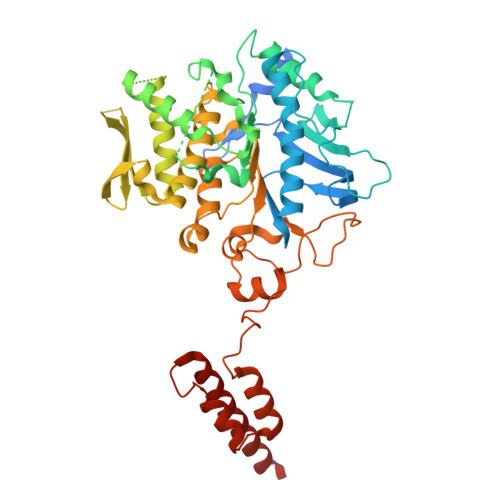
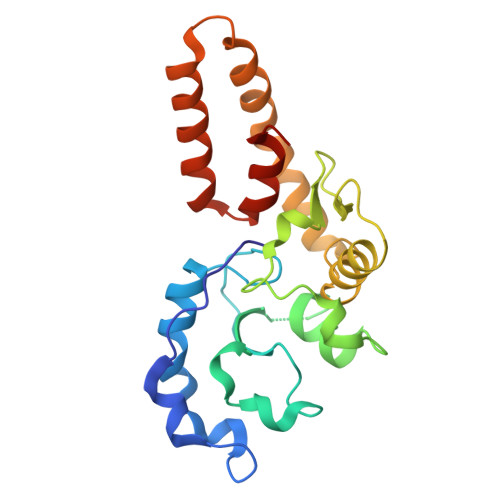
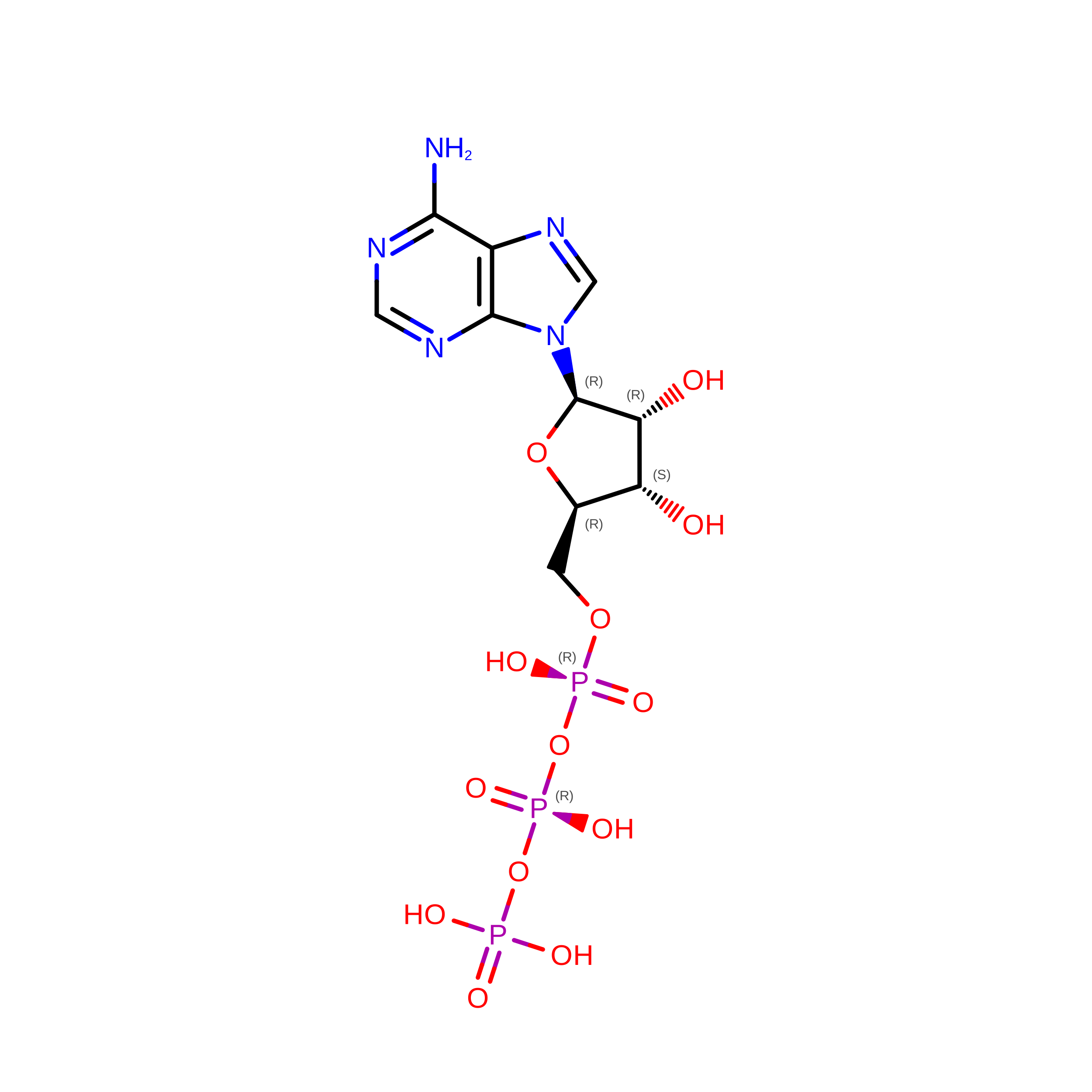
Retrons are bacterial genetic retroelements encoding a reverse transcriptase (RT) and a non-coding RNA (ncRNA)-multi-copy single-stranded DNA (msDNA) hybrid. Diverse effector proteins or domains are found to associate with retrons, typically forming tripartite toxin-antitoxin systems involved in anti-phage defense. Although retrons have attracted growing interest in genome editing technologies, the mechanisms underlying most retron-mediated immune systems remain poorly understood. Here, we characterize a distinct quaternary retron system, Ec78, harboring a dual-component effector complex in which the PtuA ATPase and PtuB nuclease act in concert to mediate phage clearance. The cryo-EM structure of the Ec78 complex adopts a flower-basket-like architecture, with two Ec78 retrons engaging the PtuAB effector complexes through a msDNA-insertion assembly mechanism. Shortening of msDNA in length releases the PtuAB from Ec78 retron and triggers its activation. The cryo-EM structure of the retron-unbound effector complex further reveals an arginine-lysine finger loop on the PtuB nuclease that undergoes an ordered-to-disordered transition during enzymatic activation. These findings delineate the molecular basis underlying the Ec78 system in antiviral defense and highlight the mechanistic diversity of retron systems in prokaryotic immunity.
- Tianjin Medical University Cancer Institute and Hospital, State Key Laboratory of Experimental Hematology, Key Laboratory of Immune Microenvironment and Disease (Ministry of Education), The Province and Ministry Co-sponsored Collaborative Innovation Center for Medical Epigenetics, National Clinical Research Center for Cancer, Tianjin Institute of Immunology, School of Basic Medical Sciences, Tianjin Medical University, Tianjin, China.
Organizational Affiliation: