9U53 | pdb_00009u53

Crystal structure of the CYP154C2 Q230A from Streptomyces avermitilis


Experimental Data Snapshot

  • Method: X-RAY DIFFRACTION
  • Resolution: 1.97 Å
  • R-Value Free: 
    0.234 (Depositor), 0.217 (DCC) 
  • R-Value Work: 
    0.178 (Depositor) 
  • R-Value Observed: 
    0.181 (Depositor) 

Starting Model: experimental
View more details

wwPDB Validation 3D Report Full Report

Validation slider image for 9U53

Ligand Structure Quality Assessment 


This is version 1.1 of the entry. See complete history

Literature

Conformational gating in CYP154C2: Gln230-mediated substrate recognition and catalytic switching revealed by structural dynamics.

Yang, J.Huang, J.He, X.Fushinobu, S.Xu, L.H.

(2025) Biosci Biotechnol Biochem 89: 1144-1153

  • DOI: https://doi.org/10.1093/bbb/zbaf076
  • Primary Citation Related Structures: 
    9U53

  • PubMed Abstract: 

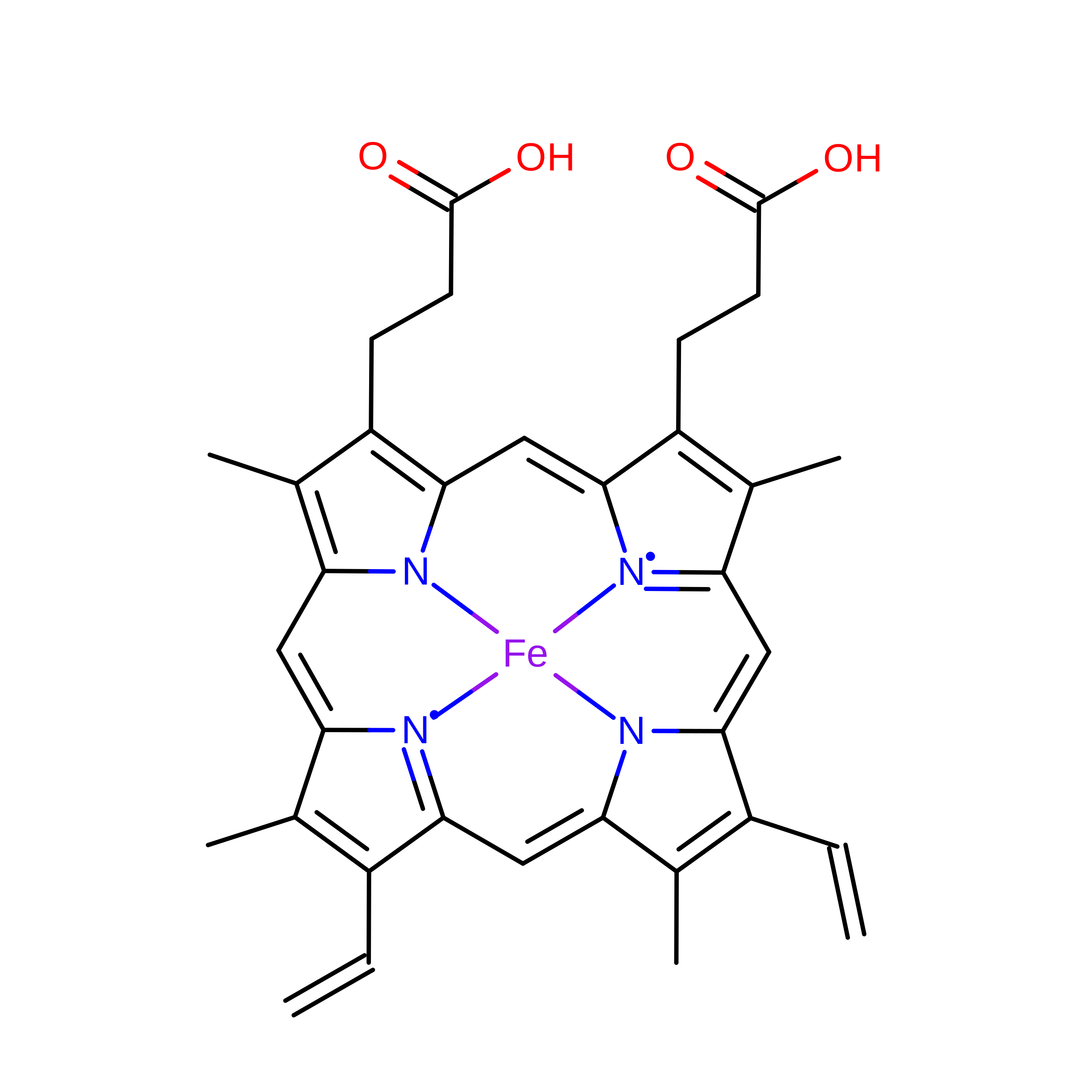
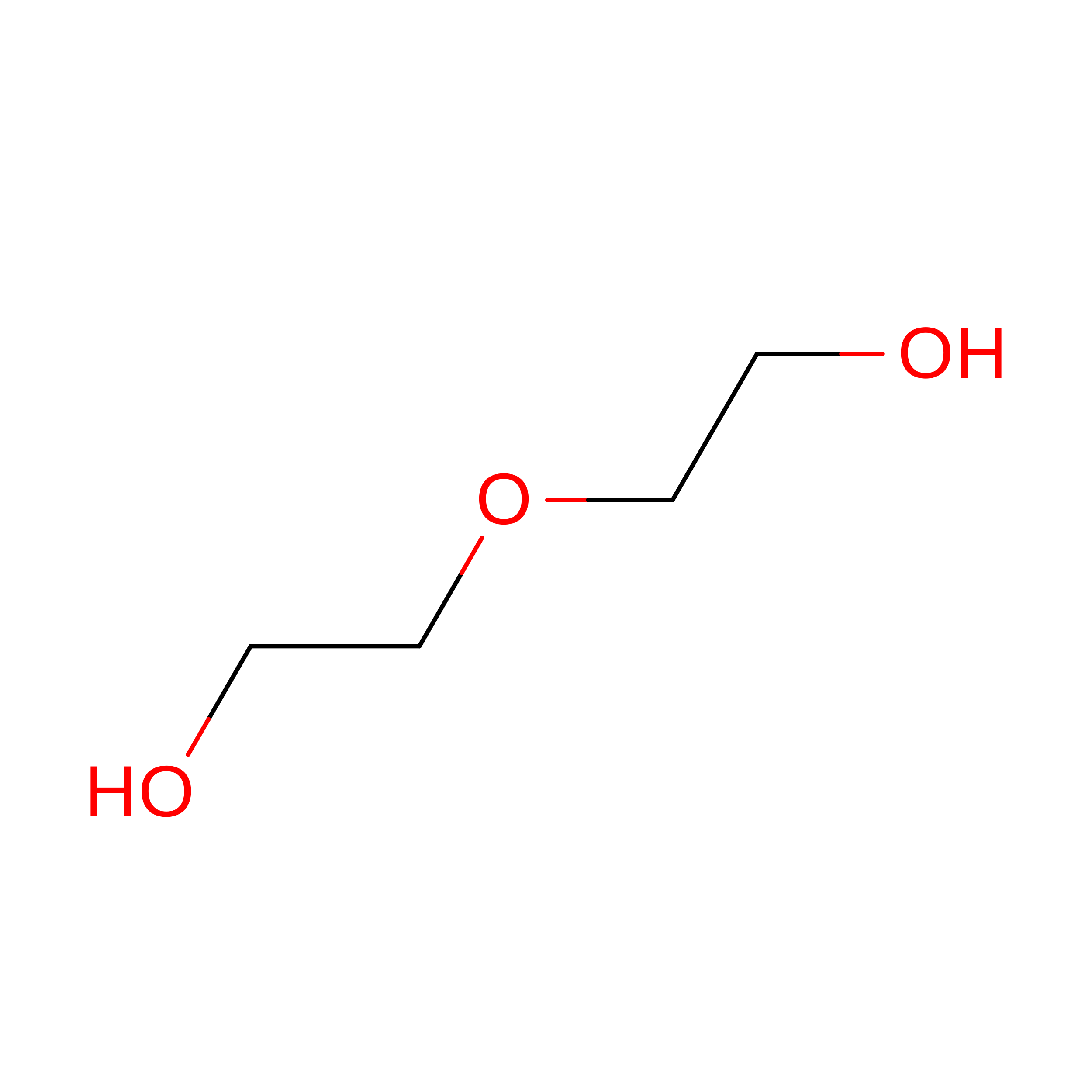
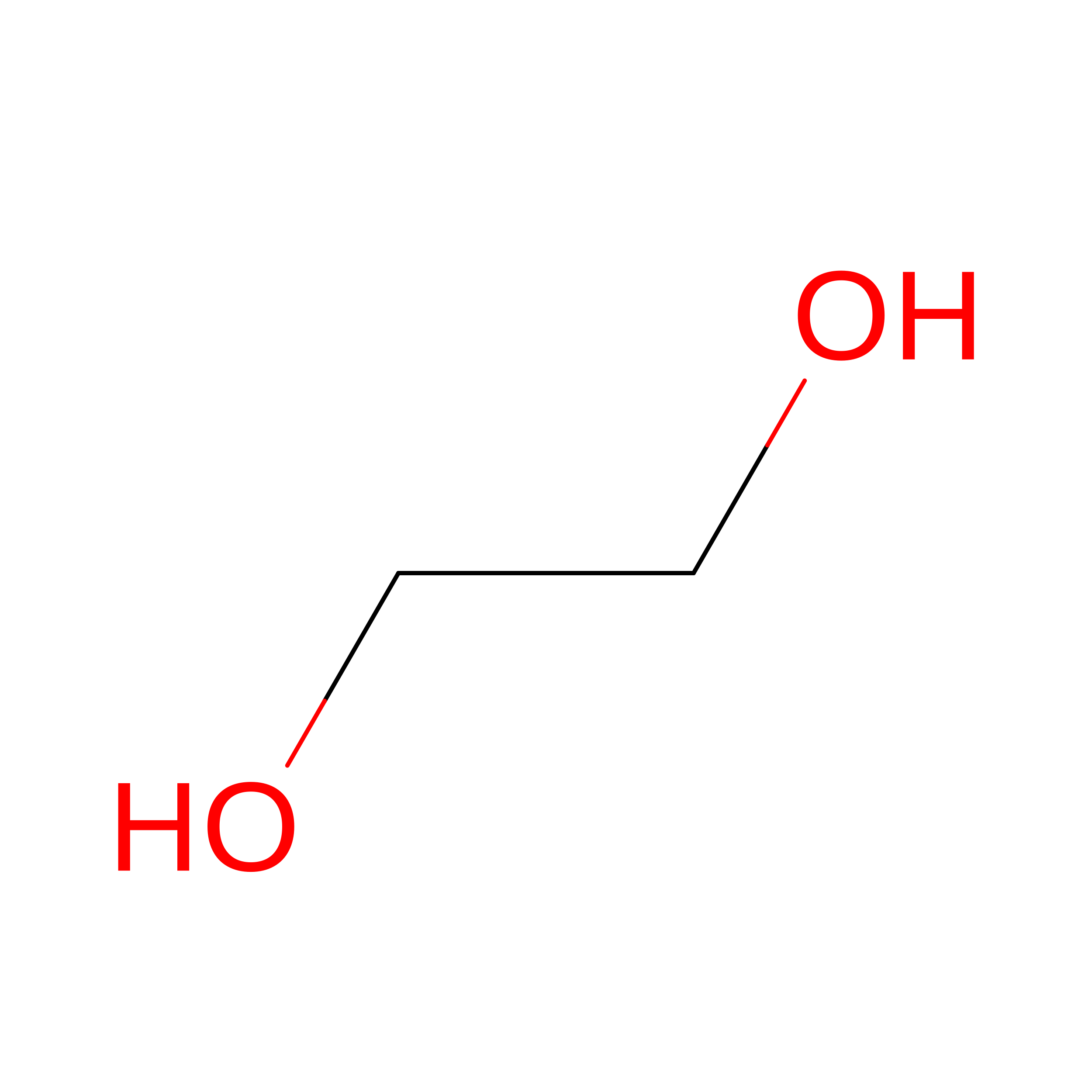
    Previously, we reported that CYP154C2 from Streptomyces avermitilis is capable of catalyzing the 2α-hydroxylation of the two model substrates, testosterone (TES) and androstenedione (ASD), and resolved the closed structures of both the substrate-free form and the TES-bound form. In this study, we extend these findings by determining the open-conformation structures of the substrate-free and ASD-bound forms-a rare achievement among bacterial P450s. Structural analyses revealed coordinated conformational shifts in the FG helices, HI helices, and BC loop during open-to-closed transitions. Despite divergent overall conformations, both substrates positioned their C2 atoms near the heme iron, aligning for 2α-hydroxylation. Mutagenesis studies established Gln230's pivotal role in substrate recognition and catalytic activation. High-resolution crystallography (1.97 Å) of the Q230A mutant revealed polyethylene glycol-occupied catalytic pockets (indicating complete loss of TES binding) while maintaining the open conformation. These results provide atomic-level evidence that Gln230 coordinates both substrate-driven conformational gating and catalytic site optimization.


  • Organizational Affiliation
    • College of Life Sciences and Medicine, Zhejiang Sci-Tech University, Hangzhou, China.

Macromolecule Content 

  • Total Structure Weight: 46.17 kDa 
  • Atom Count: 3,464 
  • Modeled Residue Count: 398 
  • Deposited Residue Count: 420 
  • Unique protein chains: 1

Macromolecules

Find similar proteins by:|  3D Structure
Entity ID: 1
MoleculeChains  Sequence LengthOrganismDetailsImage
Cytochrome P450420Streptomyces avermitilisMutation(s): 1 
Gene Names: SAV14893_032670SAV31267_054670
UniProt
Find proteins for A0A4D4LTT1 (Streptomyces avermitilis)
Explore A0A4D4LTT1 
Go to UniProtKB:  A0A4D4LTT1
Entity Groups
Sequence Clusters30% Identity50% Identity70% Identity90% Identity95% Identity100% Identity
UniProt GroupA0A4D4LTT1
Sequence Annotations
Expand
Reference Sequence

Experimental Data & Validation

Experimental Data

  • Method: X-RAY DIFFRACTION
  • Resolution: 1.97 Å
  • R-Value Free:  0.234 (Depositor), 0.217 (DCC) 
  • R-Value Work:  0.178 (Depositor) 
  • R-Value Observed: 0.181 (Depositor) 
Space Group: P 21 21 21
Unit Cell:
Length ( Å )Angle ( ˚ )
a = 56.505α = 90
b = 79.353β = 90
c = 116.995γ = 90
Software Package:
Software NamePurpose
REFMACrefinement
HKL-3000data scaling
HKL-3000data reduction
MOLREPphasing

Structure Validation

View Full Validation Report


Ligand Structure Quality Assessment 


Entry History 

& Funding Information

Deposition Data

  • Released Date: 2025-09-24 
  • Deposition Author(s): Xu, L.H.

Funding OrganizationLocationGrant Number
National Natural Science Foundation of China (NSFC)China--

Revision History  (Full details and data files)

  • Version 1.0: 2025-09-24
    Type: Initial release
  • Version 1.1: 2026-04-08
    Changes: Database references