Download Mendeley
Discovery of NP3-742: A Structurally Diverse NLRP3 Inhibitor Identified through an Unusual Phenol Replacement.
Velcicky, J., Langlois, J.B., Wright, M., Janser, P., Angst, D., Arnold, C., Beltz, K., Brenneisen, S., Dubois, C., Dawson, J., Fischer, C., Gommermann, N., Heizmann, A., Ilic, S., Machauer, R., Maschlej, M., Monnerat, S., Pflieger, D., Ristov, J., Rubert, J., Schwalm, G., Smith, D.R., Srinivas, H., Steiner, R., Stojanovic, A., Troxler, T., Unterreiner, A., Vangrevelinghe, E., von Burg, N., Wunderlich, J., Farady, C.J., Mackay, A.(2025) J Med Chem 68: 23532-23553
- PubMed: 41091523 Search on PubMed
- DOI: https://doi.org/10.1021/acs.jmedchem.5c02412
- Primary Citation Related Structures:
9SFG - PubMed Abstract:
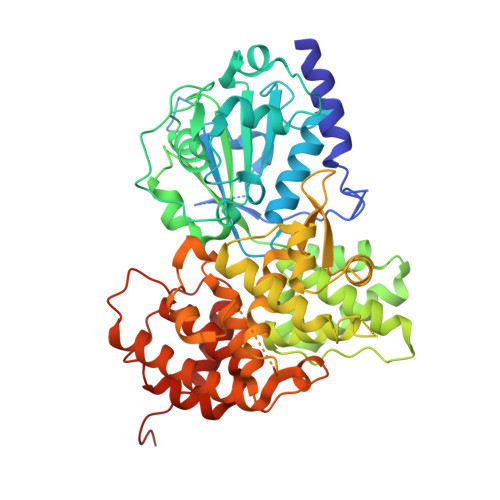
NLRP3 is a molecular sensor present in innate immune cells which recognizes a variety of danger signals such as MSU, ATP, or Aβ. Upon activation, it seeds a protein complex termed the inflammasome, which leads to secretion of the proinflammatory cytokines IL-1β and IL-18 and initiates pyroptotic cell death. NLRP3 inflammasome activation has been associated with a wide range of diseases including atherosclerosis, gout, and cancer. In this publication, we describe the replacement of the phenol moiety with indoles in the recently described pyridazine scaffold. This replacement required a shift of the hydrogen bond donor from the " ortho " to the " meta " position, relative to the pyridazine ring. Initial indole analog 7 demonstrated a robust in vivo IL-1β inhibition, but also a significant hERG inhibition. Decreasing lipophilicity led to the discovery of NP3-742 , demonstrating a favorable overall profile including diminished hERG inhibition and in vivo efficacy in a mouse peritonitis model.
- Novartis BioMedical Research, CH-4002 Basel, Switzerland.
Organizational Affiliation: