Find PDB structures and Computed Structure Models (CSM) by combining queries from tools in this suite: Attribute Search, Sequence Similarity, Sequence Motif, 3D Similarity, and 3D Motif with 'AND' logic.
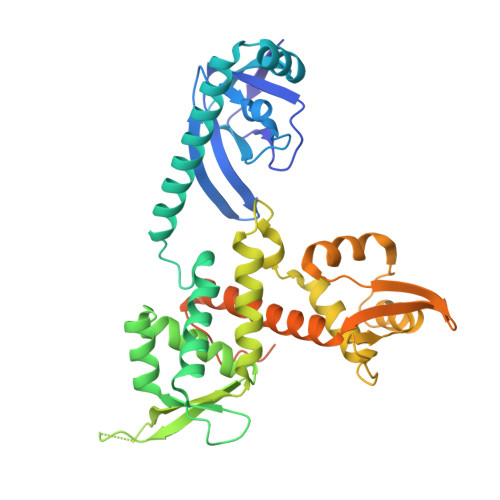
This article presents an in-depth analysis of selected CASP16 targets, with a focus on their biological and functional significance. The authors highlight the most relevant features of the target proteins and discuss how well these were reproduced in the submitted predictions. While the overall performance of structure prediction methods remains impressive, challenges persist, particularly in modeling rare structural motifs, flexible regions, small molecule interactions, posttranslational modifications, and biologically important interfaces. Addressing these limitations can strengthen the role of structure prediction in complementing experimental efforts and advancing both basic research and biomedical applications.
Organizational Affiliation:
Biozentrum, University of Basel, Basel, Switzerland.
Computational Structural Biology, SIB Swiss Institute of Bioinformatics, Basel, Switzerland.
Transplantation & Clinical Virology, Department of Biomedicine, University of Basel, Basel, Switzerland.
Genome Center, University of California, Davis, California, USA.
Max Perutz Labs, Vienna Biocenter, Medical University of Vienna, Vienna, Austria.
Vienna Biocenter PhD Program, A Doctoral School of the University of Vienna and the Medical University of Vienna, Vienna, Austria.
UMR 7156, GMGM, Université de Strasbourg - CNRS, Strasbourg, France.
Department of Biosciences, University of Birmingham, UK.
University Grenoble Alpes, CNRS, CEA, IBS, Grenoble, France.
Division of Structural Biology, Centre for Human Genetics, University of Oxford, Oxford, UK.
Department of Biomolecular Engineering, University of California, Santa Cruz, California, USA.
Department of Chemical and Structural Biology, Weizmann Institute of Science, Rehovot, Israel.
Kinase Complexes Section, Center for Structural Biology, Center for Cancer Research, National Cancer Institute, Frederick, Maryland, USA.
Department of Microbiology, Biomedicine Discovery Institute, Monash University, Melbourne, Victoria, Australia.
Department of Biochemistry and Pharmacology, Bio21 Molecular Science and Biotechnology Institute, The University of Melbourne, Melbourne, Victoria, Australia.
Centre for Electron Microscopy of Membrane Proteins, Monash Institute of Pharmaceutical Sciences, Melbourne, Victoria, Australia.
Department of Chemical Research Support, Weizmann Institute of Science, Rehovot, Israel.
School of Life Sciences, University of Warwick, Coventry, UK.
Chair of Biochemistry of Microorganisms, University of Bayreuth, Kulmbach, Germany.
Institute of Biochemistry, University of Greifswald, Greifswald, Germany.
Department of Microbiology, Immunology, and Molecular Genetics, University of California, Los Angeles, California, USA.
California NanoSystems Institute, University of California, Los Angeles, California, USA.
Leibniz Institute of Virology and Centre for Structural Systems Biology, Deutsches Elektronen-Synchrotron, Hamburg, Germany.
Institute for Molecular Virology and Tumorvirology, University Medical Center Hamburg-Eppendorf, Germany.
Department of Cell Biology and Molecular Genetics, Institute for Bioscience and Biotechnology Research, University of Maryland, Rockville, Maryland, USA.

 Download Mendeley