9S8W | pdb_00009s8w

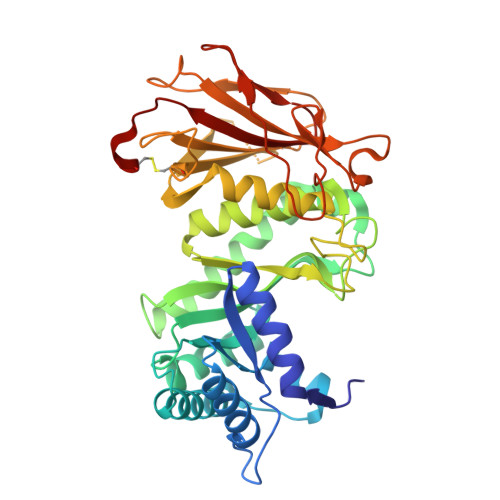
Human heparanase in complex with neutralizing antibody A54 Fab fragment


Experimental Data Snapshot

  • Method: X-RAY DIFFRACTION
  • Resolution: 3.49 Å
  • R-Value Free: 
    0.323 (Depositor), 0.321 (DCC) 
  • R-Value Work: 
    0.220 (Depositor), 0.218 (DCC) 

Starting Models: experimental
View more details

wwPDB Validation   3D Report Full Report


Ligand Structure Quality Assessment 


This is version 1.0 of the entry. See complete history


Literature

Heparanase-Neutralizing Monoclonal Antibody (mAb A54) Attenuates Tumor Growth and Metastasis.

Barash, U.Farhoud, M.Odeh, M.Huberman, E.Wu, L.Vlodavsky, I.

(2025) Cells 14

  • DOI: https://doi.org/10.3390/cells14171379
  • Primary Citation of Related Structures:  
    9S8W

  • PubMed Abstract: 

    Heparanase is the only human enzyme responsible for heparan sulfate (HS) breakdown, an activity that remodels the extracellular matrix (ECM) and strongly drives cancer metastasis and angiogenesis. Compelling evidence implies that heparanase promotes essentially all aspects of the tumorigenic process, namely, tumor initiation, vascularization, growth, metastasis, and chemoresistance. A key mechanism by which heparanase accelerates cancer progression is by enabling the release and bioavailability of HS-bound growth factors, chemokines, and cytokines, residing in the tumor microenvironment and supporting tumor growth and metastasis. The currently available heparanase inhibitors are mostly HS/heparin-like compounds that lack specificity and exert multiple off-target side effects. To date, only four such compounds have progressed to clinical trials, and none have been approved for clinical use. We have generated and characterized an anti-heparanase monoclonal antibody (A54 mAb) that specifically inhibits heparanase enzymatic activity (ECM degradation assay) and cellular uptake. Importantly, A54 mAb attenuates xenograft tumor growth and metastasis (myeloma, glioma, pancreatic, and breast carcinomas) primarily when administered (syngeneic or immunocompromised mice) in combination with conventional anti-cancer drugs. Co-crystallization of the A54 Fab fragment and the heparanase enzyme revealed that the interaction between the two proteins takes place adjacent to the enzyme HS/heparin binding domain II (HBDII; Pro271-Ala276), likely hindering heparanase from interacting with HS substrates via steric occlusion of the active site cleft. Collectively, we have generated and characterized a novel mAb that specifically neutralizes heparanase enzymatic activity and attenuates its pro-tumorigenic effects in preclinical models, paving the way for its clinical examination against cancer, inflammation, and other diseases.


  • Organizational Affiliation
    • Technion Integrated Cancer Center (TICC), Rappaport Faculty of Medicine, Technion, Haifa 31096, Israel.

Macromolecules
Find similar proteins by:  (by identity cutoff)  |  3D Structure
Entity ID: 1
MoleculeChains Sequence LengthOrganismDetailsImage
Heparanase386Homo sapiensMutation(s): 1 
Gene Names: HPSEHEPHPAHPA1HPR1HPSE1HSE1
EC: 3.2.1.166
UniProt & NIH Common Fund Data Resources
Find proteins for Q9Y251 (Homo sapiens)
Explore Q9Y251 
Go to UniProtKB:  Q9Y251
PHAROS:  Q9Y251
GTEx:  ENSG00000173083 
Entity Groups  
Sequence Clusters30% Identity50% Identity70% Identity90% Identity95% Identity100% Identity
UniProt GroupQ9Y251
Glycosylation
Glycosylation Sites: 4Go to GlyGen: Q9Y251-1
Sequence Annotations
Expand
  • Reference Sequence
Find similar proteins by:  (by identity cutoff)  |  3D Structure
Entity ID: 2
MoleculeChains Sequence LengthOrganismDetailsImage
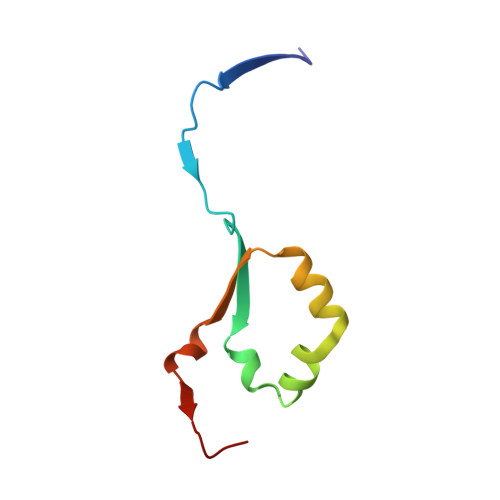
Heparanase 8 kDa subunit74Homo sapiensMutation(s): 0 
Gene Names: HPSEHEPHPAHPA1HPR1HPSE1HSE1
EC: 3.2.1.166
UniProt & NIH Common Fund Data Resources
Find proteins for Q9Y251 (Homo sapiens)
Explore Q9Y251 
Go to UniProtKB:  Q9Y251
PHAROS:  Q9Y251
GTEx:  ENSG00000173083 
Entity Groups  
Sequence Clusters30% Identity50% Identity70% Identity90% Identity95% Identity100% Identity
UniProt GroupQ9Y251
Sequence Annotations
Expand
  • Reference Sequence
Find similar proteins by:  (by identity cutoff)  |  3D Structure
Entity ID: 3
MoleculeChains Sequence LengthOrganismDetailsImage
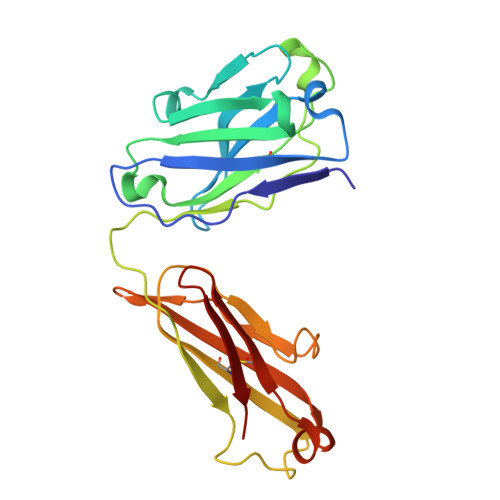
A54 Fab heavy chainC [auth H]222Mus musculusMutation(s): 0 
Entity Groups  
Sequence Clusters30% Identity50% Identity70% Identity90% Identity95% Identity100% Identity
Sequence Annotations
Expand
  • Reference Sequence
Find similar proteins by:  (by identity cutoff)  |  3D Structure
Entity ID: 4
MoleculeChains Sequence LengthOrganismDetailsImage
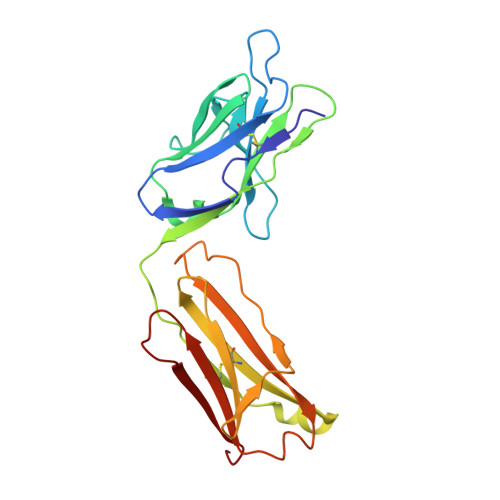
A54 Fab light chainD [auth L]218Mus musculusMutation(s): 0 
Entity Groups  
Sequence Clusters30% Identity50% Identity70% Identity90% Identity95% Identity100% Identity
Sequence Annotations
Expand
  • Reference Sequence
Oligosaccharides

Help

Entity ID: 5
MoleculeChains Length2D Diagram Glycosylation3D Interactions
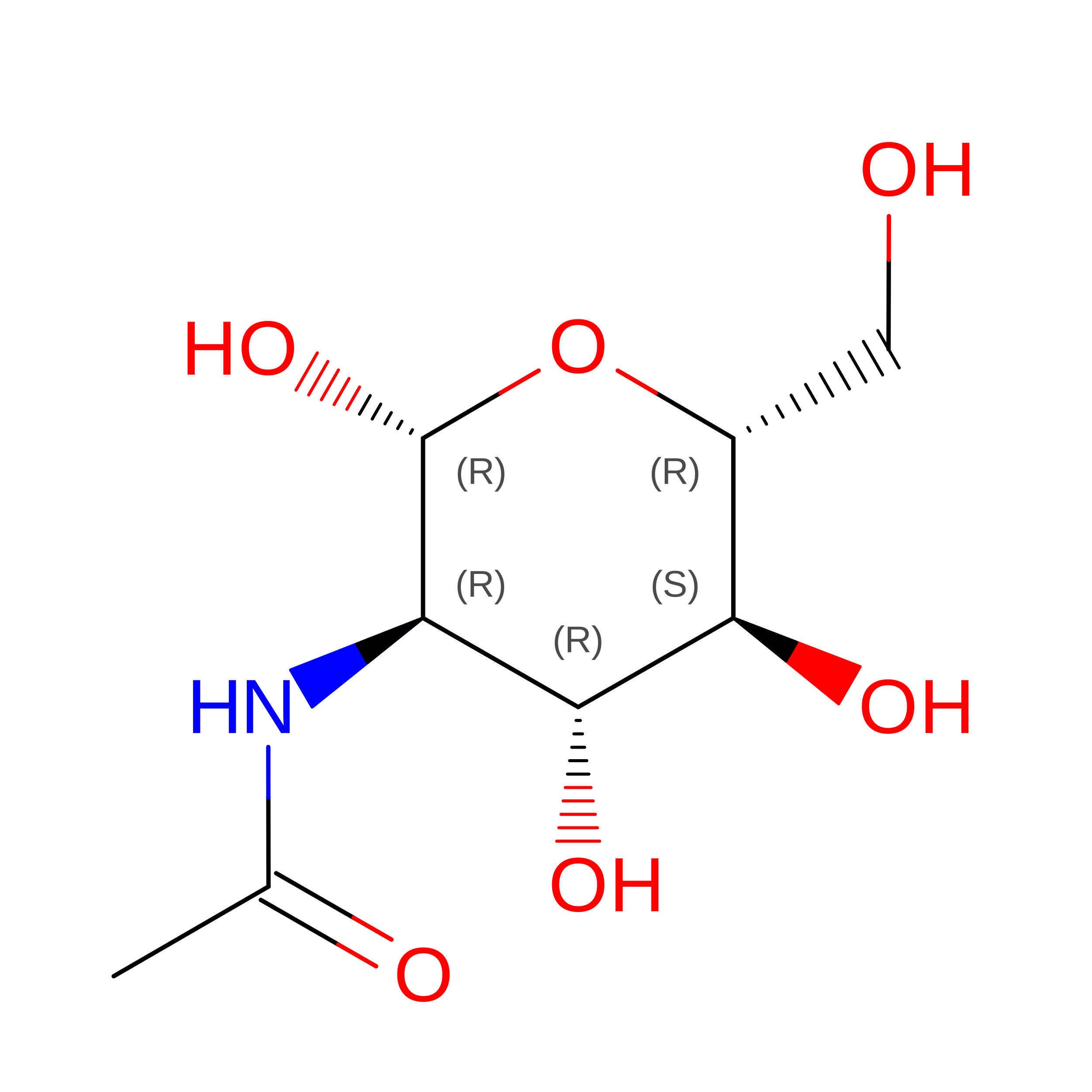
alpha-L-fucopyranose-(1-6)-2-acetamido-2-deoxy-beta-D-glucopyranoseE [auth C]2N-Glycosylation
Glycosylation Resources
GlyTouCan:  G86851RC
GlyCosmos:  G86851RC
GlyGen:  G86851RC
Experimental Data & Validation

Experimental Data

  • Method: X-RAY DIFFRACTION
  • Resolution: 3.49 Å
  • R-Value Free:  0.323 (Depositor), 0.321 (DCC) 
  • R-Value Work:  0.220 (Depositor), 0.218 (DCC) 
Space Group: P 41 21 2
Unit Cell:
Length ( Å )Angle ( ˚ )
a = 69.738α = 90
b = 69.738β = 90
c = 429.781γ = 90
Software Package:
Software NamePurpose
REFMACrefinement
xia2data reduction
STARANISOdata scaling
MOLREPphasing

Structure Validation

View Full Validation Report


Ligand Structure Quality Assessment 


Entry History & Funding Information

Deposition Data

  • Released Date: 2025-09-24 
  • Deposition Author(s): Wu, L.

Funding OrganizationLocationGrant Number
Wellcome TrustUnited Kingdom218579/Z/19/Z

Revision History  (Full details and data files)

  • Version 1.0: 2025-09-24
    Type: Initial release