Download Mendeley
A rapid imaging-based screen for induced-proximity degraders identifies a potent degrader of oncoprotein SKP2.
Chu, Y., Chen, S., Yang, M., Chen, Y., Fang, H., Huang, P., Xie, Y., Sun, C., Chen, Y., Zhang, B., Li, L., Mu, H., Song, D., Cheng, W., Wang, C., Jiang, W., Xu, X., He, Z., Chen, S., Liu, M., Ma, J., Yang, M., Cao, J., Gao, J., Shen, J., Zhang, L., Bai, Y., Liu, Z., Chen, J., Dai, S., Zeng, Y.A., Zhao, Y., Zhou, H., Chen, C., Ru, H., Tan, L., Chi, X., Wang, F., Gao, D., Lin, M., Deng, X., Jiang, H.(2025) Nat Biotechnol
- PubMed: 40931108 Search on PubMedSearch on PubMed Central
- DOI: https://doi.org/10.1038/s41587-025-02793-8
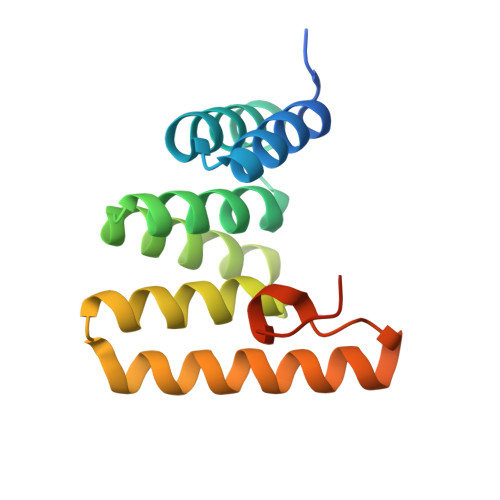
- Primary Citation Related Structures:
9R1P - PubMed Abstract:
Targeted protein degraders hold potential as therapeutic agents to target conventionally 'undruggable' proteins. Here, we develop a high-throughput screen, DEath FUSion Escaper (DEFUSE), to identify small-molecule protein degraders. By conjugating the protein of interest to a fast-acting triggerable death protein, this approach translates target protein degradation into a cell survival phenotype to illustrate the presence of degraders. Using this method, we discovered a small molecule (SKPer1) that triggers degradation of the oncoprotein SKP2 and specifically kills SKP2-expressing cancer cells. Mechanistically, SKPer1 acts as an induced-proximity degrader by inducing interaction between SKP2 and an E3 ligase, STUB1, resulting in SKP2 ubiquitination and degradation. SKPer1 exhibits substantial tumour suppression with good safety profiles in vivo. We further show that a sequence of ten amino acids from SKP2 can serve as a versatile degradation tag.
- Key Laboratory of RNA Innovation, Science and Engineering, Shanghai Institute of Biochemistry and Cell Biology, Center for Excellence in Molecular Cell Science, Chinese Academy of Sciences, Shanghai, China.
Organizational Affiliation: