9QE5 | pdb_00009qe5

VCB in complex with VHL-binding compound 82


Experimental Data Snapshot

  • Method: X-RAY DIFFRACTION
  • Resolution: 2.50 Å
  • R-Value Free: 
    0.273 (Depositor), 0.274 (DCC) 
  • R-Value Work: 
    0.245 (Depositor), 0.246 (DCC) 
  • R-Value Observed: 
    0.246 (Depositor) 

Starting Model: experimental
View more details

wwPDB Validation 3D Report Full Report

Validation slider image for 9QE5

Ligand Structure Quality Assessment 


This is version 1.1 of the entry. See complete history

Literature

Enhancing Solubility in VHL-Based PROTACs: Optimized USP7 Degraders for Improved Developability.

Wittenburg, S.Zuleeg, M.R.Peter, K.Lemnitzer, P.Voget, R.Bricelj, A.Gobec, M.Dierlamm, N.Braun, M.B.Geiger, T.M.Heim, C.Stakemeier, A.Wagner, K.G.Nowak, R.P.Hartmann, M.D.Sosic, I.Gutschow, M.Kronke, J.Steinebach, C.

(2025) J Med Chem 68: 15711-15737

  • DOI: https://doi.org/10.1021/acs.jmedchem.5c00718
  • Primary Citation Related Structures: 
    9QE4, 9QE5

  • PubMed Abstract: 

    Limited aqueous solubility, high total polar surface area (TPSA), and high hydrogen-bond donor (HBD) counts have hampered the clinical development of VHL-based proteolysis-targeting chimeras (PROTACs). This study explores strategies to enhance the physicochemical properties of VHL-recruiting USP7 degraders. By adjusting lipophilicity, HBD count, and TPSA, we created degraders with improved solubility while maintaining their USP7 degradation capability. Structural modifications at the VHL ligand included a constrained six-membered ring in the peptidic scaffold and the addition of solubilizing groups. These changes enhanced aqueous solubility without compromising degradation performance. A key example is PROTAC 40 , modified with a dibasic piperazine, which exhibits a 170-fold increase in solubility over its predecessor while retaining strong target selectivity. The findings demonstrate that rational scaffold design can yield solubility-enhanced VHL-based PROTACs with broad potential for drug development. This methodology may also be applicable to other E3 ligases, supporting the development of degraders suitable for in vivo use.


  • Organizational Affiliation
    • Pharmaceutical Institute, Department of Pharmaceutical & Medicinal Chemistry, University of Bonn, An der Immenburg 4, DE-53121 Bonn, Germany.

Macromolecule Content 

  • Total Structure Weight: 198.14 kDa 
  • Atom Count: 10,783 
  • Modeled Residue Count: 1,343 
  • Deposited Residue Count: 1,716 
  • Unique protein chains: 3

Macromolecules

Find similar proteins by:|  3D Structure
Entity ID: 1
MoleculeChains  Sequence LengthOrganismDetailsImage
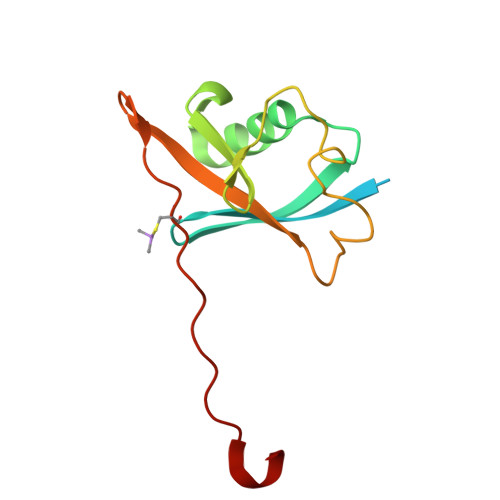
Elongin-B
A, D, G, J
129Homo sapiensMutation(s): 0 
Gene Names: ELOBTCEB2
UniProt & NIH Common Fund Data Resources
Find proteins for Q15370 (Homo sapiens)
Explore Q15370 
Go to UniProtKB:  Q15370
PHAROS:  Q15370
GTEx:  ENSG00000103363 
Entity Groups
Sequence Clusters30% Identity50% Identity70% Identity90% Identity95% Identity100% Identity
UniProt GroupQ15370
Sequence Annotations
Expand
Reference Sequence
Find similar proteins by:|  3D Structure
Entity ID: 2
MoleculeChains  Sequence LengthOrganismDetailsImage
Elongin-C
B, E, H, K
97Homo sapiensMutation(s): 0 
Gene Names: ELOCTCEB1
UniProt & NIH Common Fund Data Resources
Find proteins for Q15369 (Homo sapiens)
Explore Q15369 
Go to UniProtKB:  Q15369
PHAROS:  Q15369
GTEx:  ENSG00000154582 
Entity Groups
Sequence Clusters30% Identity50% Identity70% Identity90% Identity95% Identity100% Identity
UniProt GroupQ15369
Sequence Annotations
Expand
Reference Sequence
Find similar proteins by:|  3D Structure
Entity ID: 3
MoleculeChains  Sequence LengthOrganismDetailsImage
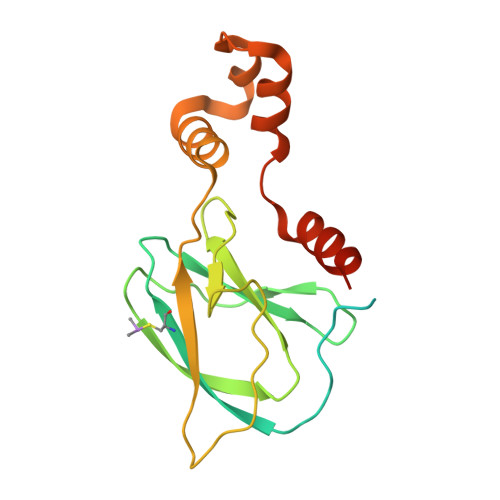
von Hippel-Lindau disease tumor suppressor
C, F, I, L
203Homo sapiensMutation(s): 0 
Gene Names: VHL
UniProt & NIH Common Fund Data Resources
Find proteins for P40337 (Homo sapiens)
Explore P40337 
Go to UniProtKB:  P40337
PHAROS:  P40337
GTEx:  ENSG00000134086 
Entity Groups
Sequence Clusters30% Identity50% Identity70% Identity90% Identity95% Identity100% Identity
UniProt GroupP40337
Sequence Annotations
Expand
Reference Sequence

Small Molecules

Ligands 1 Unique
IDChains Name / Formula / InChI Key2D Diagram3D Interactions
A1I58
(Subject of Investigation/LOI)

Query on A1I58


Download:Ideal Coordinates CCD File
M [auth C],
N [auth F],
O [auth I],
P [auth L]
(2~{S},4~{R})-1-[(2~{S})-1-(1-fluoranylcyclopropyl)carbonylpiperidin-2-yl]carbonyl-~{N}-[(1~{S})-1-[4-(4-methyl-1,3-thiazol-5-yl)phenyl]ethyl]-4-oxidanyl-pyrrolidine-2-carboxamide
C27 H33 F N4 O4 S
PMUQVDYDZIRJQF-AEMJNJESSA-N
Modified Residues  1 Unique
IDChains TypeFormula2D DiagramParent
CAS
Query on CAS
A, D, G, J
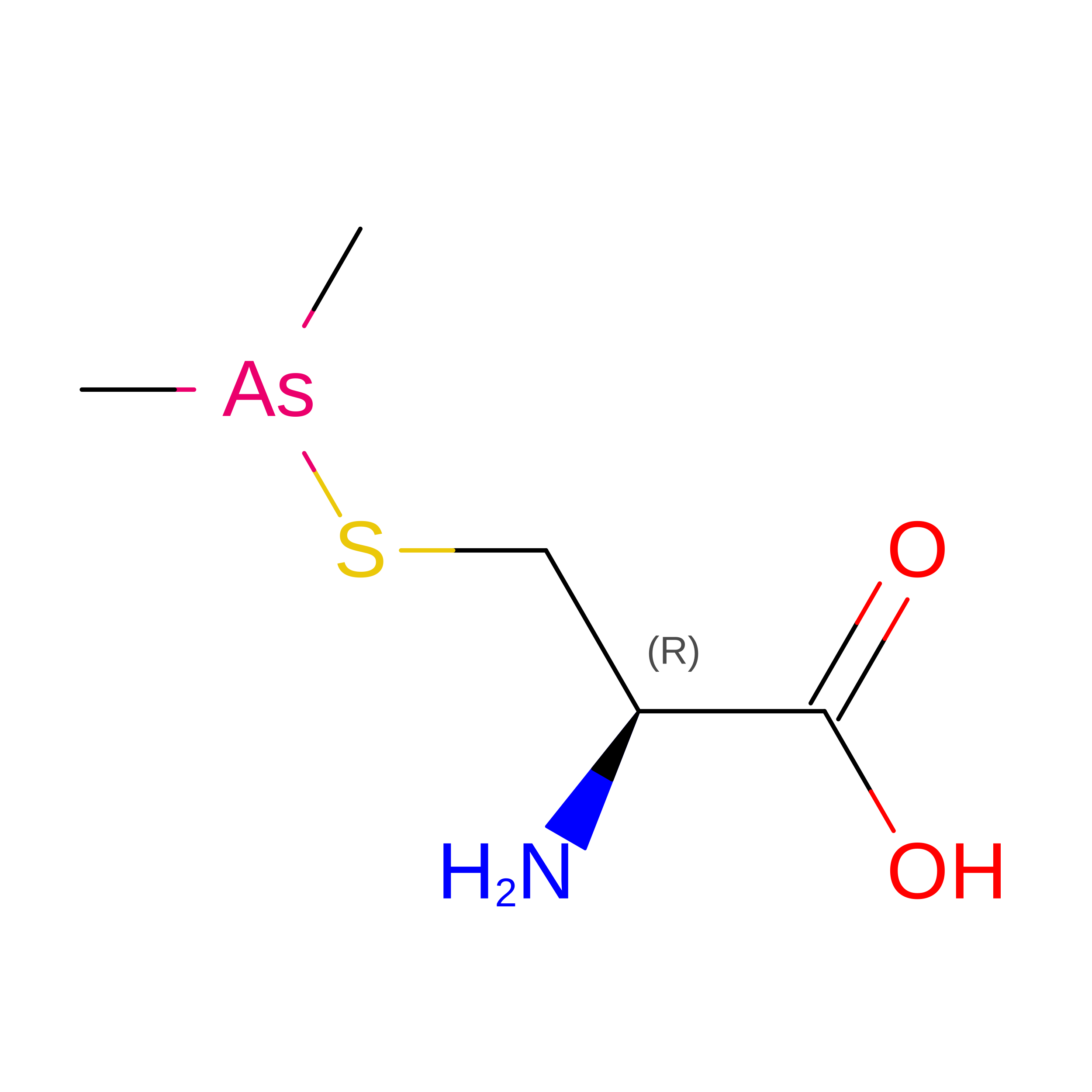
L-PEPTIDE LINKINGC5 H12 As N O2 SCYS

Experimental Data & Validation

Experimental Data

  • Method: X-RAY DIFFRACTION
  • Resolution: 2.50 Å
  • R-Value Free:  0.273 (Depositor), 0.274 (DCC) 
  • R-Value Work:  0.245 (Depositor), 0.246 (DCC) 
  • R-Value Observed: 0.246 (Depositor) 
Space Group: P 41 2 2
Unit Cell:
Length ( Å )Angle ( ˚ )
a = 94.215α = 90
b = 94.215β = 90
c = 366.025γ = 90
Software Package:
Software NamePurpose
PHENIXrefinement
XDSdata reduction
PHASERphasing

Structure Validation

View Full Validation Report


Ligand Structure Quality Assessment 


Entry History 

& Funding Information

Deposition Data


Funding OrganizationLocationGrant Number
Not funded--

Revision History  (Full details and data files)

  • Version 1.0: 2025-04-23
    Type: Initial release
  • Version 1.1: 2025-11-19
    Changes: Database references