Download Mendeley
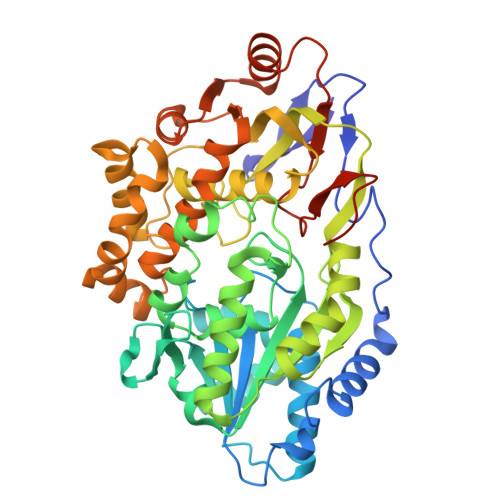
Structures of two LarA-like nickel-pincer nucleotide cofactor-utilizing enzymes with a single catalytic histidine residue.
Gatreddi, S., Subramanian, S., Sui, D., Wang, T., Urdiain-Arraiza, J., Desguin, B., Hausinger, R.P., Parent, K.N., Hu, J.(2025) Protein Sci 34: e70362-e70362
- PubMed: 41229066 Search on PubMedSearch on PubMed Central
- DOI: https://doi.org/10.1002/pro.70362
- Primary Citation Related Structures:
9Q2U, 9Q3J, 9Q3K - PubMed Abstract:
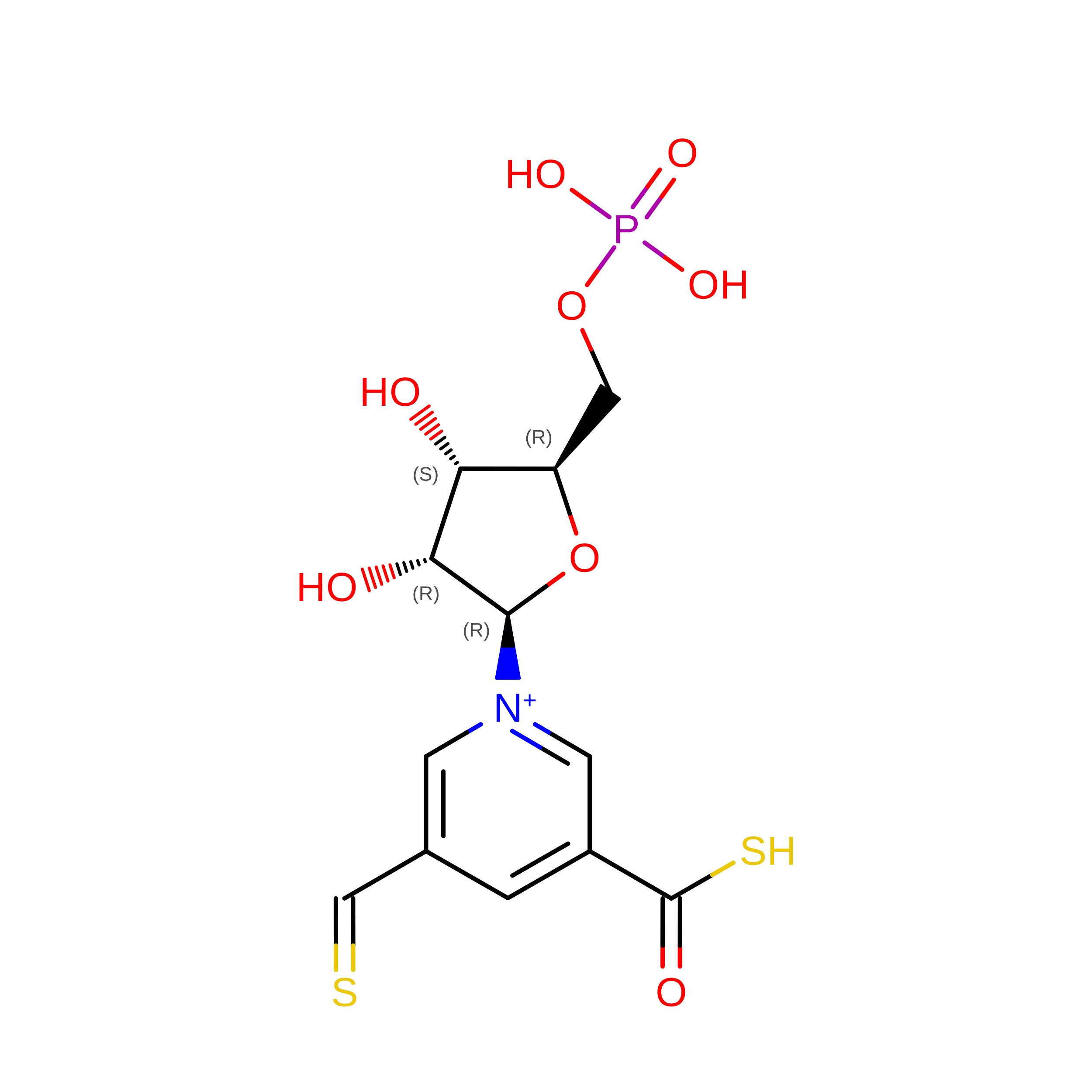
The nickel-pincer nucleotide (NPN) cofactor catalyzes the racemization/epimerization of α-hydroxy acids in enzymes of the LarA family. The established proton-coupled hydride transfer mechanism requires two catalytic histidine residues that alternately act as general acids and general bases. Notably, however, a fraction of LarA homologs (LarAHs) lack one of the active site histidine residues, replacing it with an asparaginyl side chain that cannot participate in acid/base catalysis. Here, we investigated two such LarAHs and solved their cryo-electron microscopic structures with and without loaded NPN cofactor, respectively. The structures revealed a consistent octameric assembly that is unprecedented in the LarA family and unveiled a new set of active site residues that likely recognize and process substrates differently from those of the well-studied LarAHs. Genomic context analysis suggested their potential involvement in carbohydrate metabolism. Together, these findings lay the groundwork for expanding the breadth of reactions and the range of mechanisms of LarA enzymes.
- Department of Microbiology, Genetics, and Immunology, Michigan State University, East Lansing, Michigan, USA.
Organizational Affiliation: