Download Mendeley
Crystal structure and ligand binding of a sigma-class glutathione S-transferase associated with cross-resistance in a specialist herbivore.
Moural, T.W., Hernandez, J.A., Chen, Q.R., Koirala Bk, S., Liu, Y., Cofer, T.M., Zuo, I.X., Alyokhin, A., Wang, H., Zhu, F.(2025) Int J Biol Macromol 323: 147108-147108
- PubMed: 40858164 Search on PubMed
- DOI: https://doi.org/10.1016/j.ijbiomac.2025.147108
- Primary Citation Related Structures:
9P6K - PubMed Abstract:
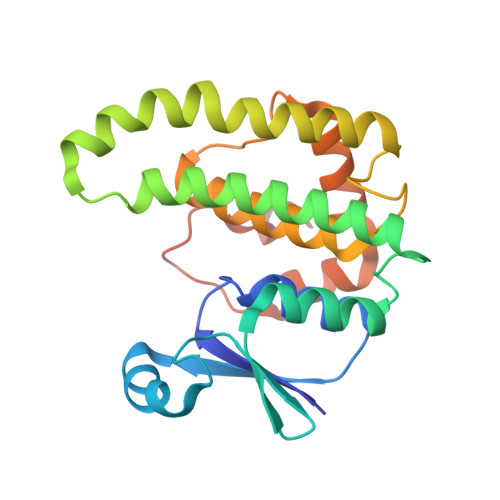
Understanding the molecular mechanisms underlying insect adaptation is critical for elucidating the evolution of pesticide resistance and improving pest management strategies. While host plant preadaptation has been proposed to facilitate insecticide resistance, direct evidence remains limited. Here, we investigated a sigma-class glutathione S-transferase (GST), LdGSTs2, in the Colorado potato beetle (Leptinotarsa decemlineata), a major agricultural pest. LdGSTs2 is significantly overexpressed in an imidacloprid-resistant strain and induced by host plant allelochemicals. Silencing LdGSTs2 via RNA interference increased susceptibility to imidacloprid, supporting its functional role in resistance. Ligand-binding assays using 8-anilinonaphthalene-1-sulfonic acid (ANS) revealed that LdGSTs2 interacts with a broad range of insecticides and potato-derived phytochemicals. We further solved the 3D crystal structure of LdGSTs2 and performed molecular docking, which identified key residues involved in ligand interactions. These findings demonstrate that LdGSTs2 may contribute to cross-resistance by binding both synthetic and natural xenobiotics, without direct evidence of metabolic detoxification. Our results provide new mechanistic insights into how sigma-class GSTs facilitate adaptation to environmental toxins and highlight a potential molecular link between host plant use and insecticide resistance in specialist herbivores.
- Department of Entomology, Pennsylvania State University, University Park, PA 16802, USA. Electronic address: twm78@psu.edu.
Organizational Affiliation: