Download Mendeley
Impacts of DNA methylation on H2A.Z deposition and nucleosome stability.
Shih, R.M., Arimura, Y., Konishi, H.A., Funabiki, H.(2026) Elife 15
- PubMed: 42411467 Search on PubMedSearch on PubMed Central
- DOI: https://doi.org/10.7554/eLife.109762
- Primary Citation Related Structures:
9OGR, 9OGS, 9OGZ, 9OH0, 9OH1, 9OH2 - PubMed Abstract:
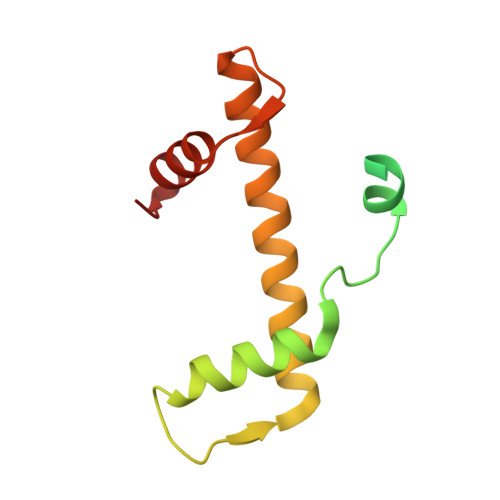
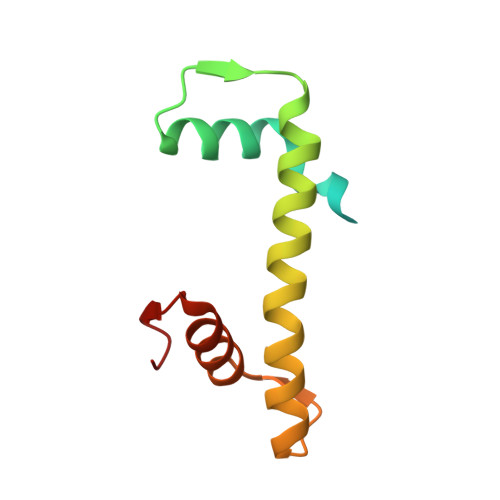
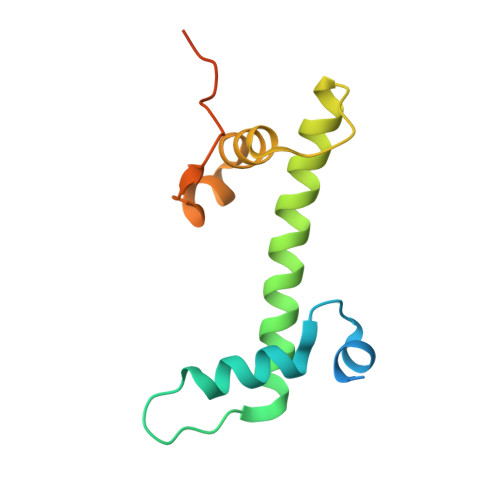
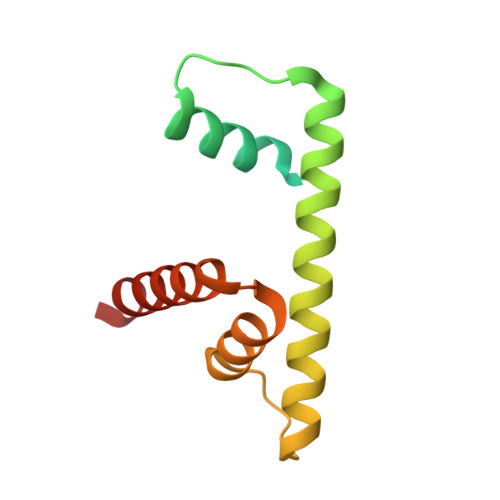
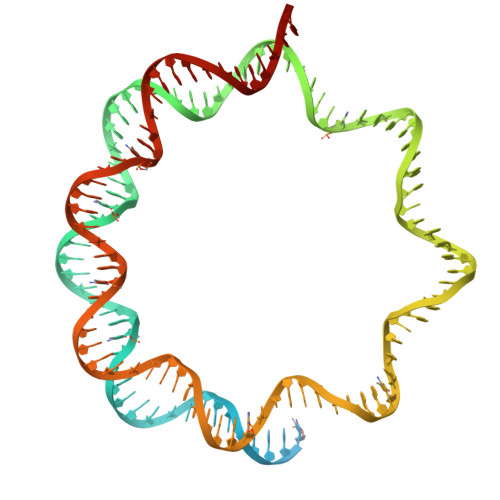
The histone variant H2A.Z and DNA methylation are enriched at mutually exclusive genomic segments, though its mechanistic bases remain unclear. Here, we examine DNA methylation's influence on the intrinsic stability of the H2A.Z nucleosome and chaperone-mediated H2A.Z deposition. Cryo-EM and endonuclease analyses suggest that DNA methylation subtly increases the openness and accessibility of the H2A.Z nucleosome on satellite II-derived DNA sequences. In transcriptionally silent Xenopus egg extracts, H2A.Z preferentially associates with unmethylated DNA though a substantial proportion of H2A.Z is recruited to methylated DNA. Preferential H2A.Z deposition to unmethylated DNA depends on the SRCAP complex, whose DNA binding is suppressed by methylation, while an SRCAP-independent and DNA methylation-insensitive mechanism for H2A.Z deposition also exists. Altogether, we propose that SRCAP drives the biased association of H2A.Z to unmethylated DNA, while additional mechanisms, potentially taking advantage of the subtle DNA methylation-induced physical effects, further assist the exclusion of H2A.Z from methylated DNA.
- Laboratory of Chromosome and Cell Biology, The Rockefeller University, New York, United States.
Organizational Affiliation: