Download Mendeley
Impact of Single Halogen Atom Substitutions on Antiviral Profile of Inhibitors Targeting SARS-CoV‐2 Main Protease.
Bulut, H., Higashi-Kuwata, N., Ogata-Aoki, H., Hayashi, H., Takamune, N., Kishimoto, N., Das, D., Li, M., Wlodawer, A., Misumi, S., Tamamura, H., Mitsuya, H.(2026) ACS Omega 11: 4541-4550
- PubMed: 41626465 Search on PubMedSearch on PubMed Central
- DOI: https://doi.org/10.1021/acsomega.5c10895
- Primary Citation Related Structures:
9NWA, 9NWB, 9NWC - PubMed Abstract:
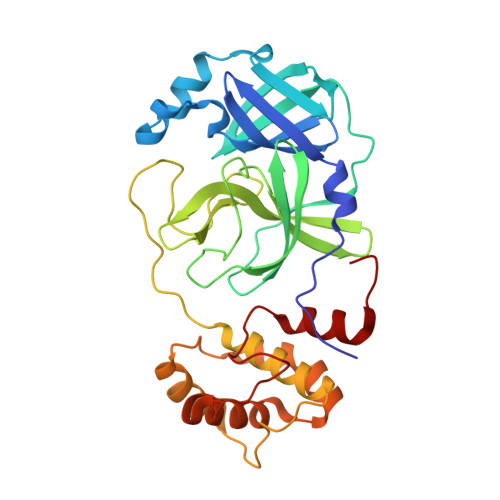
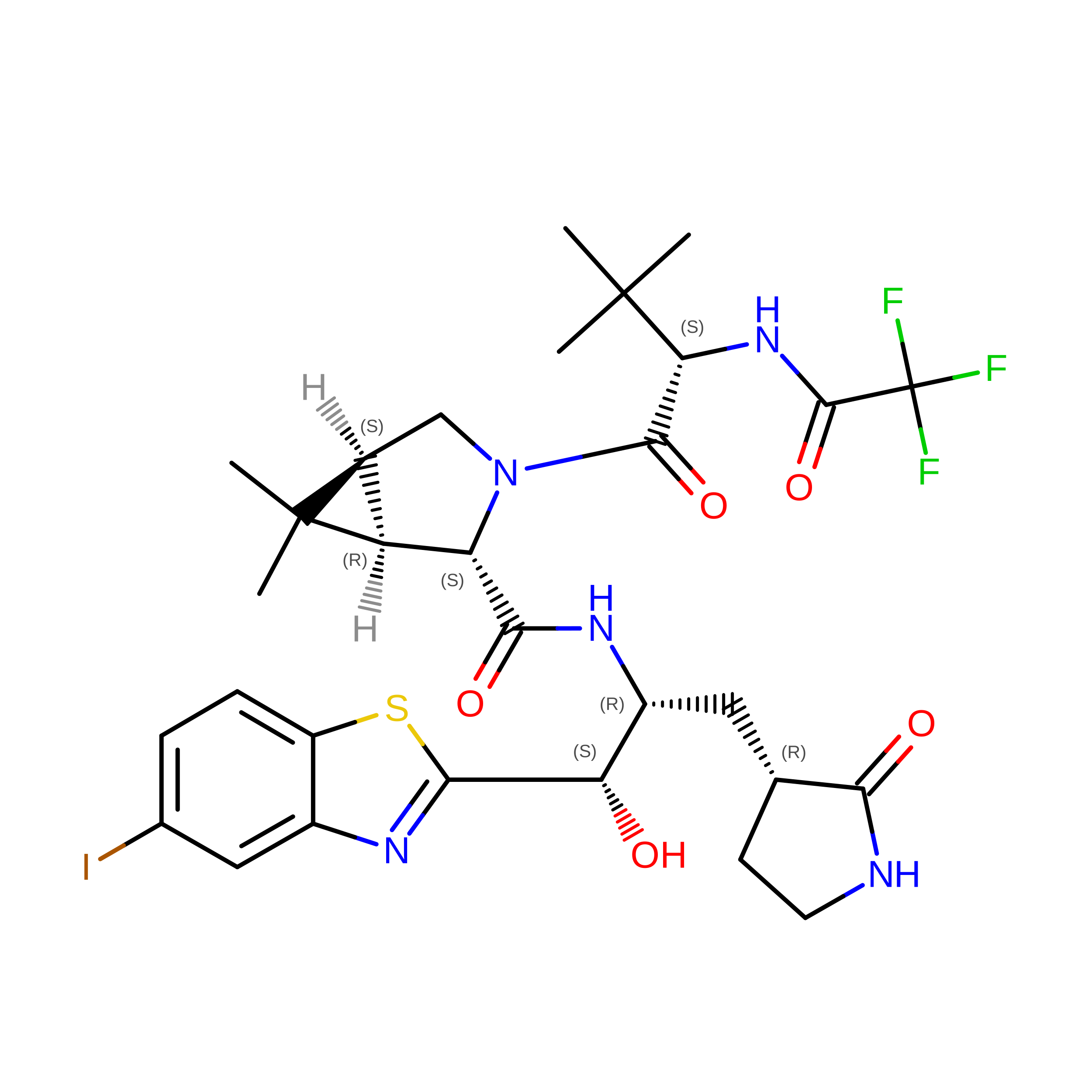
The SARS-CoV-2 main protease (M pro ) remains a prime antiviral target because its inhibition halts viral replication. To probe how subtle atomic changes influence drug performance, we carried out a systematic halogen scan on a potent ketoamide scaffold, replacing a single fluorine with chlorine, bromine, or iodine. Enzymatic assays revealed that the F- and Cl-substituted analogues inhibit M pro at nanomolar levels, whereas Br and I variants are 10- to 20-fold weaker. Cell-based antiviral tests mirrored this trend, yet uptake studies showed the opposite: iodine markedly enhances intracellular accumulation. High-resolution X-ray structures (1.6-1.8 Å) explain the dichotomy: small halogens fit snugly in the S1' σ-hole pocket, maximizing hydrogen-bond geometry, while bulkier atoms distort binding but create a lipophilic patch that boosts permeability. These data yield the first fluorine-to-iodine structure-activity map for SARS-CoV-2 M pro inhibitors. These findings highlight the critical role of halogen selection in antiviral inhibitor design.
- Experimental Retrovirology Section, HIV and AIDS Malignancy Branch, National Cancer Institute, NIH, Bethesda, Maryland 20892, United States.
Organizational Affiliation: