Download Mendeley
LetA defines a structurally distinct transporter family.
Santarossa, C.C., Li, Y., Yousef, S., Hasdemir, H.S., Rodriguez, C.C., Haase, M.A.B., Baek, M., Coudray, N., Pavek, J.G., Focke, K.N., Silverberg, A.L., Bautista, C., Yeh, J.T., Marty, M.T., Baker, D., Tajkhorshid, E., Ekiert, D.C., Bhabha, G.(2026) Nature 651: 1097-1106
- PubMed: 41565823 Search on PubMedSearch on PubMed Central
- DOI: https://doi.org/10.1038/s41586-025-09990-0
- Primary Citation Related Structures:
9N8W, 9N8X - PubMed Abstract:
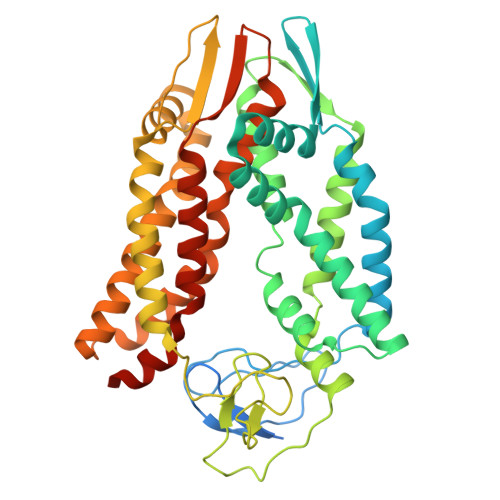
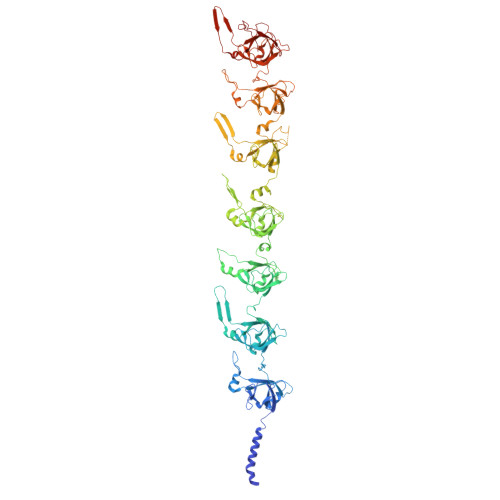
Membrane transport proteins translocate diverse cargos, ranging from small sugars to entire proteins, across cellular membranes 1-3 . A few structurally distinct protein families have been described that account for most of the known membrane transport processes 4-6 . However, many membrane proteins with predicted transporter functions remain uncharacterized. Here we determined the structure of Escherichia coli LetAB, a phospholipid transporter involved in outer membrane integrity, and found that LetA adopts a distinct architecture that is structurally and evolutionarily unrelated to known transporter families. LetA localizes to the inner membrane, where it is poised to load lipids into its binding partner, LetB, a mammalian cell entry (MCE) protein that forms an approximately 225 Å long tunnel for lipid transport across the cell envelope. Unexpectedly, the LetA transmembrane domains adopt a fold that is evolutionarily related to the eukaryotic tetraspanin family of membrane proteins, including transmembrane AMPA receptor regulatory proteins (TARPs) and claudins. Through a combination of deep mutational scanning, molecular dynamics simulations, AlphaFold-predicted alternative states and functional studies, we present a model for how the LetA-like family of membrane transporters facilitates the transport of lipids across the bacterial cell envelope.
- Department of Biology, Johns Hopkins University, Baltimore, MD, USA.
Organizational Affiliation: