Download Mendeley
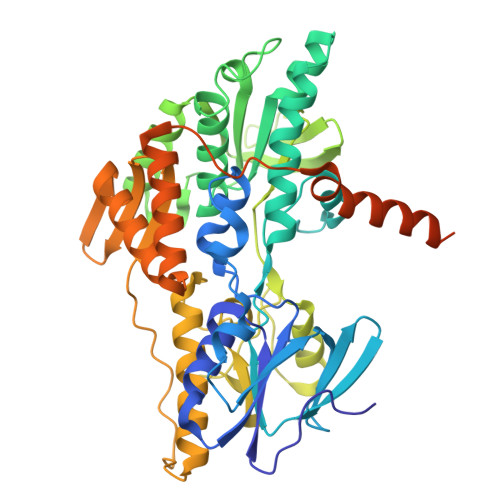
Structure of Mycobacterial NDH-2 Bound to a 2-Mercapto-Quinazolinone Inhibitor.
Liang, Y., Bueler, S.A., Cook, G.M., Rubinstein, J.L.(2025) J Med Chem 68: 7579-7591
- PubMed: 40117195 Search on PubMed
- DOI: https://doi.org/10.1021/acs.jmedchem.5c00049
- Primary Citation Related Structures:
9MQY, 9MQZ - PubMed Abstract:
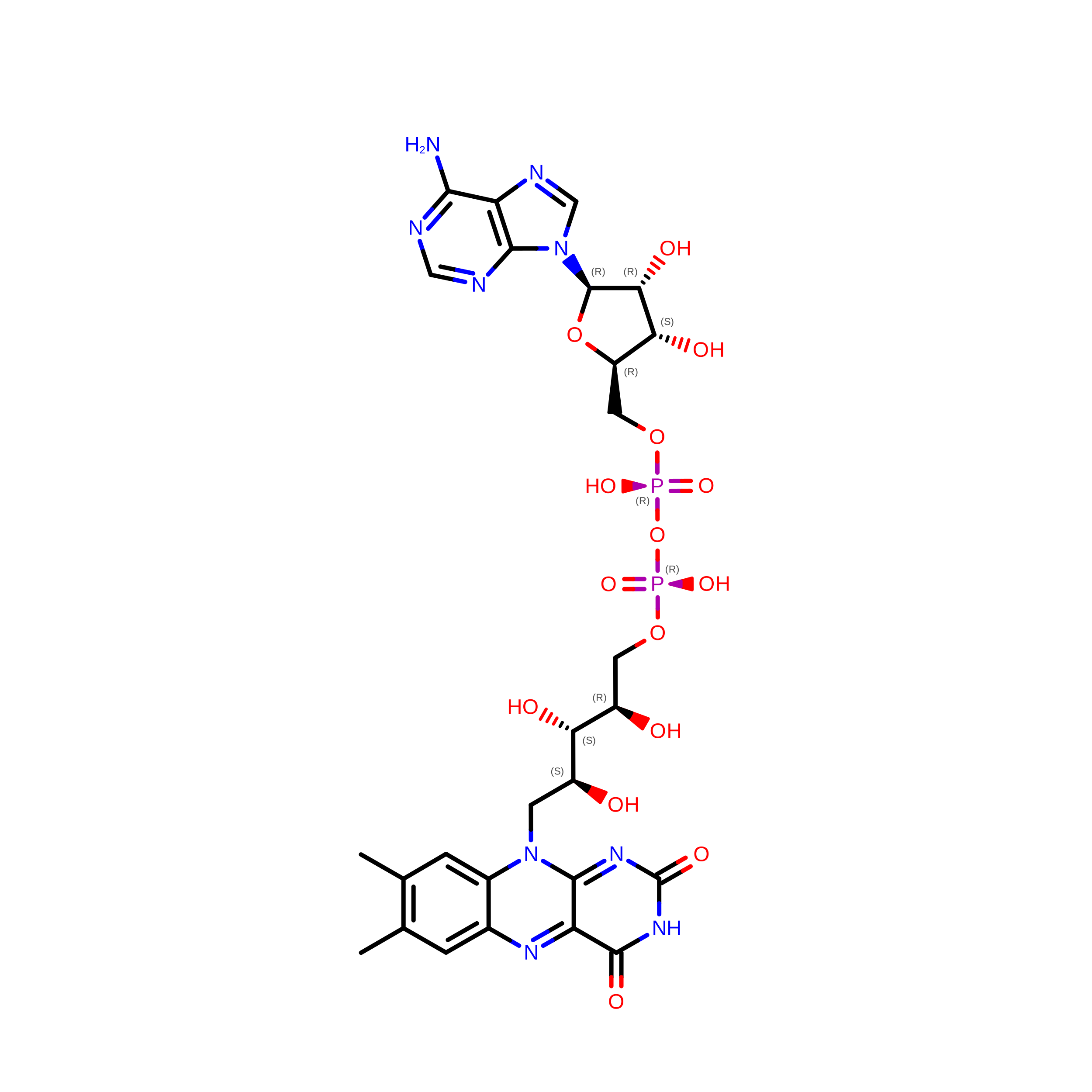
Mycobacterial type II NADH dehydrogenase (NDH-2) is a promising drug target because of its central role in energy metabolism in Mycobacterium tuberculosis and other pathogens, and because it lacks a known mammalian homologue. To facilitate optimization of lead compounds, we used electron cryomicroscopy (cryo-EM) to determine the structure of NDH-2 from Mycobacterium smegmatis , a fast-growing nonpathogenic model for respiration in M. tuberculosis . The structure shows that active mycobacterial NDH-2 is dimeric, with an arrangement of monomers in the dimer that differs from the arrangement described for other prokaryotic NDH-2 dimers, instead resembling dimers formed by NDH-2 in the eukaryotes Saccharomyces cerevisiae and Plasmodium falciparum . A structure of the enzyme bound to a 2-mercapto-quinazolinone inhibitor shows that the compound interacts directly with the flavin adenine dinucleotide cofactor, blocking the menaquinone-reducing site. These results reveal structural elements of NDH-2 that could be used to design specific inhibitors of the mycobacterial enzyme.
- Molecular Medicine Program, The Hospital for Sick Children, Toronto, ON M5G 0A4, Canada.
Organizational Affiliation: