9MQB | pdb_00009mqb

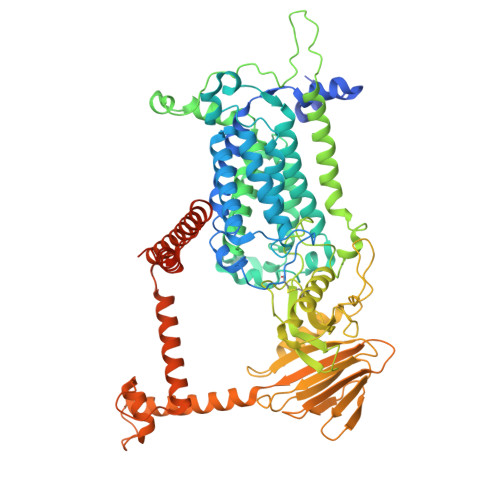
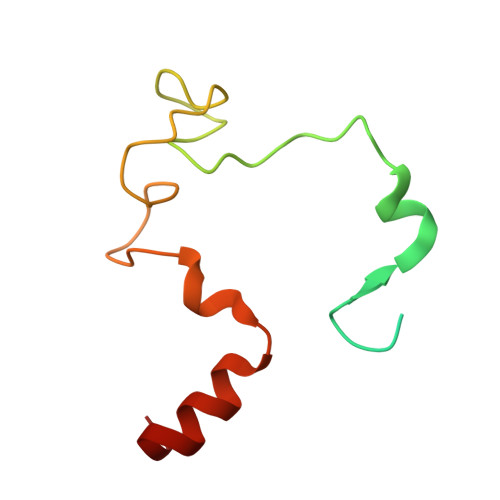
Vitamin K-dependent gamma-carboxylase with Osteocalcin (mutant) and vitamin K hydroquinone and calcium

  • Classification: TRANSFERASE
  • Organism(s): Homo sapiens
  • Expression System: Homo sapiens
  • Mutation(s): Yes 

  • Deposited: 2025-01-02 Released: 2025-10-08 
  • Deposition Author(s): Li, W., Liu, B., Cao, Q.
  • Funding Organization(s): National Institutes of Health/National Heart, Lung, and Blood Institute (NIH/NHLBI), American Heart Association, W. M. Keck Foundation, Childrens Discovery Institute of Washington University and St. Louis Childrens Hospital, National Institutes of Health/National Institute Of Allergy and Infectious Diseases (NIH/NIAID), National Institutes of Health/National Institute of General Medical Sciences (NIH/NIGMS)

Experimental Data Snapshot

  • Method: ELECTRON MICROSCOPY
  • Resolution: 3.37 Å
  • Aggregation State: PARTICLE 
  • Reconstruction Method: SINGLE PARTICLE 

wwPDB Validation   3D Report Full Report


This is version 1.0 of the entry. See complete history


Literature

Structural insights into the vitamin K-dependent gamma-carboxylation of osteocalcin.

Cao, Q.Fan, J.Ammerman, A.Awasthi, S.Lin, Z.Mierxiati, S.Chen, H.Xu, J.Garcia, B.A.Liu, B.Li, W.

(2025) Cell Res 35: 735-749

  • DOI: https://doi.org/10.1038/s41422-025-01161-0
  • Primary Citation of Related Structures:  
    9MQB, 9MQC, 9MQE

  • PubMed Abstract: 

    The γ-carboxylation state of osteocalcin determines its essential functions in bone mineralization or systemic metabolism and serves as a prominent biomarker for bone health and vitamin K nutrition. This post-translational modification of glutamate residues is catalyzed by the membrane-embedded vitamin K-dependent γ-carboxylase (VKGC), which typically recognizes protein substrates through their tightly bound propeptide that triggers γ-carboxylation. However, the osteocalcin propeptide exhibits negligible affinity for VKGC. To understand the underlying molecular mechanism, we determined the cryo-electron microscopy structures of VKGC with osteocalcin carrying a native propeptide or a high-affinity variant at different carboxylation states. The structures reveal a large chamber in VKGC that maintains uncarboxylated and partially carboxylated osteocalcin in partially unfolded conformations, allowing their glutamate-rich region and C-terminal helices to engage with VKGC at multiple sites. Binding of this mature region together with the low-affinity propeptide effectively stimulates VKGC activity, similar to high-affinity propeptides that differ only in closely fitting interactions. However, the low-affinity propeptide renders osteocalcin prone to undercarboxylation at low vitamin K levels, thereby serving as a discernible biomarker. Overall, our studies reveal the unique interaction of osteocalcin with VKGC and provide a framework for designing therapeutic strategies targeting osteocalcin-related bone and metabolic disorders.


  • Organizational Affiliation
    • Department of Biochemistry and Molecular Biophysics, Washington University School of Medicine, St. Louis, MO, USA.

Macromolecules
Find similar proteins by:  (by identity cutoff)  |  3D Structure
Entity ID: 1
MoleculeChains Sequence LengthOrganismDetailsImage
Vitamin K-dependent gamma-carboxylase758Homo sapiensMutation(s): 0 
Gene Names: GGCXGC
EC: 4.1.1.90
UniProt & NIH Common Fund Data Resources
Find proteins for P38435 (Homo sapiens)
Explore P38435 
Go to UniProtKB:  P38435
PHAROS:  P38435
GTEx:  ENSG00000115486 
Entity Groups  
Sequence Clusters30% Identity50% Identity70% Identity90% Identity95% Identity100% Identity
UniProt GroupP38435
Glycosylation
Glycosylation Sites: 4Go to GlyGen: P38435-1
Sequence Annotations
Expand
  • Reference Sequence
Find similar proteins by:  (by identity cutoff)  |  3D Structure
Entity ID: 2
MoleculeChains Sequence LengthOrganismDetailsImage
OsteocalcinB [auth P]100Homo sapiensMutation(s): 2 
Gene Names: BGLAP
UniProt & NIH Common Fund Data Resources
Find proteins for P02818 (Homo sapiens)
Explore P02818 
Go to UniProtKB:  P02818
PHAROS:  P02818
GTEx:  ENSG00000242252 
Entity Groups  
Sequence Clusters30% Identity50% Identity70% Identity90% Identity95% Identity100% Identity
UniProt GroupP02818
Sequence Annotations
Expand
  • Reference Sequence
Oligosaccharides

Help

Entity ID: 3
MoleculeChains Length2D Diagram Glycosylation3D Interactions
2-acetamido-2-deoxy-beta-D-glucopyranose-(1-4)-2-acetamido-2-deoxy-beta-D-glucopyranoseC [auth B],
D [auth C]
2N-Glycosylation
Glycosylation Resources
GlyTouCan:  G42666HT
GlyCosmos:  G42666HT
GlyGen:  G42666HT
Small Molecules
Ligands 3 Unique
IDChains Name / Formula / InChI Key2D Diagram3D Interactions
6PL (Subject of Investigation/LOI)
Query on 6PL

Download Ideal Coordinates CCD File 
H [auth A],
I [auth A]
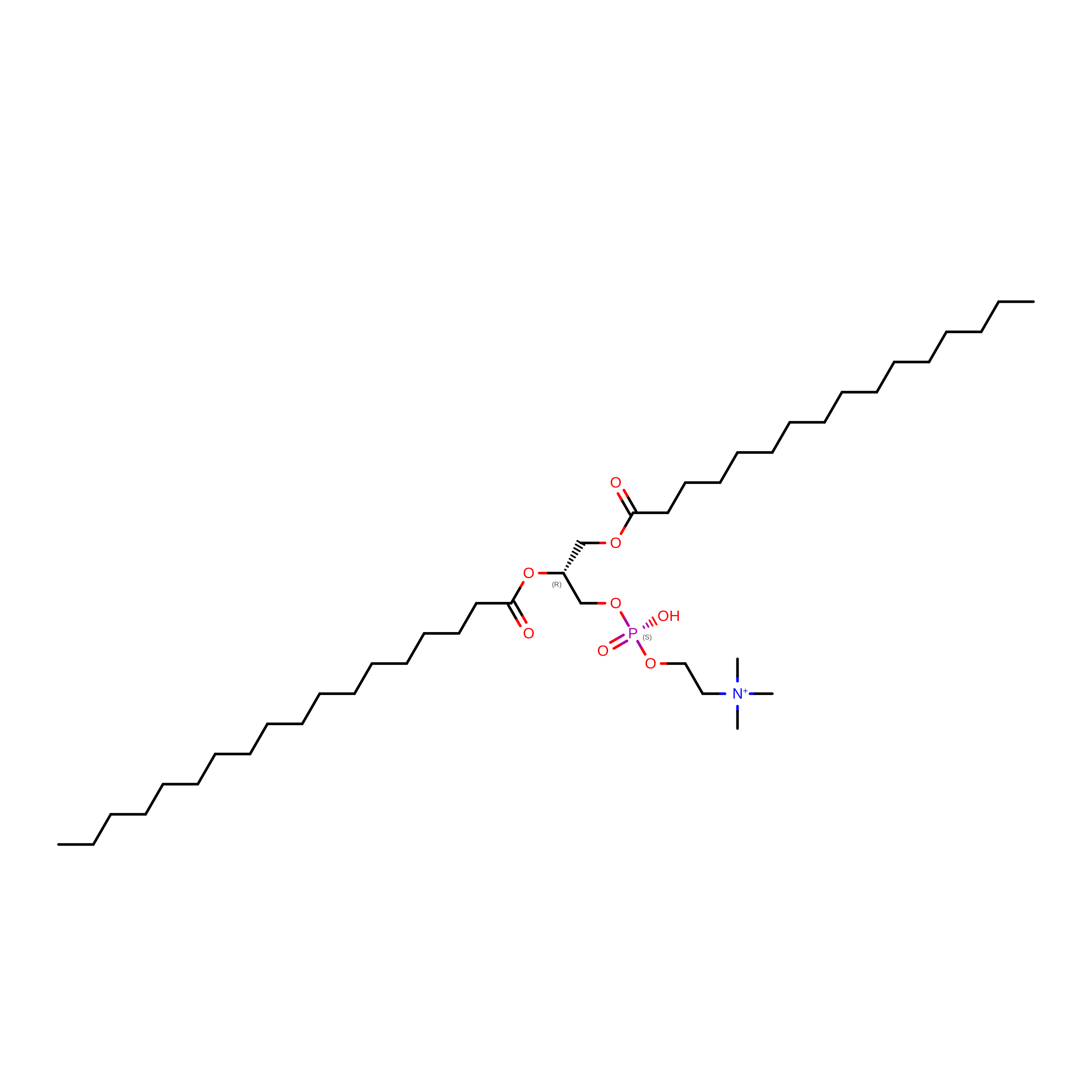
(4S,7R)-4-HYDROXY-N,N,N-TRIMETHYL-9-OXO-7-[(PALMITOYLOXY)METHYL]-3,5,8-TRIOXA-4-PHOSPHAHEXACOSAN-1-AMINIUM 4-OXIDE
C42 H85 N O8 P
PZNPLUBHRSSFHT-RRHRGVEJSA-O
A1AVC (Subject of Investigation/LOI)
Query on A1AVC

Download Ideal Coordinates CCD File 
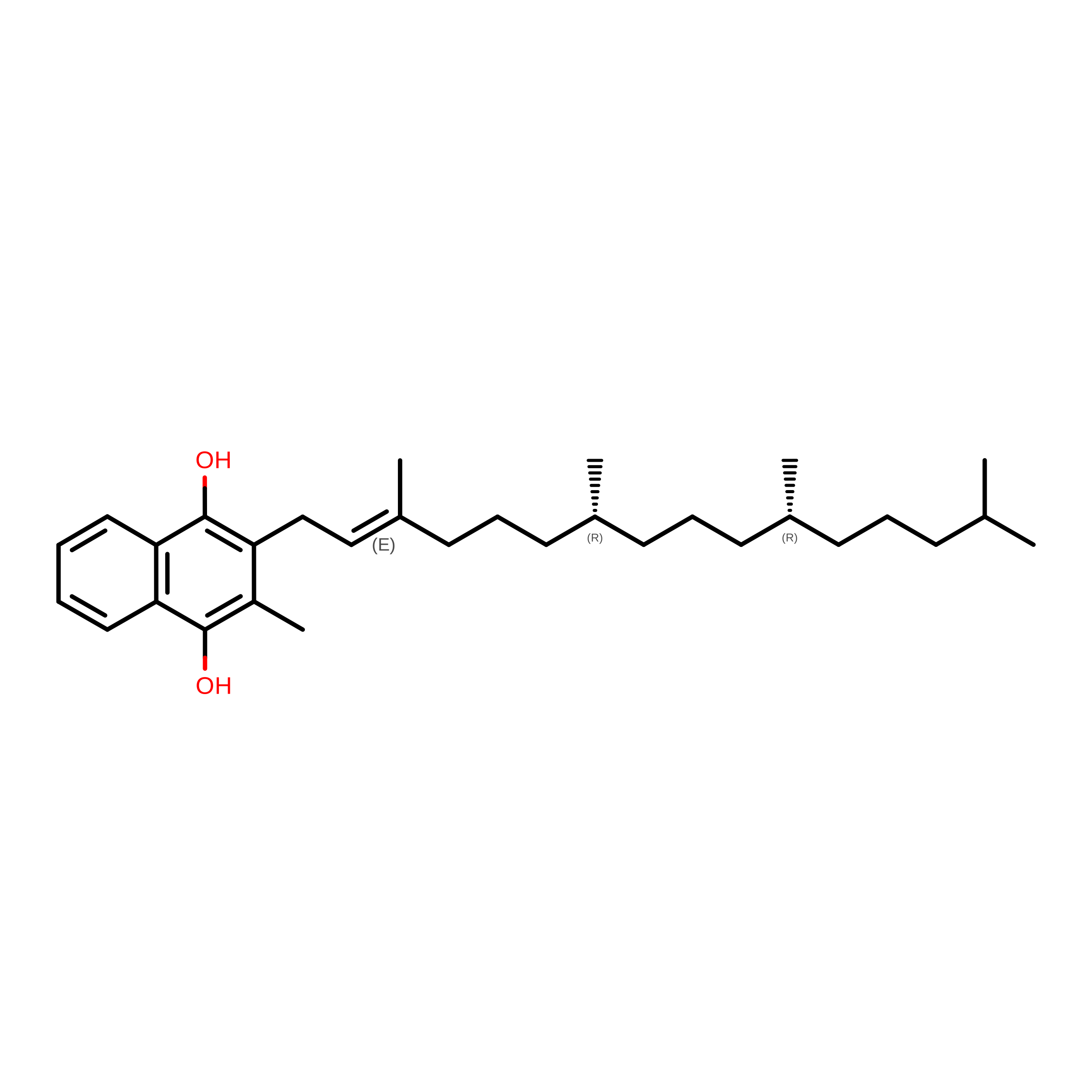
J [auth A]vitamin K1 hydroquinone
C31 H48 O2
BUFJIHPUGZHTHL-NKFFZRIASA-N
NAG (Subject of Investigation/LOI)
Query on NAG

Download Ideal Coordinates CCD File 
E [auth A],
F [auth A],
G [auth A]
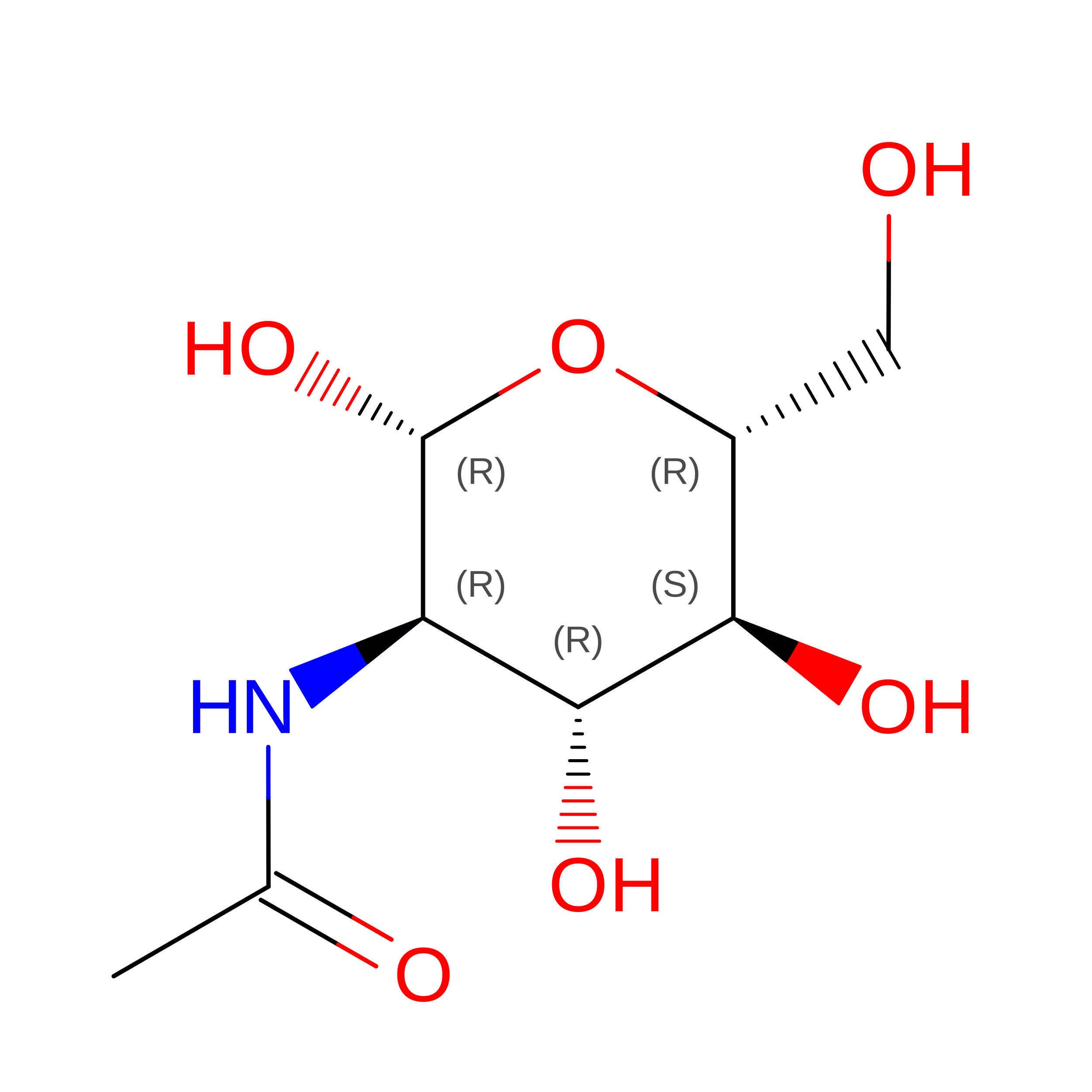
2-acetamido-2-deoxy-beta-D-glucopyranose
C8 H15 N O6
OVRNDRQMDRJTHS-FMDGEEDCSA-N
Experimental Data & Validation

Experimental Data

  • Method: ELECTRON MICROSCOPY
  • Resolution: 3.37 Å
  • Aggregation State: PARTICLE 
  • Reconstruction Method: SINGLE PARTICLE 
EM Software:
TaskSoftware PackageVersion
MODEL REFINEMENTPHENIX1.21.1_5286:

Structure Validation

View Full Validation Report


Entry History & Funding Information

Deposition Data


Funding OrganizationLocationGrant Number
National Institutes of Health/National Heart, Lung, and Blood Institute (NIH/NHLBI)United StatesHL121718
American Heart AssociationUnited StatesEstablished Investigator Award
American Heart AssociationUnited StatesCollaborative Sciences Award
W. M. Keck FoundationUnited StatesForefront of Science Award
Childrens Discovery Institute of Washington University and St. Louis Childrens HospitalUnited StatesMCII 2020-854
National Institutes of Health/National Institute Of Allergy and Infectious Diseases (NIH/NIAID)United StatesAI158500
National Institutes of Health/National Institute of General Medical Sciences (NIH/NIGMS)United StatesGM131008

Revision History  (Full details and data files)

  • Version 1.0: 2025-10-08
    Type: Initial release