Download Mendeley
Structure-guided discovery of Otopetrin 1 inhibitors reveals druggable binding sites at the intrasubunit interface.
Burendei, B., Kaplan, J.P., Orellana, G.M., Liman, E.R., Forli, S., Ward, A.B.(2025) Nat Commun 16: 9362-9362
- PubMed: 41130946 Search on PubMedSearch on PubMed Central
- DOI: https://doi.org/10.1038/s41467-025-64392-0
- Primary Citation Related Structures:
9MFF, 9MFL, 9MFM - PubMed Abstract:
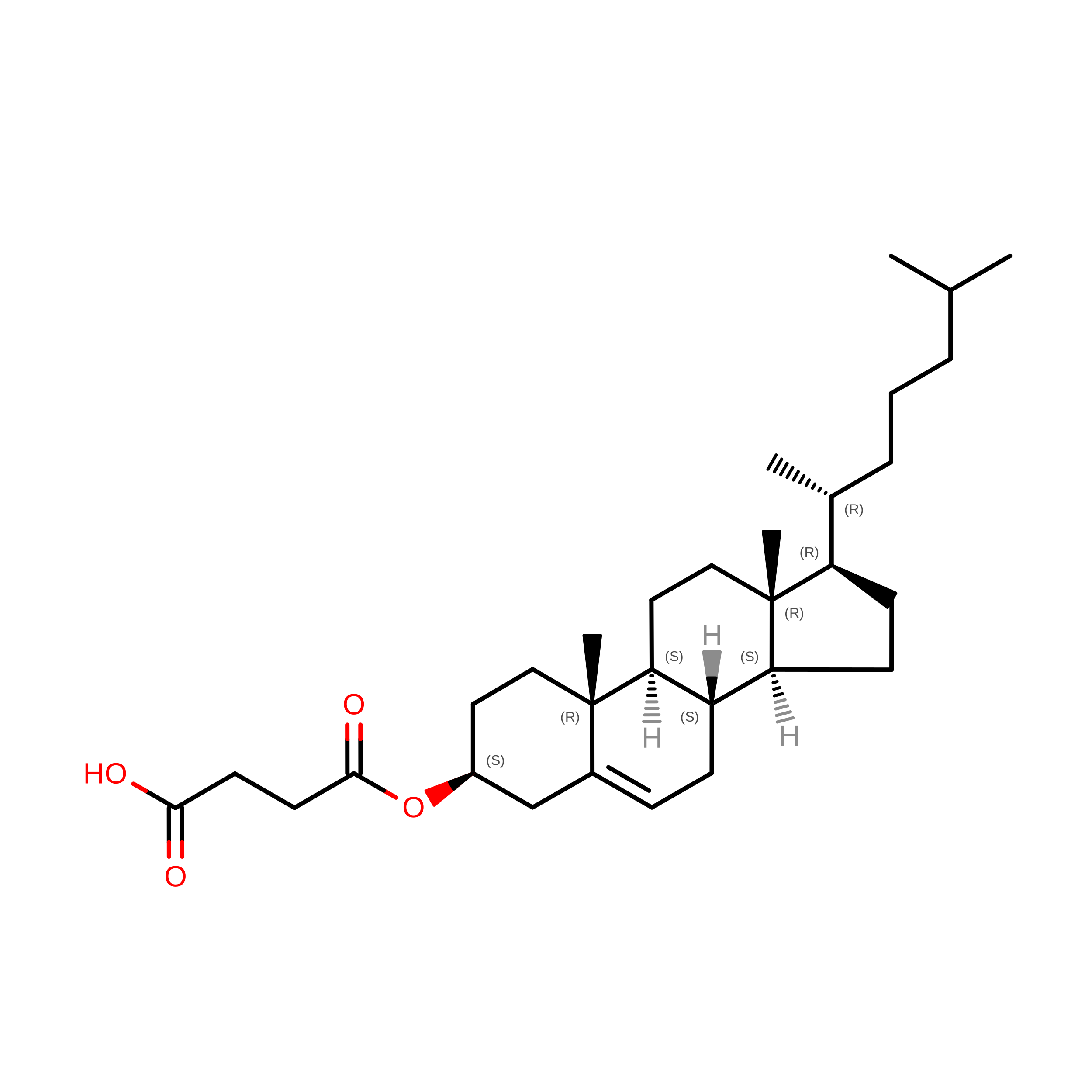
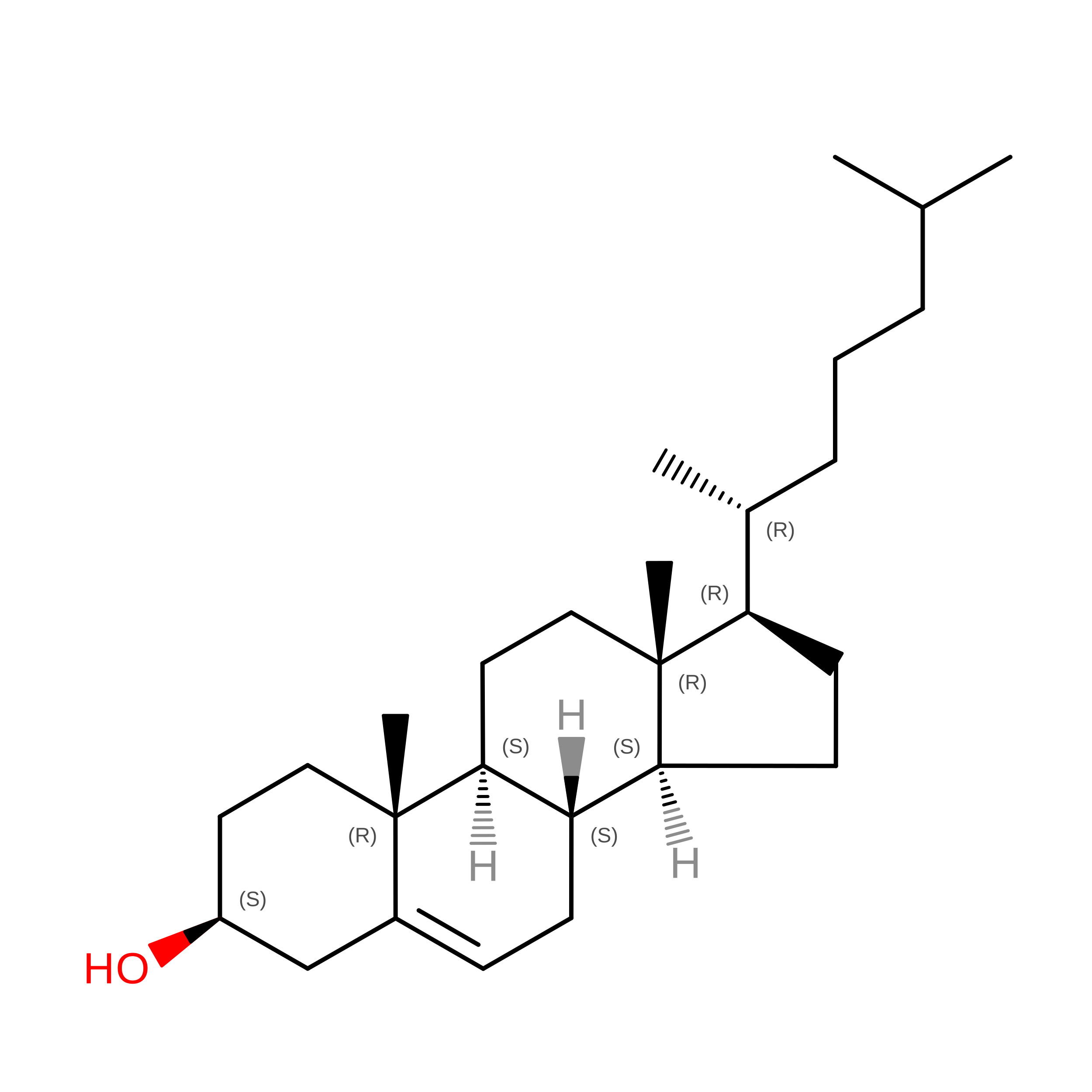
Proton conductance across cell membranes serves many biological functions, ranging from the regulation of intracellular and extracellular pH to the generation of electrical signals that lead to sour taste perception. Otopetrins (OTOPs) are a conserved, eukaryotic family of proton-selective ion channels, one of which (OTOP1) serves as a gustatory sensor for sour tastes and ammonium chloride. As the functional properties and structures of OTOP channels were only recently described, there are presently few tools available to modulate their activity. Here, we perform subsequent rounds of molecular docking-based virtual screening against the structure of zebrafish OTOP1, followed by functional testing using whole-cell patch-clamp electrophysiology, and identify several small molecule inhibitors that are effective in the low-to-mid µM range. Cryo-electron microscopy structures reveal inhibitor binding sites in the intrasubunit interface that are validated by functional testing of mutant channels. Our findings reveal pockets that can be targeted for small molecule discovery to develop modulators for Otopetrins. Such modulators can serve as useful toolkit molecules for future investigations of structure-function relationships or physiological roles of Otopetrins.
- Department of Integrative Structural and Computational Biology, The Scripps Research Institute, La Jolla, CA, USA.
Organizational Affiliation: