Download Mendeley
Mechanistic insights into Cas13d enzymes from cryo-EM structures of CasRx and DjCas13d.
Chen, X., He, Y., Guo, M., Liu, S., Li, Y., Zeng, F., Wang, C., Yuan, K., Huang, H.(2025) Nucleic Acids Res 53
- PubMed: 41036620 Search on PubMedSearch on PubMed Central
- DOI: https://doi.org/10.1093/nar/gkaf986
- Primary Citation Related Structures:
9M30, 9M31, 9M33, 9M34, 9M38, 9M8Q - PubMed Abstract:
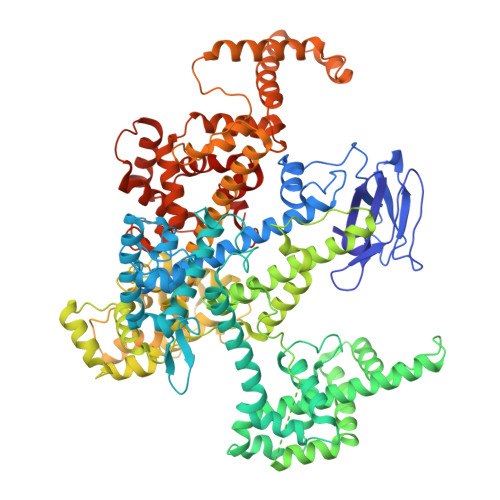
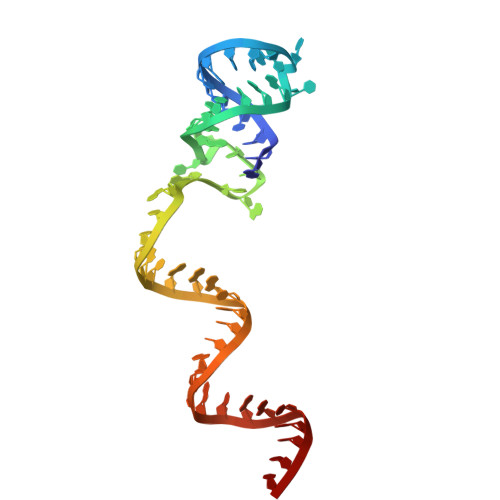
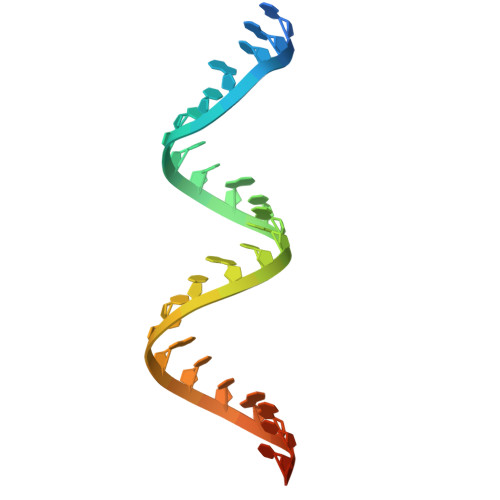
CasRx and its engineered variants have emerged as powerful RNA-targeting tools, exhibiting high specificity, robust efficiency, and minimal trans-cleavage activity. Recently, DjCas13d was identified as a promising alternative, offering even lower trans-cleavage activity while retaining comparable cis-cleavage efficiency. Despite their broad utility in biotechnology and therapeutic development, the molecular mechanisms governing substrate recognition and activation in these functionally relevant Cas13d enzymes remain incompletely understood. Here, we present comparative structural and biochemical analyses of CasRx and DjCas13d. Using cryogenic electron microscopy, we determined structures of both enzymes in binary (protein-crRNA) and ternary (protein-crRNA-target RNA) states, and additionally solved the apo structure of DjCas13d. Biochemical assays revealed that both enzymes exhibit similar cis-cleavage activity, whereas DjCas13d shows substantially reduced trans-cleavage activity relative to CasRx. Structural comparisons uncovered key conformational changes linked to target RNA engagement and catalytic activation, providing mechanistic insight into their distinct cleavage behaviors. Furthermore, structure-guided mutagenesis yielded several CasRx variants that achieve a favorable balance between reduced trans-cleavage activity and preserved cis-cleavage efficiency, representing valuable starting points for further optimization. Together, these findings advance our mechanistic understanding of Cas13 enzymes and provide a structural framework for the rational design of RNA-targeting technologies.
- Shenzhen Key Laboratory of Plant Genetic Engineering and Molecular Design, Institute of Plant and Food Science, School of Life Sciences, Southern University of Science and Technology, Shenzhen 518055, China.
Organizational Affiliation: