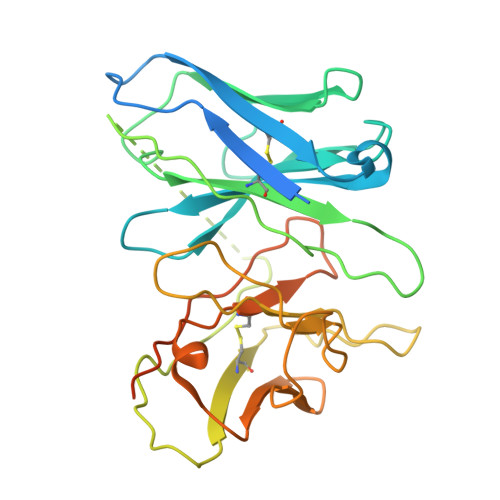
9M57 | pdb_00009m57

Structural insight into determinants of endogenous agonist selectivity of aminergic receptors from octopamine b2 receptor structure


Experimental Data Snapshot

  • Method: ELECTRON MICROSCOPY
  • Resolution: 3.65 Å
  • Aggregation State: PARTICLE 
  • Reconstruction Method: SINGLE PARTICLE 

wwPDB Validation   3D Report Full Report


This is version 1.1 of the entry. See complete history


Literature

Structural insights into endogenous agonist selectivity of aminergic receptors from the octopamine beta 2 receptor.

Hori, T.Katsura, K.Miyamoto-Kohno, S.Uchikubo-Kamo, T.Yonemochi, M.Shirouzu, M.

(2025) PNAS Nexus 4

  • DOI: https://doi.org/10.1093/pnasnexus/pgaf376
  • Primary Citation of Related Structures:  
    9M55, 9M57

  • PubMed Abstract: 

    Tyrosine-derived amines (TDAs), such as octopamine, noradrenaline, dopamine, and tyramine, are essential neurotransmitters that play diverse roles in various physiological processes. The distinct receptor selectivity of these structurally similar molecules is vital for their specific functions. However, all these receptors belong to the same subfamily of G-protein-coupled receptors and share high sequence homology within their orthosteric binding sites. The molecular basis of this selectivity remains unclear because of the absence of structural data on octopamine and tyramine receptors. In this study, we present cryo-electron microscopy structures of the deer tick octopamine β 2 receptor (octβ 2 R) bound to octopamine or N -2,4-dimethylphenyl- N '-methylformamidine (DPMF), an acaricidal amitraz metabolite. Octopamine and DPMF formed aromatic interactions with Y307 6.55 and F328 7.39 , residues crucial for octβ 2 R activation. The lower potency of other TDAs for octβ 2 R stems from the subtle effect of functional groups on both interactions, i.e. the meta-hydroxyl group of noradrenaline and dopamine hinders edge-to-edge interaction with Y307 6.55 , and the absence of a 1-hydroxyl group in dopamine and tyramine prevents π-hydrogen bonding with F328 7.39 . These structural insights into octβ 2 R selectivity are likely applicable across other TDA receptors, highlighting the pivotal role of residues 6.55 and 7.39. Consequently, the elucidated selection mechanism provides fundamental knowledge of aminergic ligand recognition, a process crucial for neurotransmission and overall organismal function.


  • Organizational Affiliation
    • Laboratory for Protein Functional and Structural Biology, RIKEN Center for Integrative Medical Sciences, 1-7-22 Suehiro-cho, Tsurumi-ku, Yokohama, Kanagawa 230-0045, Japan.

Macromolecules
Find similar proteins by:  (by identity cutoff)  |  3D Structure
Entity ID: 1
MoleculeChains Sequence LengthOrganismDetailsImage
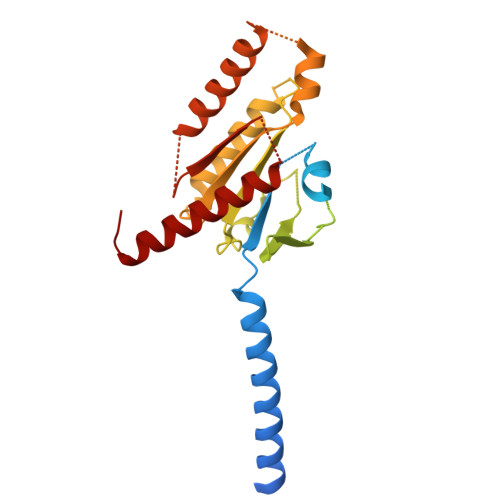
G-protein alpha subunit402Ixodes scapularisMutation(s): 0 
UniProt
Find proteins for B7PTW2 (Ixodes scapularis)
Explore B7PTW2 
Go to UniProtKB:  B7PTW2
Entity Groups  
Sequence Clusters30% Identity50% Identity70% Identity90% Identity95% Identity100% Identity
UniProt GroupB7PTW2
Sequence Annotations
Expand
  • Reference Sequence
Find similar proteins by:  (by identity cutoff)  |  3D Structure
Entity ID: 2
MoleculeChains Sequence LengthOrganismDetailsImage
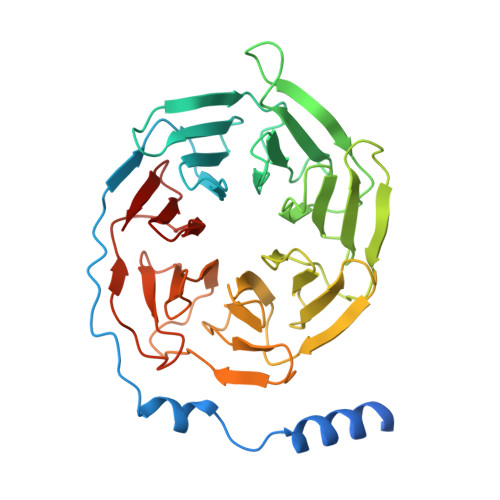
Guanine nucleotide-binding protein G(I)/G(S)/G(T) subunit beta-1358Homo sapiensMutation(s): 0 
Gene Names: GNB1
UniProt & NIH Common Fund Data Resources
Find proteins for P62873 (Homo sapiens)
Explore P62873 
Go to UniProtKB:  P62873
PHAROS:  P62873
GTEx:  ENSG00000078369 
Entity Groups  
Sequence Clusters30% Identity50% Identity70% Identity90% Identity95% Identity100% Identity
UniProt GroupP62873
Sequence Annotations
Expand
  • Reference Sequence
Find similar proteins by:  (by identity cutoff)  |  3D Structure
Entity ID: 3
MoleculeChains Sequence LengthOrganismDetailsImage
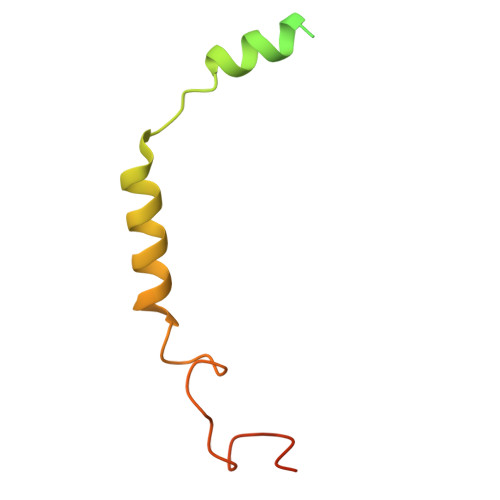
G-protein gamma subunitC [auth G]99Homo sapiensMutation(s): 0 
Entity Groups  
Sequence Clusters30% Identity50% Identity70% Identity90% Identity95% Identity100% Identity
Sequence Annotations
Expand
  • Reference Sequence
Find similar proteins by:  (by identity cutoff)  |  3D Structure
Entity ID: 4
MoleculeChains Sequence LengthOrganismDetailsImage
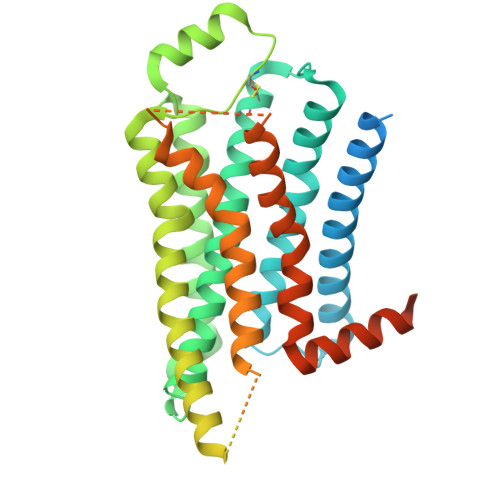
octopamine b2 receptorD [auth R]425Ixodes scapularisMutation(s): 0 
EC: 2.7.10.2
UniProt
Find proteins for B7Q337 (Ixodes scapularis)
Explore B7Q337 
Go to UniProtKB:  B7Q337
Entity Groups  
Sequence Clusters30% Identity50% Identity70% Identity90% Identity95% Identity100% Identity
UniProt GroupB7Q337
Sequence Annotations
Expand
  • Reference Sequence
Find similar proteins by:  (by identity cutoff)  |  3D Structure
Entity ID: 5
MoleculeChains Sequence LengthOrganismDetailsImage
single chain FvE [auth S]308Mus musculusMutation(s): 0 
Entity Groups  
Sequence Clusters30% Identity50% Identity70% Identity90% Identity95% Identity100% Identity
Sequence Annotations
Expand
  • Reference Sequence
Small Molecules
Ligands 1 Unique
IDChains Name / Formula / InChI Key2D Diagram3D Interactions
OTR (Subject of Investigation/LOI)
Query on OTR

Download Ideal Coordinates CCD File 
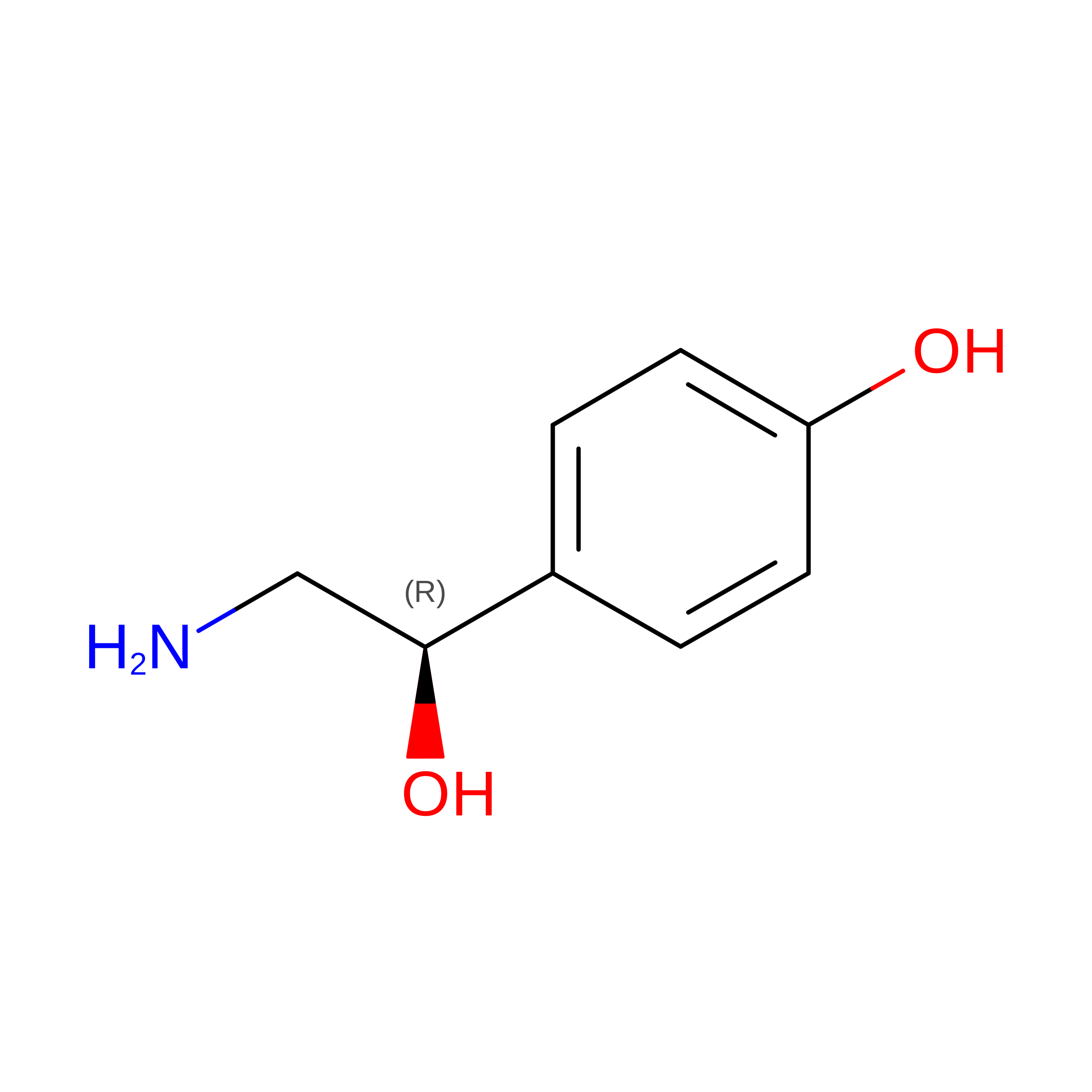
F [auth R]4-(2R-AMINO-1-HYDROXYETHYL)PHENOL
C8 H11 N O2
QHGUCRYDKWKLMG-QMMMGPOBSA-N
Experimental Data & Validation

Experimental Data

  • Method: ELECTRON MICROSCOPY
  • Resolution: 3.65 Å
  • Aggregation State: PARTICLE 
  • Reconstruction Method: SINGLE PARTICLE 

Structure Validation

View Full Validation Report


Entry History & Funding Information

Deposition Data


Funding OrganizationLocationGrant Number
Japan Society for the Promotion of Science (JSPS)Japan23K05046

Revision History  (Full details and data files)

  • Version 1.0: 2025-12-17
    Type: Initial release
  • Version 1.1: 2025-12-31
    Changes: Database references