Download Mendeley
Environmental pH controls antimicrobial production by human probiotic Streptococcus salivarius.
Nguyen, D.L., Saha, S., Thacharodi, A., Singh, B.B., Mitra, S., Do, H., Kumaraswami, M.(2025) J Bacteriol 207: e0005925-e0005925
- PubMed: 40454994 Search on PubMed
- DOI: https://doi.org/10.1128/jb.00059-25
- Primary Citation Related Structures:
9LTH - PubMed Abstract:
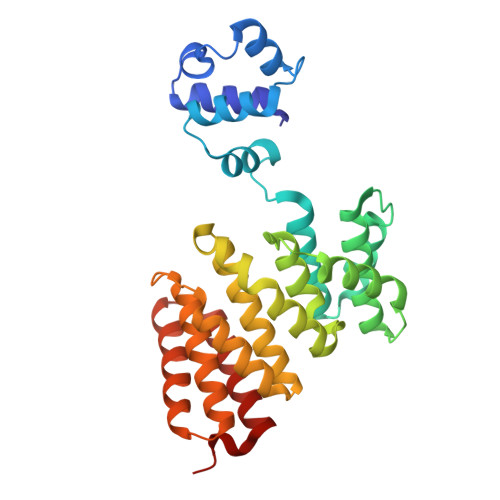
Streptococcus salivarius K12 (SAL) is an oral probiotic used to treat or prevent oral infections caused by human pathogens. SAL produces at least three antimicrobials to exert its antimicrobial activity, namely, salivaricin A and salivaricin B, and the newly identified salivabactin. Salivabactin production is catalyzed by a polyketide/non-ribosomal peptide synthase hybrid biosynthetic gene cluster (BGC), termed as sar-BGC . The sar-BGC expression and salivabactin production are transient during SAL growth in vitro and in vivo , which may negatively impact SAL probiotic efficacy. To understand the molecular basis for transient sar-BGC expression, we assessed the impact of environmental pH on sar-BGC expression. We found that environmental acidification is a critical factor in promoting salivabactin antimicrobial activity and production by inducing sar-BGC expression. We further showed that acidic pH directly influences the quorum-sensing system that controls sar-BGC expression. During environmental acidification, SAL cytosol is acidified, which is sensed by a pH-sensitive histidine switch in the cytosolic transcription regulator, NrpR. The protonation of histidine during cytosolic acidification promotes high-affinity interactions between NrpR and its cognate intercellular signaling peptide, NIP, which leads to upregulation of sar-BGC expression. Collectively, our results indicate that SAL uses a sophisticated regulatory mechanism to orchestrate salivabactin production in an environment that is conducive to its antimicrobial activity. Probiotic bacteria are important tools in combating bacterial infections. Probiotics exert their antimicrobial activity via several mechanisms, including antimicrobial production. However, discrepancies exist between the in vitro and in vivo efficacies of probiotics in inhibiting pathogen growth. Understanding the host and environmental factors that influence antimicrobial production and activity is critical for improving probiotic efficacy. In this study, we showed that the antimicrobial salivabactin produced by human oral probiotic Streptococcus salivarius K12 is active at acidic pH. We further elucidated the molecular mechanism by which S. salivarius coordinates salivabactin production in concert with environmental acidification, thereby maximizing salivabactin antimicrobial activity.
- Center for Molecular and Translational Human Infectious Diseases Research, Houston Methodist Research Institute, Houston, Texas, USA.
Organizational Affiliation: