Download Mendeley
Structural and dynamic roles of tandem acyl carrier proteins in aryl polyene biosynthesis in carbapenem-resistant Acinetobacter baumannii.
Lee, C.Y., Son, M., Lee, W.C., Yoo, S., Choi, S., Kim, E., Hwang, E., Kim, Y.(2025) Protein Sci 34: e70382-e70382
- PubMed: 41251411 Search on PubMedSearch on PubMed Central
- DOI: https://doi.org/10.1002/pro.70382
- Primary Citation Related Structures:
9L1V, 9LS6 - PubMed Abstract:
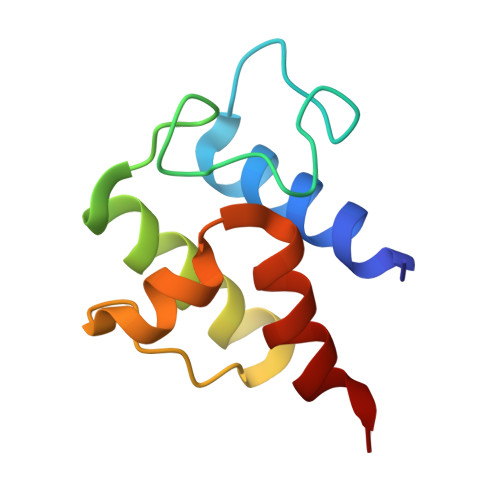
Aryl polyenes (APEs) are critical secondary metabolites in gram-negative pathogens, synthesized by polyketide synthases that rely on acyl carrier proteins (ACPs) as essential cofactors. Despite their importance, the structural and functional dynamics of tandem ACPs-ApeE and ApeF-have remained largely uncharacterized. In this study, we elucidate the molecular mechanisms underlying these ACPs within the APE biosynthetic gene cluster of carbapenem-resistant Acinetobacter baumannii (CRAB), a major threat to global health, revealing features that markedly differ from those in conventional fatty acid or polyketide synthesis systems. We demonstrate that ApeE functions as the primary starter ACP, engaging selectively with benzoyl-ACP synthetase (ApeH) to initiate APE biosynthesis. Through NMR spectroscopy and molecular dynamics simulations, we reveal that ApeE possesses distinctive features-such as a glycine-rich motif, a substrate-binding surface pocket, and a highly mobile NAE-lid domain-that orchestrate dynamic mechanisms required to accommodate and transfer bulky, rigid intermediates. CPMG and CEST experiments further uncover conformational exchange between "in" and "out" states at the prosthetic group attachment site S41 and α3-helix, regulating substrate entry and release in concert with the flexible NAE-lid domain. Functional assays show that key motifs in ApeE facilitate interactions with biosynthetic enzymes, highlighting its specialized role in handling large APE intermediates. Conversely, ApeF features a shallow hydrophobic cavity optimized for efficient malonyl-group transfer. These insights establish a novel molecular framework for ACP function in complex APE biosynthesis, offering promising avenues for targeted antimicrobial development against multidrug-resistant pathogens like CRAB.
- Department of Bioscience and Biotechnology, Konkuk University, Seoul, South Korea.
Organizational Affiliation: