Download Mendeley
Structural basis of complement anaphylatoxin receptor activation by an immunostimulant lead candidate.
Dalal, A., Yadav, M.K., Ganguly, M., Mishra, S., Yadav, R., Sinha, S., Roy, N., Tiwari, D., Mukherjee, D., Reyaz, A., Dsouza, C.A., Nigam, A., Banerjee, N., Li, X.X., Clark, R.J., Woodruff, T.M., Banerjee, R., Gati, C., Shukla, A.K.(2026) Proc Natl Acad Sci U S A 123: e2614459123-e2614459123
- PubMed: 42418494 Search on PubMedSearch on PubMed Central
- DOI: https://doi.org/10.1073/pnas.2614459123
- Primary Citation Related Structures:
9KUG, 9KXS, 9KZ2, 9KZ8 - PubMed Abstract:
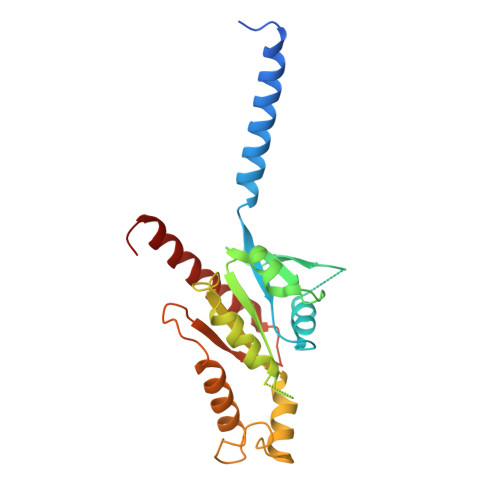
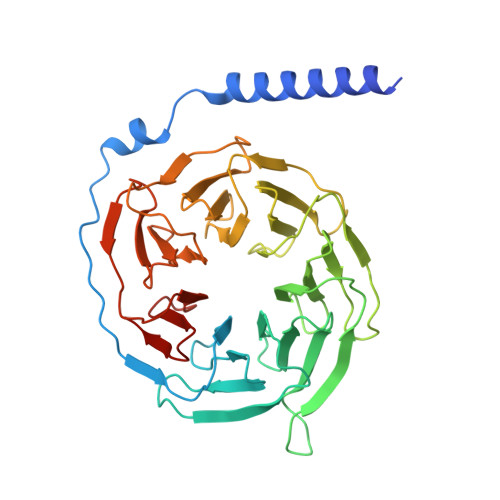
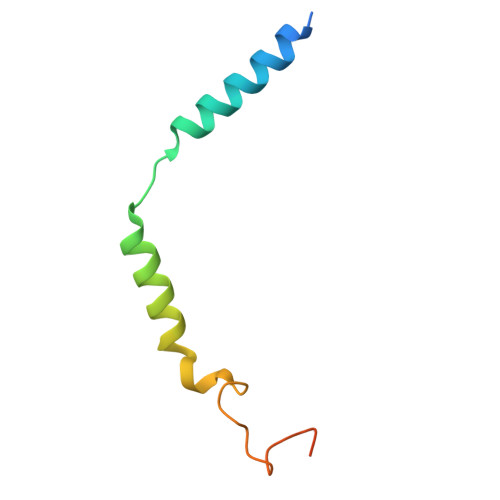
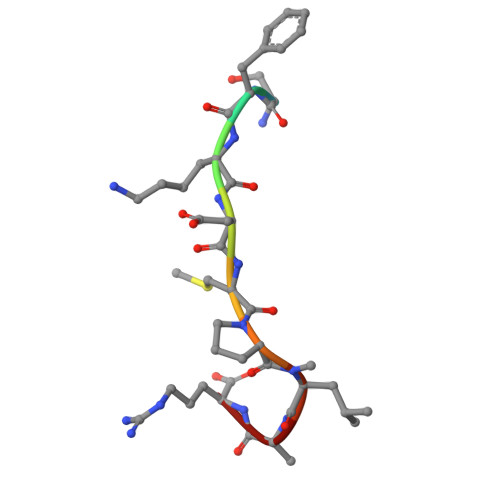
Activation of the complement cascade is a primary innate immune response mechanism to combat pathogenic infections. Complement anaphylatoxins (i.e., C3a and C5a) exert a robust inflammatory response via prototypical GPCRs (i.e., C3aR and C5aR1). Several peptides derived from anaphylatoxins have shown promise as immunostimulants from therapeutic standpoint by eliciting immune response without excessive inflammation. EP67, a C5a-derived decapeptide, is the most advanced candidate with preclinical indications in antiviral and antibacterial context. Still, the molecular mechanism and the precise receptor target of EP67 remain unclear. Here, we perform a comprehensive pharmacological profiling of EP67 on the human and mouse C3aR and C5aR1 and find that it preferentially activates human C3aR in transducer-coupling assays. Subsequently, we determined four cryo-EM structures of C3aR and C5aR1 in complex with EP67, which elucidate the molecular details of its interaction with, and activation of, these receptors. Interestingly, we observe that EP67 adopts a hook-like structure and binds in the orthosteric pocket of the receptors, analogous to that of the carboxyl terminus of C3a and C5a. We employ site-directed mutagenesis studies to validate the key interactions of EP67 with these receptors and corroborate the structural observations including the engagement of a critical activation switch. Finally, we observe that EP67 induces distinct conformations of the TM7-Helix8 interface for C3aR and C5aR1, which provides a plausible explanation for its ability to preferentially activate C3aR. In summary, our study elucidates molecular insights into the interaction of EP67 with the complement anaphylatoxin receptors, and it should facilitate further optimization for therapeutic applications.
- Department of Biological Sciences and Bioengineering, Indian Institute of Technology, Kanpur 208016, India.
Organizational Affiliation: