Download Mendeley
Enantioselective Radical Hydrocyanoalkylation of Alkenes via Photoenzymatic Catalysis.
Wu, D., Sun, Z., Wang, S., Yang, J., He, J., Lei, X.(2025) JACS Au 5: 3625-3631
- PubMed: 40747066 Search on PubMedSearch on PubMed Central
- DOI: https://doi.org/10.1021/jacsau.5c00633
- Primary Citation Related Structures:
9KUH - PubMed Abstract:
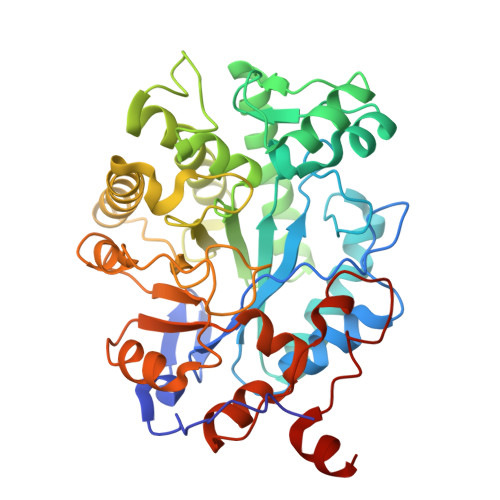
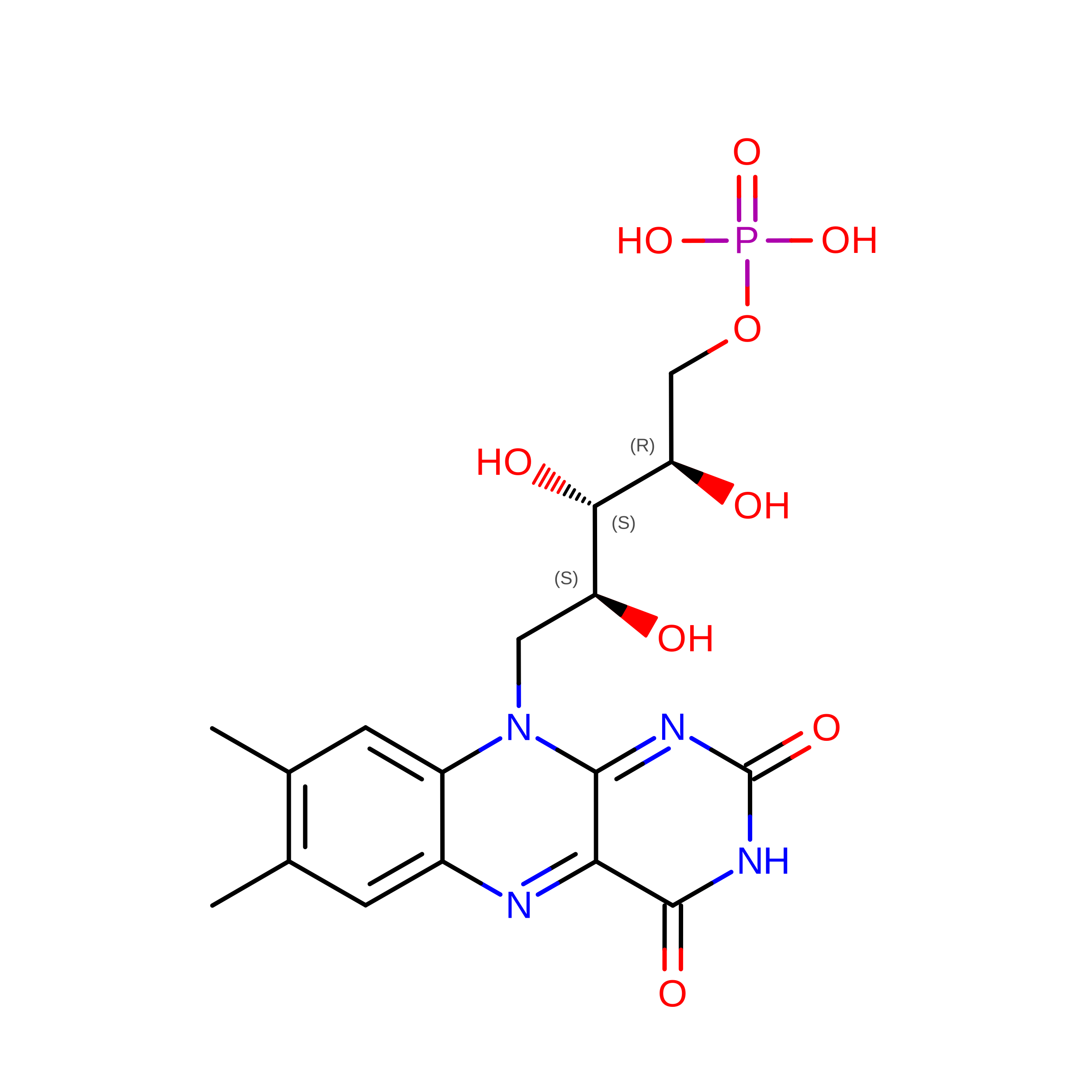
Organic nitriles are significant in pharmaceuticals, agrochemicals, cosmetics, and materials. Although numerous cyanidation methods have been developed, more eco-friendly and green protocols for manufacturing alkyl nitriles are in high demand. Here, we report a photoenzymatic enantioselective intermolecular hydrocyanoalkylation of alkenes catalyzed by flavin-dependent "ene"-reductases. The discovery of stereocomplementary enzymes that provide access to both enantiomers of the high-value nitriles further showcases the synthetic applications of this method. Radical trapping, isotopic labeling, and spectroscopic experiments have elucidated the formation of a charge transfer complex at the protein active site. The single-electron reduction of the cyanoalkyl radical precursor by flavin hydroquinone yields a cyanoalkyl radical, which then undergoes intermolecular radical addition. This active site can stereoselectively control the radical-terminating hydrogen atom transfer, enabling the synthesis of enantioenriched γ-stereogenic nitriles. This work further expands the reactivity repertoire of biocatalytic transformations via non-natural radical mechanisms.
- Beijing National Laboratory for Molecular Sciences, Key Laboratory of Bioorganic Chemistry and Molecular Engineering of the Ministry of Education, College of Chemistry and Molecular Engineering, Peking University, Beijing 100871, China.
Organizational Affiliation: