Download Mendeley
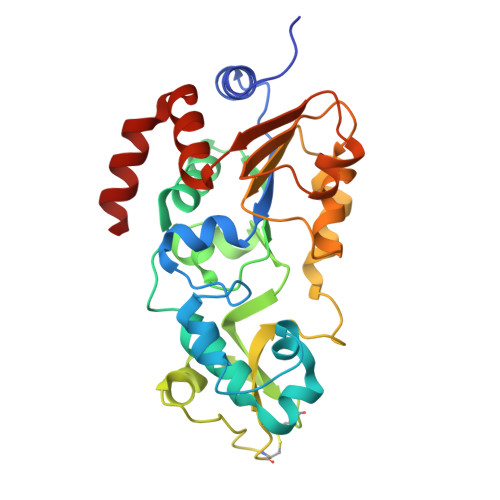
Unraveling Small Molecule-Mediated Sirtuin 3 Activation at a Distinct Binding Site for Cardioprotective Therapies.
Zhang, D., Zhang, J., Wu, C., Xiao, Y., Ji, L., Hu, J., Ding, J., Li, T., Zhang, Y., Ouyang, L.(2025) ACS Cent Sci 11: 704-718
- PubMed: 40454347 Search on PubMedSearch on PubMed Central
- DOI: https://doi.org/10.1021/acscentsci.5c00023
- Primary Citation Related Structures:
9KTK - PubMed Abstract:
Sirtuin 3 (SIRT3), a pivotal mitochondrial deacetylase, plays a critical role in restoring mitochondrial function, particularly through the activation of autophagy. Despite its promise as a cardioprotective target, developing SIRT3 activators and their therapeutic applications remains challenging. Here, we report the identification of SKLB-11A , a SIRT3 activator with submicromolar affinity and high efficacy. Structural and mutagenesis analyses revealed a unique allosteric site for SKLB-11A in SIRT3, where a conformational change in Leu298 drives its potent activation. Subsequent studies demonstrated that SKLB-11A drives autophagy/mitophagy signaling pathways, effectively preventing mitochondrial dysfunction, and improving cardiac dysfunction in both doxorubicin (Dox)-induced cardiotoxicity and myocardial ischemia/reperfusion (I/R) models. Collectively, our data highlight the potential of pharmacological SIRT3 activation as an effective therapeutic strategy for cardioprotection. SKLB-11A , as a first-in-class SIRT3 allosteric activator with a distinct binding mode, not only offers a valuable tool for exploring the physiological and pathological roles of SIRT3 deacetylation but also holds promise for the development of targeted cardioprotective therapies.
- Department of Biotherapy, State Key Laboratory of Biotherapy and Cancer Center, Laboratory of Neuro-system and Multimorbidity, West China Hospital, Sichuan University, Chengdu 610041, Sichuan, China.
Organizational Affiliation: