Download Mendeley
CXCR4 induces memory formation over exhaustion in CAR-T cells to achieve durable leukemia targeting.
Itoh-Nakadai, A., Liang, M., Shindo, M., Bibi, C., Tomizawa-Murasawa, M., Fujiki, S., Kaneko, A., Kanamaru, E., Hashimoto, M., Kajita, H., Ando, Y., Kojima, M., Moody, J., Iwasaki, M., Takagi, S., Nakagawa, R., Agrawal, S., Amitani-Iijima, H., Sato, K., Sorimachi, Y., Suzuki, N., Fukami, T., Hanada, K., Morita, S., Katsura, K., Matsumoto, T., Kobayashi, M., Kato, M., Negishi, Y., Shirouzu, M., Najima, Y., Takubo, K., Hon, C.C., Uchida, N., Taniguchi, S., Momozawa, Y., Carninci, P., Shultz, L.D., Saito, Y., de Hoon, M., Shin, J.W., Ishikawa, F.(2026) Nat Commun 17: 101-101
- PubMed: 41587986 Search on PubMedSearch on PubMed Central
- DOI: https://doi.org/10.1038/s41467-025-67745-x
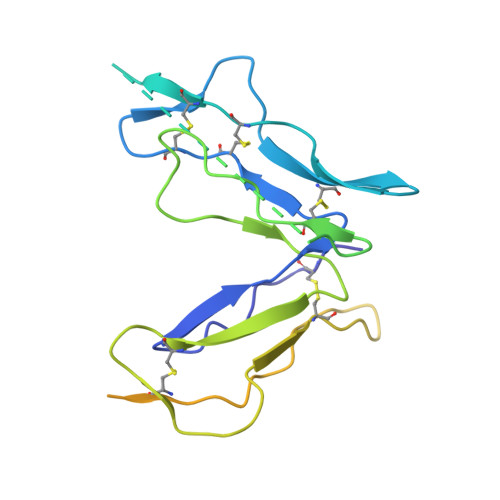
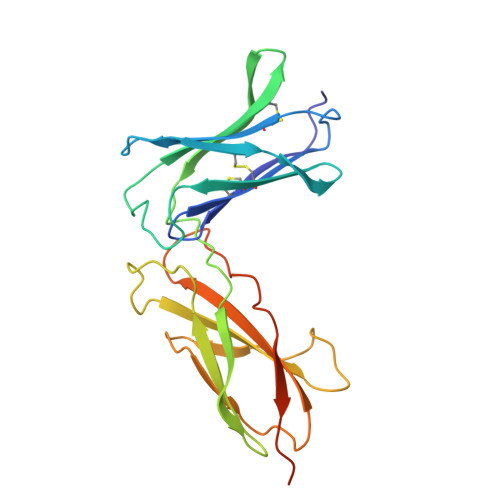
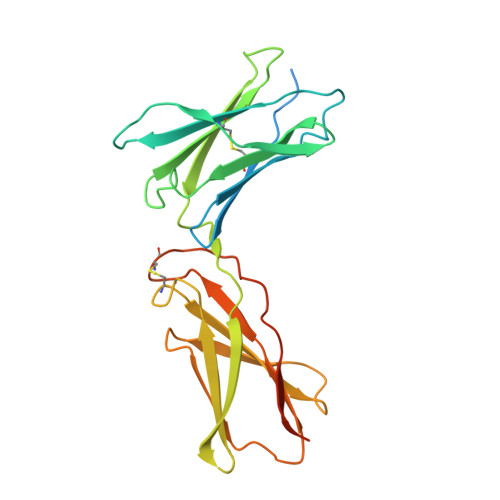
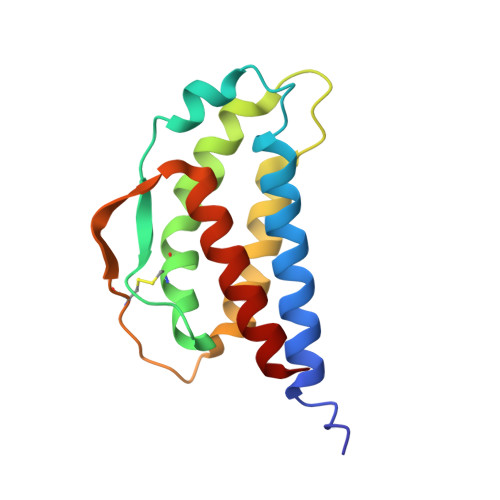
- Primary Citation Related Structures:
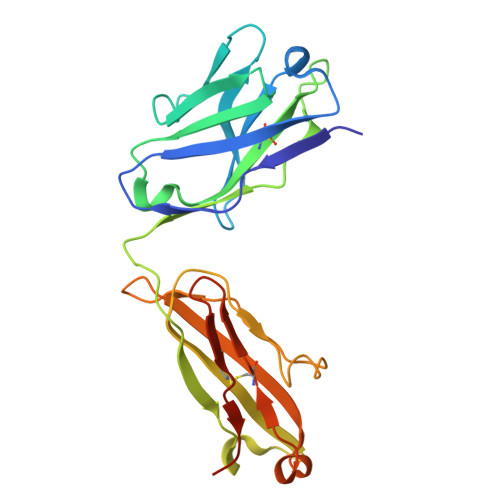
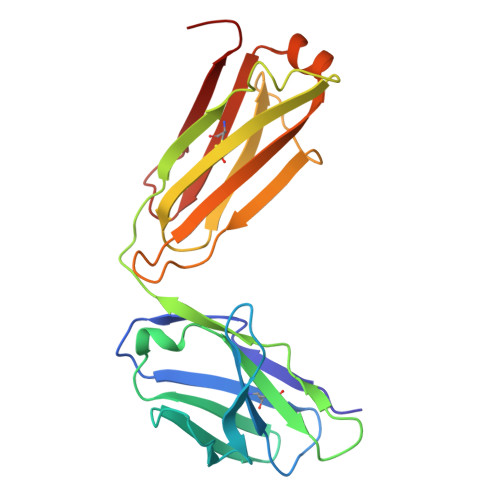
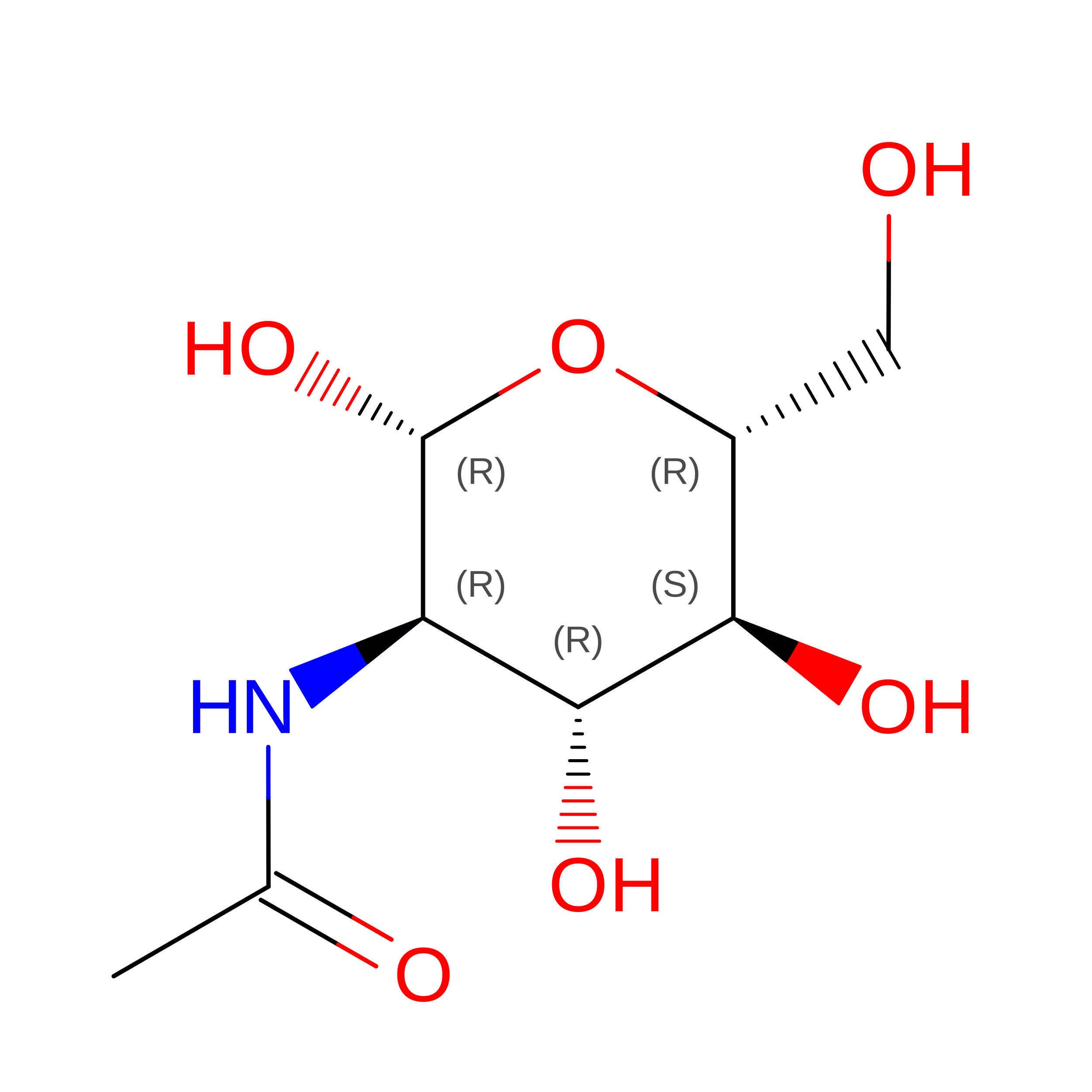
9KMC - PubMed Abstract:
Chimeric antigen receptor (CAR)-T cell therapy has transformed the treatment of B-cell malignancies, but its success in acute myeloid leukemia (AML) remains limited. Durable responses depend on the formation of long-lived memory T cells, whereas T cell exhaustion contributes to non-response and relapse. In patients with AML who achieved remission after cord blood transplantation, we here first observe enrichment of memory T cells with high expression of the chemokine receptor CXCR4. Next, we show that engineering CAR-T cells to co-express CXCR4 enhances their persistence and anti-leukemic activity in patient-derived xenograft models. Using single-cell profiling and metabolic analysis, we find that CXCR4 promotes memory-associated transcriptional programs, reduces exhaustion, and supports oxidative metabolism. These effects are observed with CAR-T cells targeting CD25 or CD96 as AML-associated targets. Our results indicate that CXCR4 strengthens CAR-T cell memory and durability, offering a strategy to improve immunotherapy outcomes in AML and beyond.
- Laboratory for Human Disease Models, RIKEN Center for Integrative Medical Sciences, RIKEN, Kanagawa, Japan.
Organizational Affiliation: