9K1R | pdb_00009k1r

Structure of SF3B core in complex with the intron-U2 snRNA (SF3B-intron-U2 snRNA)


Experimental Data Snapshot

  • Method: ELECTRON MICROSCOPY
  • Resolution: 3.80 Å
  • Aggregation State: PARTICLE 
  • Reconstruction Method: SINGLE PARTICLE 

wwPDB Validation   3D Report Full Report


This is version 1.0 of the entry. See complete history


Literature

A common structural mechanism for RNA recognition by the SF3B complex in mRNA splicing and export.

Zhang, Y.Yin, C.Wang, Y.Yan, K.Zhao, B.Hu, X.Wan, Y.Cheng, H.Huang, J.

(2025) Nucleic Acids Res 53

  • DOI: https://doi.org/10.1093/nar/gkaf759
  • Primary Citation of Related Structures:  
    9K1O, 9K1Q, 9K1R, 9K1W, 9K1Y

  • PubMed Abstract: 

    The SF3B complex plays a critical role in branch point adenosine recognition during pre-mRNA splicing. Its largest subunit SF3B1 is frequently mutated in cancers, leading to aberrant alternative splicing. Besides its function in pre-mRNA splicing, the SF3B complex also binds mature or intronless mRNAs to facilitate their nuclear export. Notably, the RNA motifs recognized by the SF3B complex exhibit no apparent sequence similarities, raising the question of how the SF3B complex recognizes diverse mRNA sequences for various cellular activities. Here we report the cryo-EM structures of the human SF3B complex associated with either intronless histone mRNAs or intron-U2 snRNA. These structures unveil that both mRNA molecules adopt a similar conformation featuring a bulged adenosine and bind the SF3B complex in a remarkably resembling manner, suggesting that SF3B recognizes the specific shape rather than the sequence of its RNA targets. Further cryo-EM and molecular dynamics analyses of the hotspot-mutant SF3B complexes bound to intron-U2 snRNA demonstrate that the SF3B1K700E and SF3B1R625H mutations similarly repel the attachment of the intronic polypyrimidine tract around the mutation sites, leading to reduced RNA-binding affinity. Altogether, our study provides structural insights into the RNA-recognition mechanism of the SF3B complex and suggests that the cancer-associated SF3B1 mutations could potentially affect multiple cellular processes including mRNA splicing and export, which advances our understanding of the pathogenic mechanisms of the SF3B1 mutations.


  • Organizational Affiliation
    • Ninth People's Hospital, Shanghai Jiao Tong University School of Medicine, Shanghai 200125, China.

Macromolecules

Find similar proteins by:  (by identity cutoff)  |  3D Structure
Entity ID: 1
MoleculeChains Sequence LengthOrganismDetailsImage
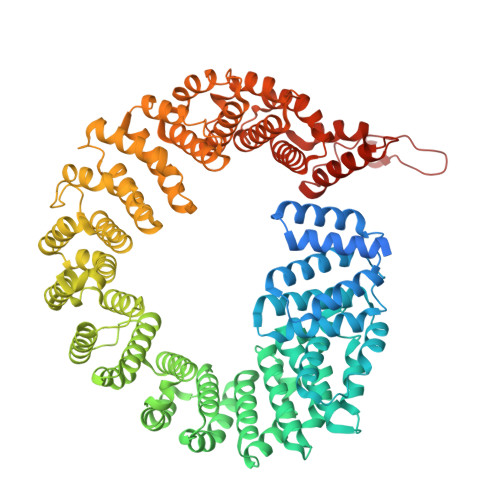
Splicing factor 3B subunit 1A [auth C]897Homo sapiensMutation(s): 0 
Gene Names: SF3B1SAP155
UniProt & NIH Common Fund Data Resources
Find proteins for O75533 (Homo sapiens)
Explore O75533 
Go to UniProtKB:  O75533
PHAROS:  O75533
GTEx:  ENSG00000115524 
Entity Groups  
Sequence Clusters30% Identity50% Identity70% Identity90% Identity95% Identity100% Identity
UniProt GroupO75533
Sequence Annotations
Expand
  • Reference Sequence
Find similar proteins by:  (by identity cutoff)  |  3D Structure
Entity ID: 2
MoleculeChains Sequence LengthOrganismDetailsImage
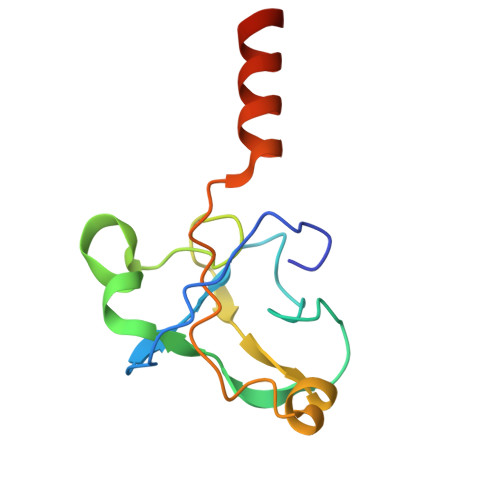
PHD finger-like domain-containing protein 5AB [auth D]110Homo sapiensMutation(s): 0 
Gene Names: PHF5A
UniProt & NIH Common Fund Data Resources
Find proteins for Q7RTV0 (Homo sapiens)
Explore Q7RTV0 
Go to UniProtKB:  Q7RTV0
PHAROS:  Q7RTV0
GTEx:  ENSG00000100410 
Entity Groups  
Sequence Clusters30% Identity50% Identity70% Identity90% Identity95% Identity100% Identity
UniProt GroupQ7RTV0
Sequence Annotations
Expand
  • Reference Sequence
Find similar proteins by:  (by identity cutoff)  |  3D Structure
Entity ID: 3
MoleculeChains Sequence LengthOrganismDetailsImage
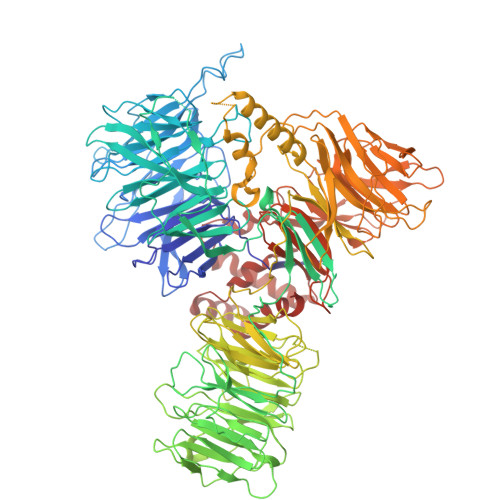
Splicing factor 3B subunit 3C [auth A]1,224Homo sapiensMutation(s): 0 
Gene Names: SF3B3KIAA0017SAP130
UniProt & NIH Common Fund Data Resources
Find proteins for Q15393 (Homo sapiens)
Explore Q15393 
Go to UniProtKB:  Q15393
PHAROS:  Q15393
GTEx:  ENSG00000189091 
Entity Groups  
Sequence Clusters30% Identity50% Identity70% Identity90% Identity95% Identity100% Identity
UniProt GroupQ15393
Sequence Annotations
Expand
  • Reference Sequence
Find similar proteins by:  (by identity cutoff)  |  3D Structure
Entity ID: 4
MoleculeChains Sequence LengthOrganismDetailsImage
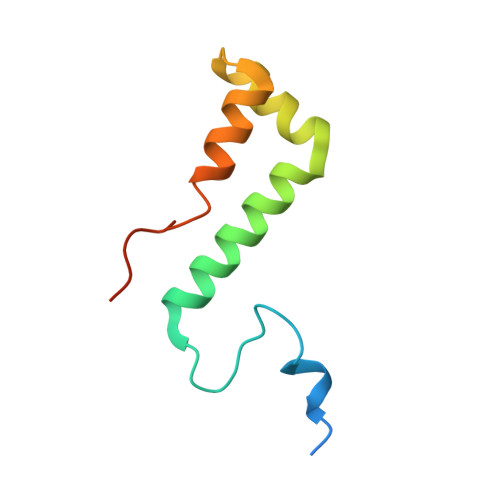
Splicing factor 3B subunit 5D [auth B]86Homo sapiensMutation(s): 0 
Gene Names: SF3B5SF3B10
UniProt & NIH Common Fund Data Resources
Find proteins for Q9BWJ5 (Homo sapiens)
Explore Q9BWJ5 
Go to UniProtKB:  Q9BWJ5
PHAROS:  Q9BWJ5
GTEx:  ENSG00000169976 
Entity Groups  
Sequence Clusters30% Identity50% Identity70% Identity90% Identity95% Identity100% Identity
UniProt GroupQ9BWJ5
Sequence Annotations
Expand
  • Reference Sequence
Find similar nucleic acids by:  (by identity cutoff)  |  3D Structure
Entity ID: 5
MoleculeChains LengthOrganismImage
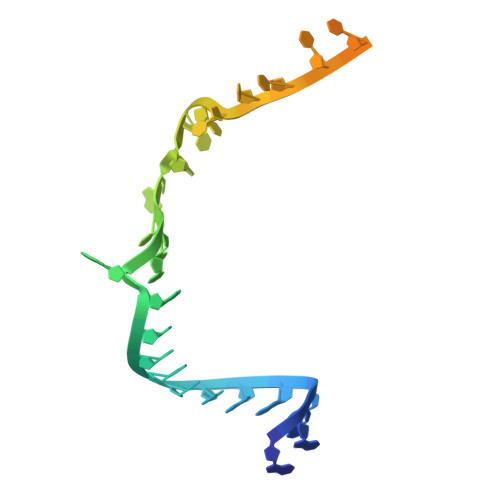
pre-mRNA intronE [auth G]34Homo sapiens
Sequence Annotations
Expand
  • Reference Sequence

Find similar nucleic acids by:  Sequence   |   3D Structure  

Entity ID: 6
MoleculeChains LengthOrganismImage
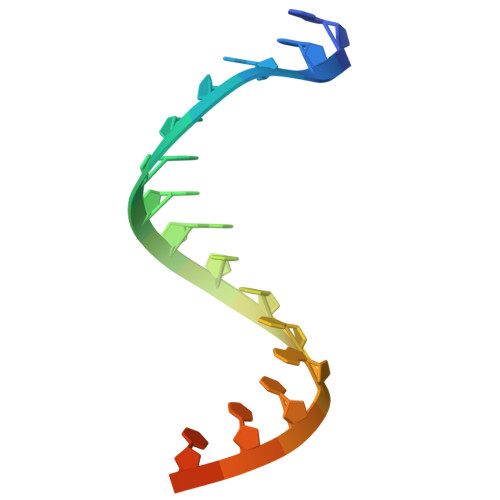
U2 snRNAF [auth H]18Homo sapiens
Sequence Annotations
Expand
  • Reference Sequence
Experimental Data & Validation

Experimental Data

  • Method: ELECTRON MICROSCOPY
  • Resolution: 3.80 Å
  • Aggregation State: PARTICLE 
  • Reconstruction Method: SINGLE PARTICLE 
EM Software:
TaskSoftware PackageVersion
MODEL REFINEMENTPHENIX

Structure Validation

View Full Validation Report


Entry History & Funding Information

Deposition Data


Funding OrganizationLocationGrant Number
Not funded--

Revision History  (Full details and data files)

  • Version 1.0: 2025-09-03
    Type: Initial release