Download Mendeley
Enhancing functional proteins through multimodal inverse folding with ABACUS-T.
Liu, Y., Wu, R., Wang, X., Wang, S., Chen, L., Li, F., Chen, Q., Liu, H.(2025) Nat Commun 16: 10177-10177
- PubMed: 41261139 Search on PubMedSearch on PubMed Central
- DOI: https://doi.org/10.1038/s41467-025-65175-3
- Primary Citation Related Structures:
9JWL, 9JWO, 9JWQ, 9JWT - PubMed Abstract:
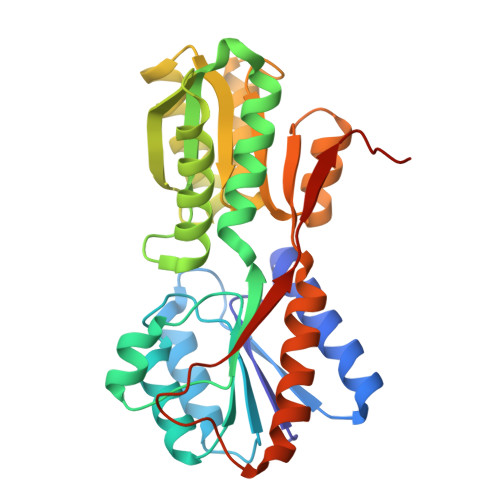
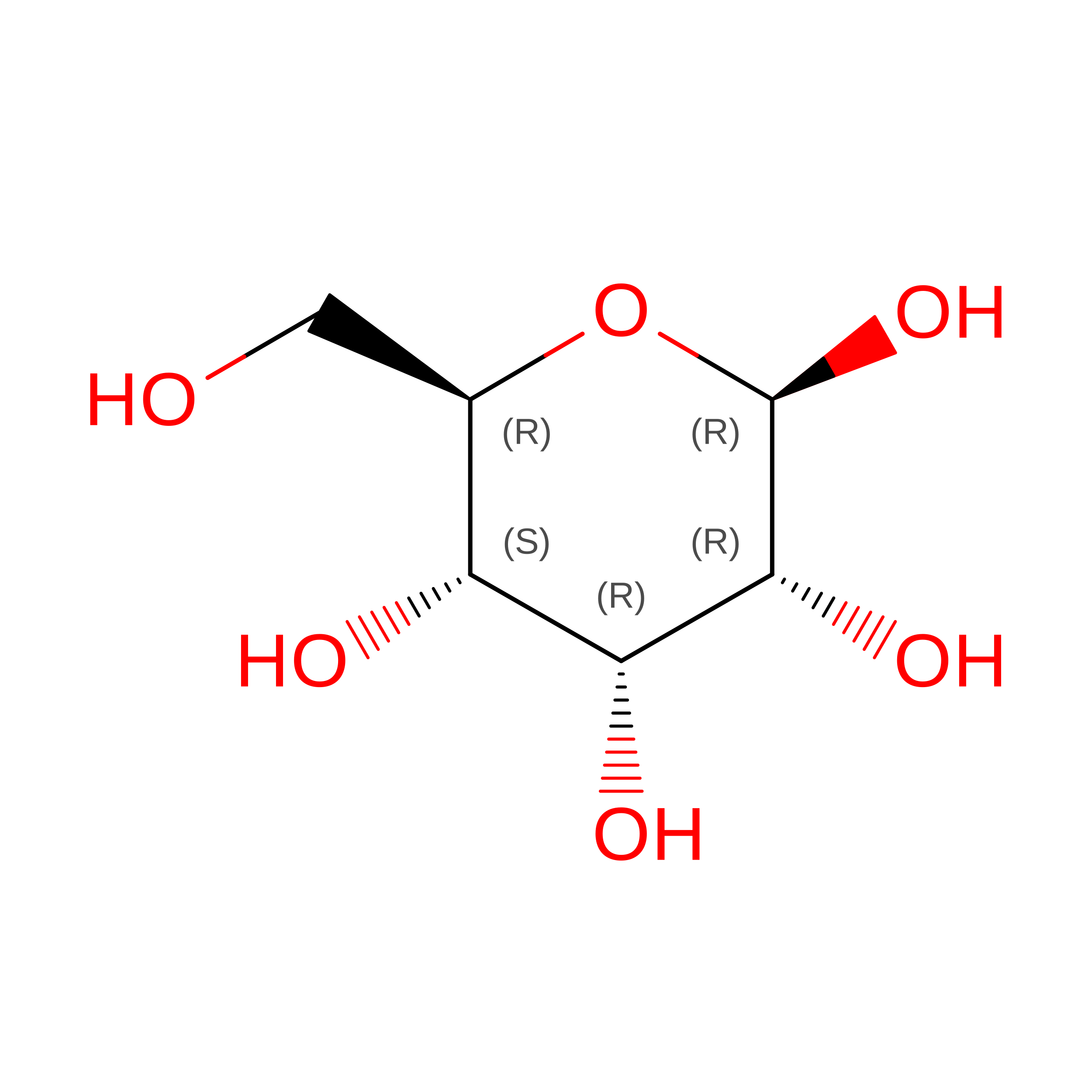
Structure-based sequence redesign or inverse folding can significantly enhance structural stability but often compromises functional activity when performed using existing models. Here, we introduce ABACUS-T, a multimodal inverse folding model that improves precision and minimizes functional loss. ABACUS-T unifies several important features into one framework: detailed atomic sidechains and ligand interactions, a pre-trained protein language model, multiple backbone conformational states, and evolutionary information from multiple sequence alignment (MSA). Redesigned proteins show notable improvements: an allose binding protein achieves 17-fold higher affinity while retaining conformational change; redesigned endo-1,4-β-xylanase and TEM β-lactamase maintain or surpass wild-type activity; and OXA β-lactamase gains altered substrate selectivity. All achieve substantially increase thermostability (∆T m ≥ 10 °C). In each test case, these enhancements are achieved by testing only a few sequences, each containing dozens of simultaneously mutated residues. ABACUS-T thus offers a promising tool for reengineering functional proteins in biotechnological applications.
- Department of Rheumatology and Immunology, The First Affiliated Hospital of USTC, Division of Life Sciences and Medicine, Hefei National Research Center for Physical Sciences at the Microscale, Center for Advanced Interdisciplinary Science and Biomedicine of IHM, University of Science and Technology of China, Hefei, Anhui, China.
Organizational Affiliation: