Download Mendeley
A broad-spectrum anti-fungal effector dictates bacterial-fungal interkingdom interactions.
Yan, S., Zou, Y., Wu, T., Kan, Y., Luo, H., Pei, T.T., Liang, X., An, Y., Meng, P., Song, Y., Qin, W.M., Chen, C., Dong, T.(2025) PLoS Pathog 21: e1013598-e1013598
- PubMed: 41144565 Search on PubMedSearch on PubMed Central
- DOI: https://doi.org/10.1371/journal.ppat.1013598
- Primary Citation Related Structures:
9J9W - PubMed Abstract:
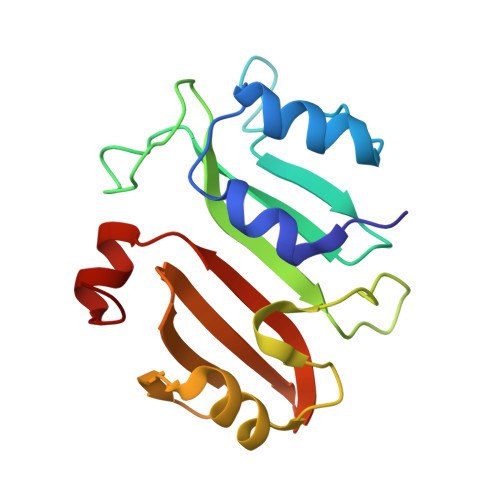
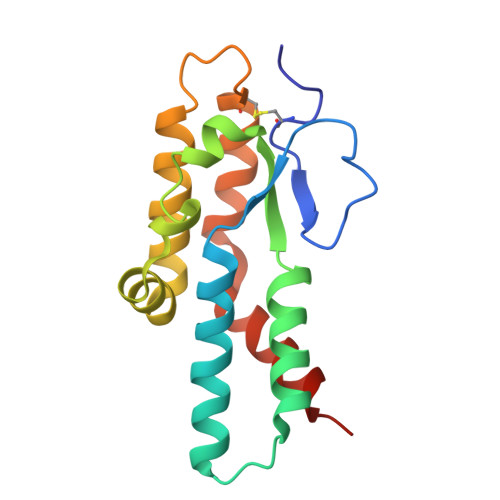
Bacteria-fungi interactions play crucial roles in shaping microbial communities across diverse environmental and host-associated niches. While their antagonism through diffusible metabolites is a well-known ecological phenomenon, delivery of bacterial effectors into the nucleus of fungal cells remains rare, and the mechanisms are poorly understood. Here, we identify and characterize a potent anti-fungal nuclease effector, TseN, delivered by the type VI secretion system (T6SS) of Acidovorax citrulli. TseN possesses a nuclear localization signal and inhibits multiple fungal species, including emerging human pathogens Candida auris and Cryptococcus neoformans. Structural and biochemical analyses show that TseN possesses a unique C-terminal DNase domain that defines a new effector class, with its activity neutralized by a cognate immunity protein TsiN. The delivery of TseN requires the upstream-encoded VgrG5, a chaperone Aave_2128, and PAAR5. Transcriptome profiling of co-cultured bacterial-fungal cells demonstrates that the T6SS attack triggers extensive reprogramming in fungal cells, affecting DNA repair, stress response, and filamentation pathways. These responses not only compromise fungal survival but also modulate fungal drug resistance, as evidenced by the synergistic enhancement of azole efficacy against drug-resistant Candida albicans. Importantly, in vivo experiments confirm that the T6SS, via TseN, can significantly reduce fungal burden on murine skin. Phylogenetic analysis shows TseN homologs are present in a large number of bacterial species. Collectively, our findings highlight a previously underappreciated interkingdom antagonism modulated by a novel effector. The broad-spectrum anti-fungal activities of TseN and its homologs may be explored for therapeutic strategies targeting fungal pathogens in both clinical and environmental settings.
- State Key Laboratory of Microbial Metabolism, Joint International Research Laboratory of Metabolic and Developmental Sciences, School of Life Sciences and Biotechnology, Shanghai Jiao Tong University, Shanghai, China.
Organizational Affiliation: