Download Mendeley
Structure-guided engineering of snake toxins for selective modulation of adrenergic and muscarinic receptors.
Zhong, Y., Tao, H., Zhang, Y., He, B., Jiao, H., Wang, D., Teng, M., Hu, H., Guo, Q., Tao, Y.(2025) Nat Commun 16: 6478-6478
- PubMed: 40659608 Search on PubMedSearch on PubMed Central
- DOI: https://doi.org/10.1038/s41467-025-61695-0
- Primary Citation Related Structures:
9IQR, 9IQS, 9IQV - PubMed Abstract:
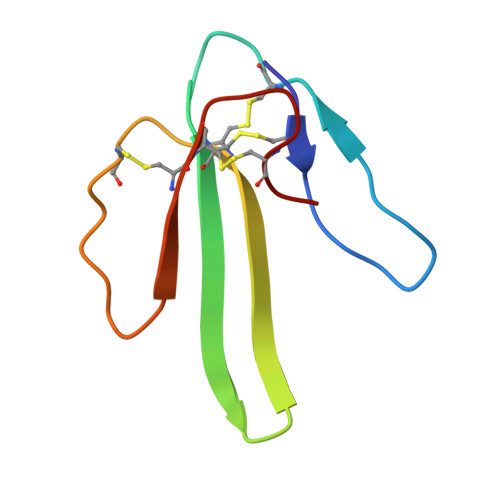
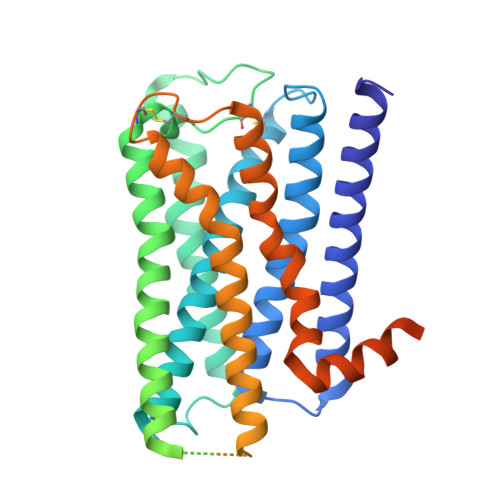
Adrenergic receptors (ARs) and muscarinic acetylcholine receptors (mAChRs) are essential G protein-coupled receptors (GPCRs) that regulate a wide range of physiological processes. Despite their significance, developing subtype-selective modulators for these receptors has been a formidable challenge due to the high structural and sequence similarities within their subfamilies. In this study, we elucidated the recognition and regulatory mechanisms of ARs and mAChRs by muscarinic toxin 3 (MT3), a cross-reactive ligand derived from snake venom. By leveraging the distinct toxin-receptor interfaces, we engineer a panel of toxin variants capable of selectively modulating α2A and M 4 AChR using computational design and directed evolution. These subtype-selective toxins not only provide valuable tools for basic research but also hold therapeutic potential for diseases associated with these GPCRs. This study further underscores the effectiveness of structure-guided approaches in transforming venom-derived scaffolds into receptor-specific modulators.
- Department of Laboratory Medicine, The First Affiliated Hospital of USTC, MOE Key Laboratory for Membraneless Organelles and Cellular Dynamics, Hefei National Center for Cross-disciplinary Sciences, Biomedical Sciences and Health Laboratory of Anhui Province, Center for Advanced Interdisciplinary Science and Biomedicine of IHM, Division of Life Sciences and Medicine, University of Science and Technology of China, 230027, Hefei, P.R. China.
Organizational Affiliation: