Download Mendeley
Two Key Ferredoxins for Nitrogen Fixation Have Different Specificities and Biophysical Properties.
Addison, H., Pfister, P., Lago-Maciel, A., Erb, T.J., Pierik, A.J., Rebelein, J.G.(2025) Chemistry 31: e202500844-e202500844
- PubMed: 40396536 Search on PubMedSearch on PubMed Central
- DOI: https://doi.org/10.1002/chem.202500844
- Primary Citation Related Structures:
9I2A - PubMed Abstract:
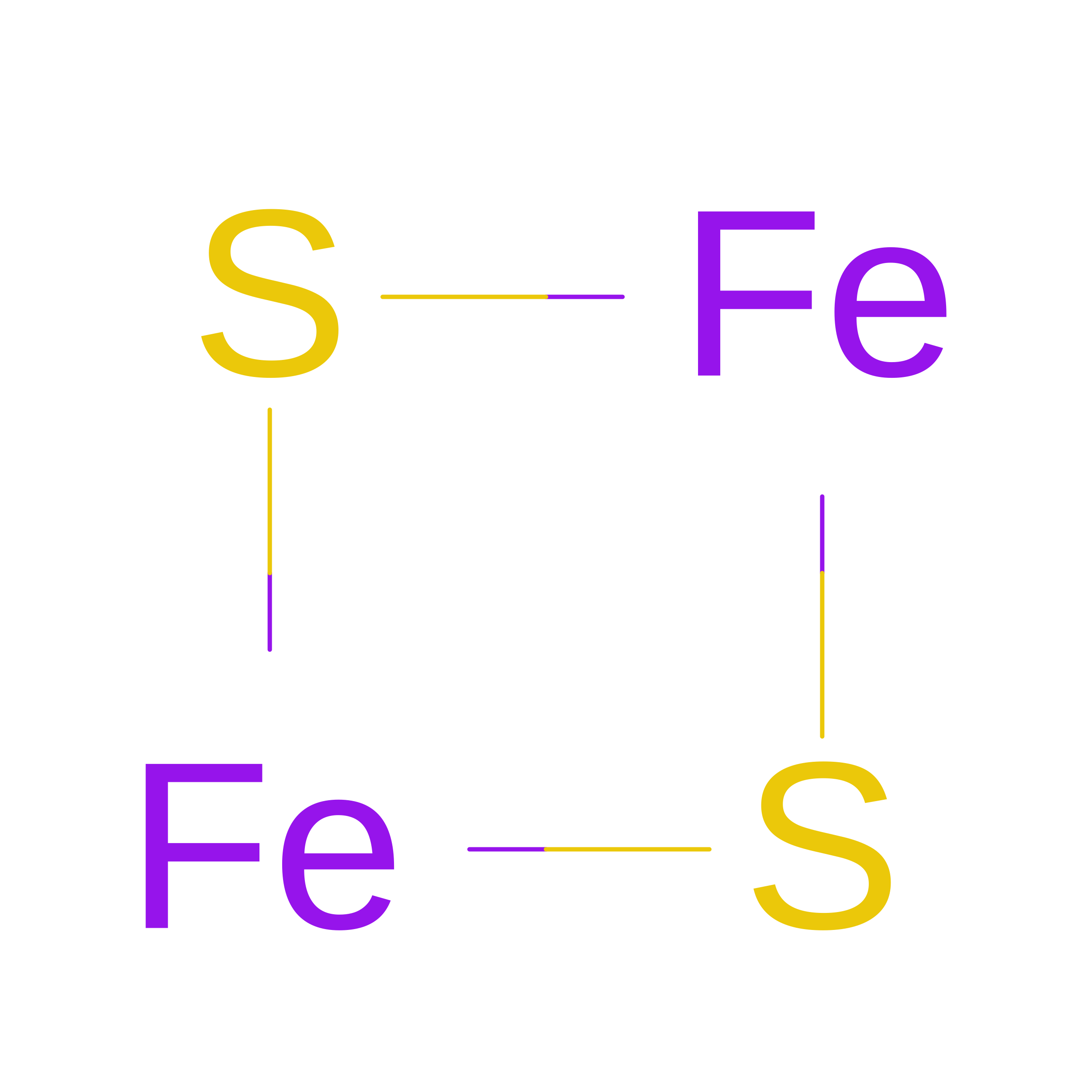
Ferredoxins deliver electrons to drive many challenging biochemical transformations, including enzyme-catalyzed nitrogen fixation. We recently showed two distinct ferredoxins, FdC and FdN, were essential for iron nitrogenase-mediated nitrogen fixation in R. capsulatus. In this study, we perform investigations on FdC and FdN to establish their key differences in terms of specificity, structure, and electronic properties. In vivo complementation studies of both the genes encoding FdC (fdxC) and FdN (fdxN), into ∆fdxC and ∆fdxN R. capsulatus-deletion strains under N 2 -fixing conditions, showed that plasmid-based expression of fdxN recovered diazotrophic growth and Fe-nitrogenase activity in both ∆fdxC and ∆fdxN strains, while plasmid-based fdxC expression could only complement the ∆fdxC strain. Spectroscopic analysis of FdC and FdN using electron paramagnetic resonance spectroscopy revealed large differences in the electronic features of FdC and FdN. These differences were accompanied by large structural differences between FdC and FdN, assessed by a crystallographic structure of FdC and an AlphaFold model of FdN. We report novel features in the FdC structure, in terms of secondary structure and hydrogen-bonding network, compared with structures of other [Fe 2 S 2 ]-cluster ferredoxins. Overall, we explore the biophysical properties that influence ferredoxin specificity, while providing new insights into the properties of ferredoxins essential for N 2 -fixation.
- Microbial Metalloenzymes Research Group, Max Planck Institute for Terrestrial Microbiology, Marburg, 35043, Germany.
Organizational Affiliation: