Download Mendeley
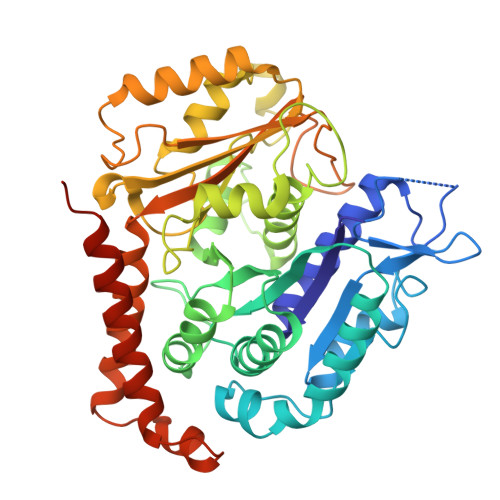
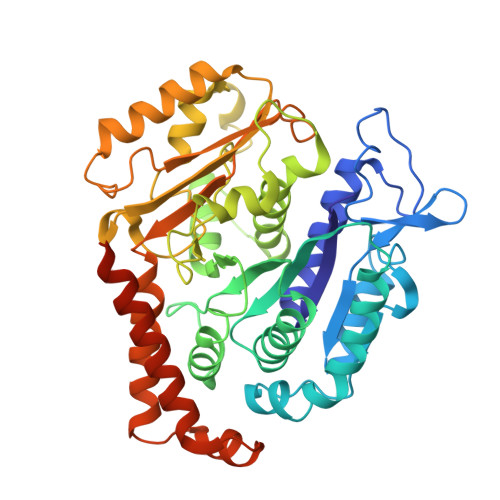
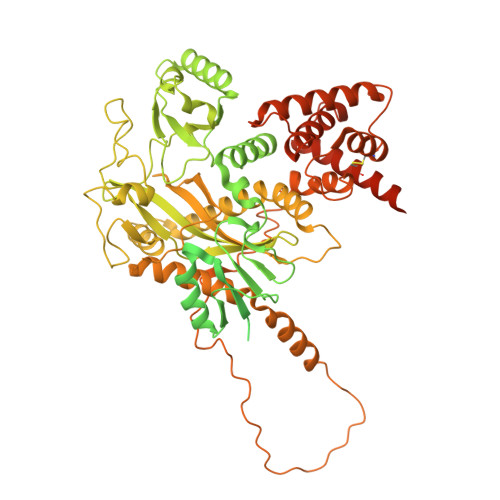
Mechanistic insights into TTLL11 polyglutamylase-mediated primary tubulin chain elongation.
Campbell, J., Vosahlikova, M., Ismail, S., Volnikova, M., Motlova, L., Kudlacova, J., Ustinova, K., Snajdr, I., Novakova, Z., Basta, M., Gutsche, I., Moutin, M.J., Desfosses, A., Barinka, C.(2025) Sci Adv 11: eadw1561-eadw1561
- PubMed: 40834096 Search on PubMedSearch on PubMed Central
- DOI: https://doi.org/10.1126/sciadv.adw1561
- Primary Citation Related Structures:
9HQ4 - PubMed Abstract:
Microtubules (MTs) undergo diverse posttranslational modifications that regulate their structural and functional properties. Among these, polyglutamylation-a dominant and conserved modification targeting unstructured tubulin C-terminal tails-plays a pivotal role in defining the tubulin code. Here, we describe a mechanism by which tubulin tyrosine ligase-like 11 (TTLL11) expands and diversifies the code. Cryo-electron microscopy revealed a unique bipartite MT recognition strategy wherein TTLL11 binding and catalytic domains engage adjacent MT protofilaments. Biochemical and cellular assays identified previously uncharacterized polyglutamylation patterns, showing that TTLL11 directly extends the primary polypeptide chains of α- and β-tubulin in vitro, challenging the prevailing paradigms emphasizing lateral branching. Moreover, cell-based and in vivo data suggest a cross-talk between polyglutamylation and the detyrosination/tyrosination cycle likely linked to the TTLL11-mediated elongation of the primary α-tubulin chain. These findings unveil an unrecognized layer of complexity within the tubulin code and offer mechanistic insights into the molecular basis of functional specialization of MT cytoskeleton.
- Institute of Biotechnology of the Czech Academy of Sciences, BIOCEV, Prumyslova 595, Vestec, Czech Republic.
Organizational Affiliation: