Download Mendeley
Engineered Protein-Based Ionic Conductors for Sustainable Energy Storage Applications.
Cortes-Ossa, J.D., Blesio, P., Fernandez-Castro, M., Almonte, L., Fernandez, M., Liutkus, M., Pandurangan, P., Sabater, C., Villaverde, A., Melle-Franco, M., Ashkenazy, N., Jimenez-Angeles, F., Morant-Minana, M.C., Calvo, M.R., Cortajarena, A.L.(2025) Adv Mater : e08838-e08838
- PubMed: 41178188 Search on PubMed
- DOI: https://doi.org/10.1002/adma.202508838
- Primary Citation Related Structures:
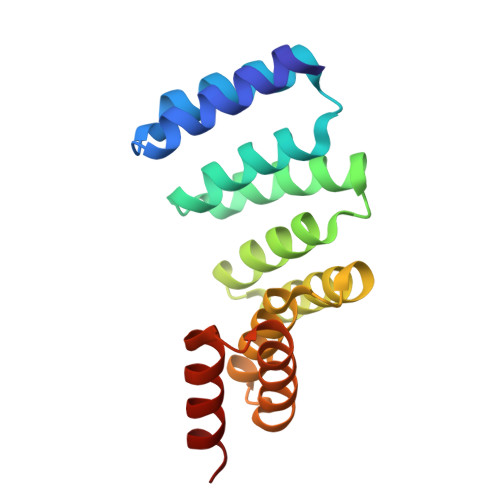
9GZG - PubMed Abstract:
Protein-based biomaterials offer sustainable and biocompatible alternatives to traditional ionic conductors, essential for advancing green energy storage and bioelectronic applications. In this work, a robust, intrinsically self-assembling repeat protein scaffold to enhance ionic conductivity through the selective incorporation of glutamic acids is engineered. These mutations increase the number of available protonation sites and promote the formation of well-defined charge pathways. The self-assembly properties of the system enable the propagation of molecular-level modifications to the macroscopic scale, yielding self-standing protein films with significantly improved ionic conductivity. Specifically, engineered protein-based films exhibit an order of magnitude higher conductivity than their unmodified counterparts, with a further ten-fold enhancement through controlled addition of salt ions. Mechanistic analysis shows that the conductivity enhancement originates from the intertwined contributions of proton transport, hydration, and ion diffusion, all promoted by engineered charged residues. Finally, films of the best-performing variant are integrated, as both separator and electrolyte, into a supercapacitor device with competitive energy storage performance. These findings highlight the potential of rational protein design to create biocompatible, sustainable, and efficient ionic conductors with the stability and processability required to be successfully integrated into the next generation of energy storage and bioelectronic devices.
- BCMaterials, Basque Center for Materials, Applications and Nanostructures, UPV/EHU Science Park, Leioa, Vizcaya, 48940, Spain.
Organizational Affiliation: