Download Mendeley
From discovery to potential application: engineering a novel M23 peptidase to combat Listeria monocytogenes.
Kaus-Drobek, M., Nowacka, M., Gewartowska, M., Korzeniowska Nee Wiweger, M., Jensen, M.R., Moretro, T., Heir, E., Nowak, E., Sabala, I.(2025) Sci Rep 15: 15628-15628
- PubMed: 40325189 Search on PubMedSearch on PubMed Central
- DOI: https://doi.org/10.1038/s41598-025-99141-2
- Primary Citation Related Structures:
9GY1 - PubMed Abstract:
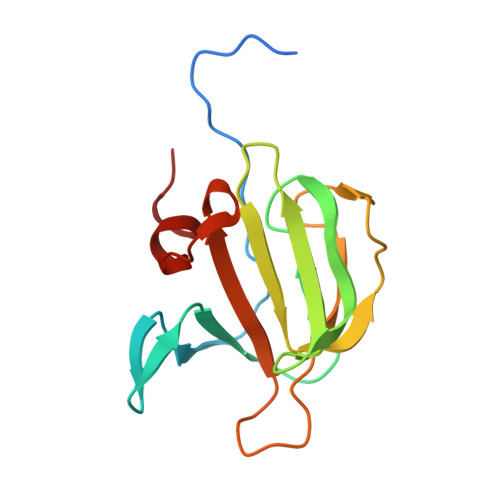
Peptidoglycan hydrolases are promising alternatives for combating pathogens due to their specificity and potent bacteriolytic activity. In this study, a novel M23 peptidase from Streptococcus thermophilus NCTC10353, designated StM23, was discovered and characterized. It exhibited antibacterial activity against Listeria monocytogenes and other Gram-positive bacteria with meso-DAP-type peptidoglycan, including Bacillus subtilis and Bacillus cereus. To enhance StM23's efficacy and specificity, a chimeric enzyme, StM23_CWT, was engineered by fusing its catalytic domain with a cell wall-targeting domain (CWT) from SpM23B, a peptidoglycan hydrolase found in Staphylococcus pettenkoferi. The engineered chimera demonstrated expanded specificity, showing activity against Staphylococcus aureus and Enterococcus faecium. Its ability to disrupt L. monocytogenes cells was visualized by electron microscopy. The enzyme effectively disrupted biofilm structures and decontaminated surfaces like glass, stainless steel, and silicone, showcasing its industrial potential. Safety evaluations using zebrafish, moth larvae, and human cell models confirmed its non-toxic profile, supporting its broad applicability. Based on these findings, StM23_CWT is a novel and potent antimicrobial agent with significant potential to reduce the risk of listeriosis and control persistent pathogens.
- Laboratory of Protein Engineering, Mossakowski Medical Research Institute, Polish Academy of Sciences, Pawinskiego 5, 02-106, Warsaw, Poland. mdrobek@imdik.pan.pl.
Organizational Affiliation: