Download Mendeley
AAK1-mediated phosphorylation of PDLIM5 and Talin1 promotes focal adhesion disassembly to accelerate cell migration.
Krocianova, D., Dagg, A.D., Clayton, R.A., Potesil, D., Fedorova, V., Harmanec, A., Benova, V., Bosakova, V., Kaufman, J.G.G., Martinkova, P., Alblova, M., Kelly, B.T., Hanakova, K., Roudnicky, P., Spielman, S.J., Fric, J., Sroubek, F., Houser, J., Wrobel, A.G., Boura, E., Owen, D.J., Zdrahal, Z., Kadlecova, Z.(2026) Nat Commun
- PubMed: 42082516 Search on PubMed
- DOI: https://doi.org/10.1038/s41467-026-72501-w
- Primary Citation Related Structures:
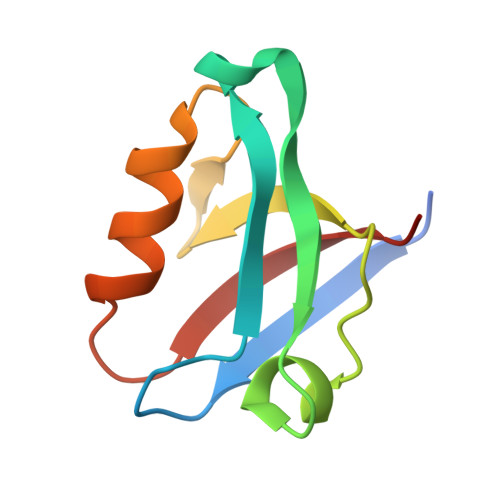
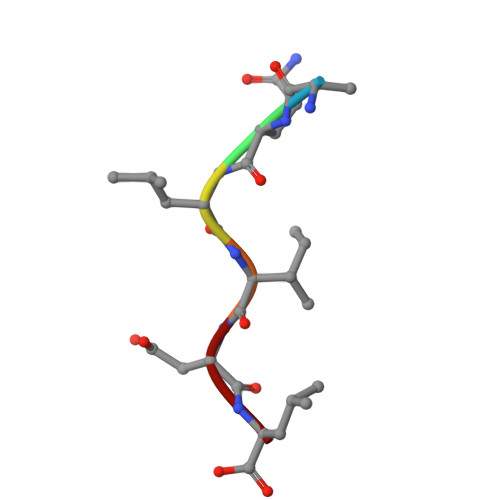
9F6S - PubMed Abstract:
AAK1 and BMP2K are serine/threonine kinases traditionally known for phosphorylating AP2 during clathrin-mediated endocytosis (CME), but their broader roles remained incompletely defined. Here, using motif-guided in silico, biochemical, and phosphoproteomic screens, we identify PDLIM5 and Talin1 as direct AAK1/BMP2K substrates. Despite high kinase-domain similarity, only AAK1 promotes cell migration and potentiates focal adhesion (FA) turnover. Live-cell imaging shows that AAK1 recruitment to FAs peaks as disassembly begins. The conserved AAK1 C-terminal PDZ-binding motif mediates direct, low-affinity binding to PDLIM5, providing a plausible mechanism for localized substrate access. Dynamic analyses of phospho-mimetic and phospho-null mutants support a model in which AAK1-dependent phosphorylation promotes timely release of PDLIM5 and Talin1 during FA disassembly. These findings reveal a kinase-driven contribution to FA turnover distinct from protease- and phosphatase-based mechanisms and suggest that functional divergence between AAK1 and BMP2K may provide a strategy to modulate cell migration with reduced impact on CME.
- Department of Histology and Embryology, Faculty of Medicine, Masaryk University, Brno, Czech Republic.
Organizational Affiliation: