Download Mendeley
High-Throughput Human Histone Detection by an Engineered Actinoporin Nanopore.
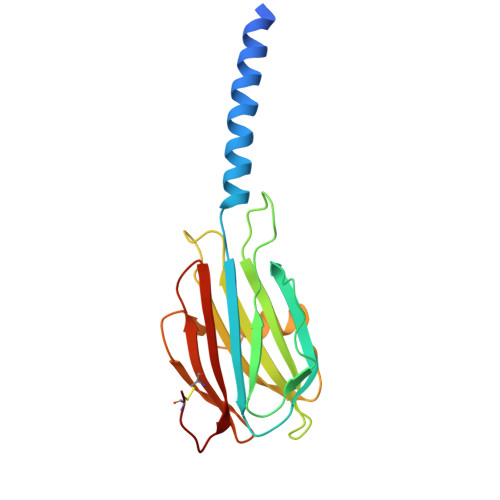
Srnko, M., Solinc, G., Crnkovic, A., Merzel, F., Jordan, M., Wallace, E.J., Podobnik, M., Anderluh, G.(2026) ACS Sens 11: 2016-2029
- PubMed: 41718555 Search on PubMed
- DOI: https://doi.org/10.1021/acssensors.5c03533
- Primary Citation Related Structures:
9EYP, 9EYQ - PubMed Abstract:
The use of protein nanopores has proven to be very promising for the identification of proteins or the sequencing of peptides. However, their widespread use in biosensor applications is limited by more complex molecular properties of proteins in comparison to nucleic acids. Here, we developed an α-helical Fav nanopore from the coral Orbicella faveolata to detect human histones using a commercial MinION device. The engineered nanopores showed stable insertion into the polymeric membrane support. Bulk analysis of several tens to hundreds of pores per measurement revealed significant differences in mean current passing the pore and current noise resulting from capturing different full-length human histones or their post-translationally modified variants into the pore lumen. Importantly, detailed blocking analyses confirmed histone-specific signals that allow further discrimination between two medically important extracellular histones in mixtures. The newly developed Fav nanopore and high-throughput approach for the detection of biomedically important proteins is an important step towards the widespread use of nanopores in modern analytics.
- Department of Molecular Biology and Nanobiotechnology, National Institute of Chemistry, Ljubljana 1000, Slovenia.
Organizational Affiliation: