Download Mendeley
Structural basis for ATP-driven double-ring assembly of the human mitochondrial Hsp60 chaperonin.
Tascon, I., Lopez-Alonso, J.P., Shkolnisky, Y., Gil-Carton, D., Vilchez-Garcia, J., Berruezo, A.G., Gomez-Llorente, Y., Malik, R., Jebara, F., Patra, M., Hirsch, J.A., Azem, A., Ubarretxena-Belandia, I.(2025) bioRxiv
- PubMed: 41256524 Search on PubMedSearch on PubMed Central
- DOI: https://doi.org/10.1101/2025.10.04.680452
- Primary Citation Related Structures:
9ES0, 9ES1, 9ES2, 9ES3, 9ES4, 9ES5, 9ES6, 9H5S, 9H5T, 9H5U, 9H5V - PubMed Abstract:
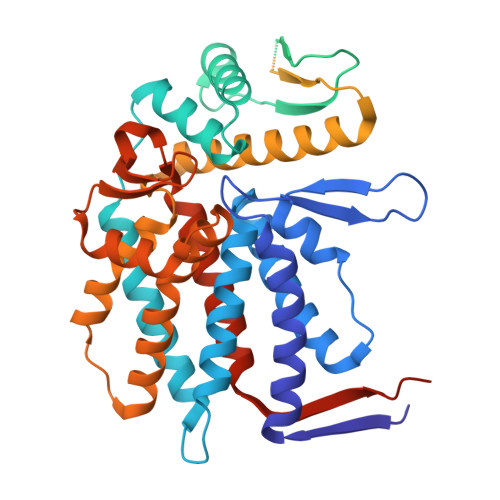
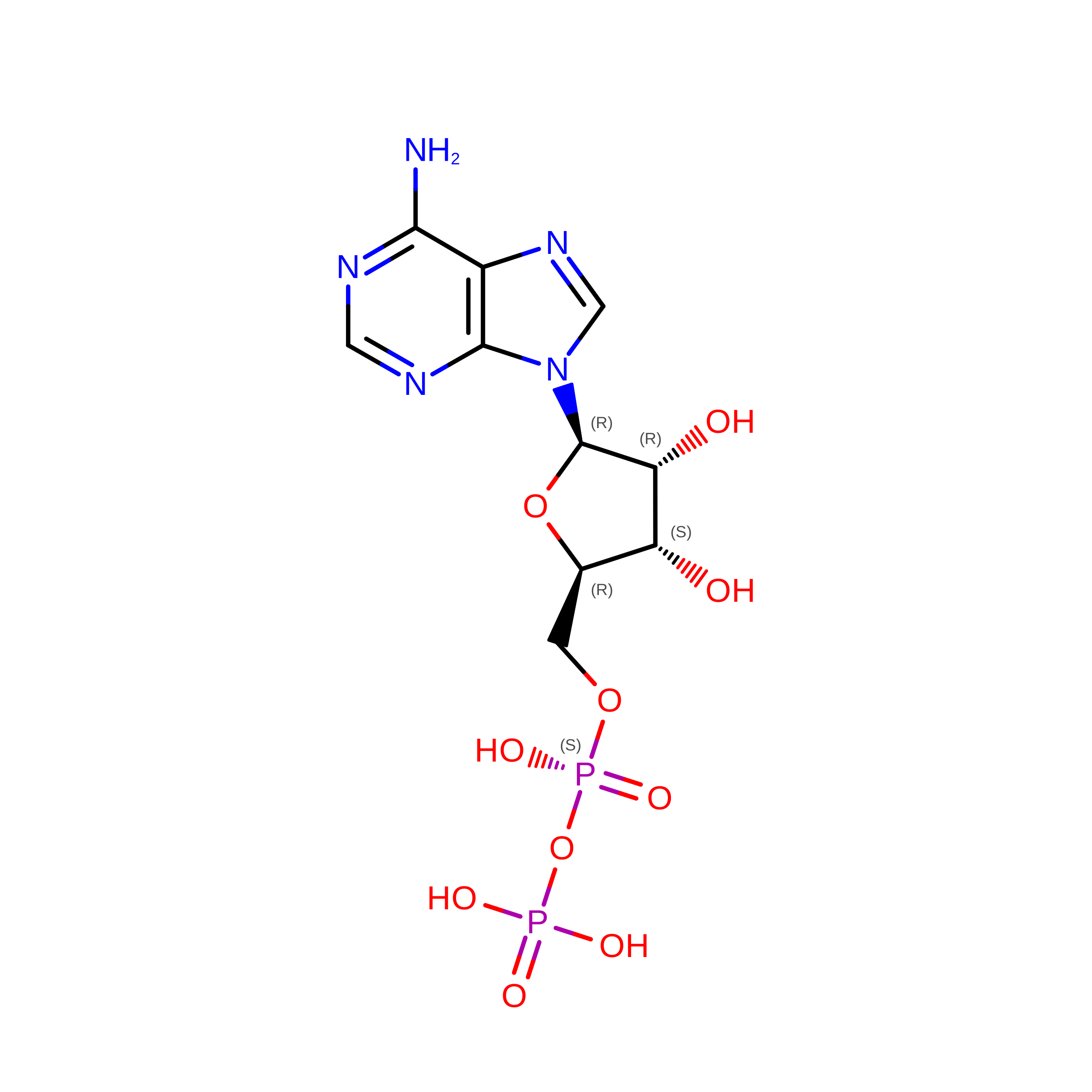
The ATP-driven mHsp60:mHsp10 chaperonin system assists protein folding within the mitochondrial matrix of human cells. Substrate protein folding has been proposed to occur through interconnected single- and double-ring pathways. In the absence of nucleotide, mHsp60 exists in equilibrium between free protomers and heptameric single rings, while the formation of double rings requires ATP. Here, we present cryo-electron microscopy structures of mHsp60 in the apo state, bound to ATP, and bound to ATP in complex with the cochaperonin mHsp10. ATP binding to single-ring apo mHsp60 7 triggers coordinated conformational changes in the intermediate and apical domains, resulting in a highly dynamic apical region within the ring. Extensive inter-subunit rearrangements flatten the equatorial surface of each ring, thereby enabling inter-ring contacts that stitch the rings together to form double-ring mHsp60 14 . Collectively, these structures define the structural basis of ATP-driven double-ring assembly of a human mitochondrial chaperonin responsible for maintaining mitochondrial protein homeostasis.